
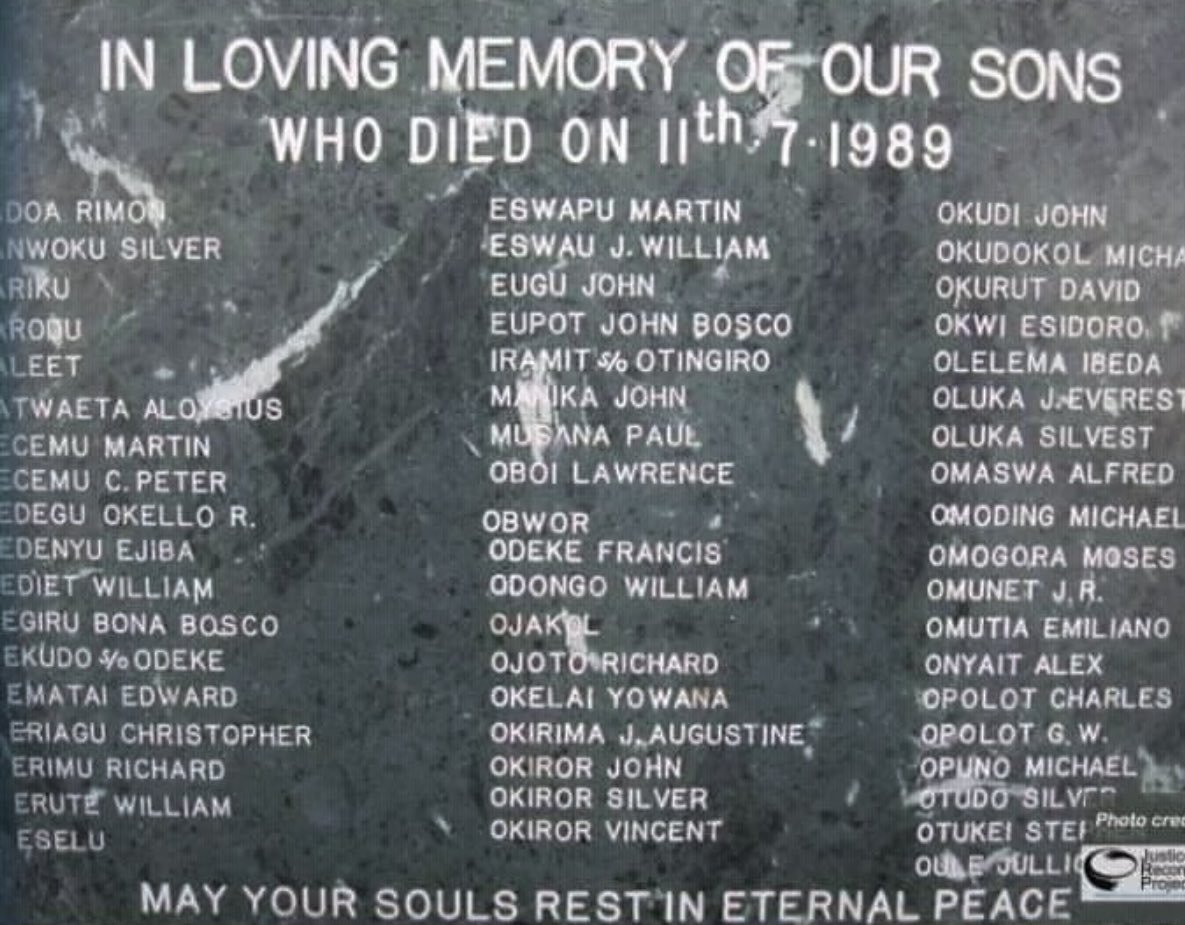
One of the darkest chapters in Uganda's post independence history unfolded on July 11, 1989, when 69 civilians suffocated to death inside a locked railway goods wagon during a military operation in Mukura, in present day Ngora District.
The incident, now remembered as the Mukura Massacre, occurred at the height of the insurgency in the Teso sub region and remains one of the country's most devastating wartime atrocities.
At the time, government forces of the National Resistance Army (NRA) were battling the Uganda People's Army (UPA), a rebel group operating in eastern Uganda. As part of a counter insurgency operation, soldiers from the NRA's 106th Battalion, commonly known as Pili Pili, established a temporary base at Okungulo Railway Station before carrying out sweeps across neighbouring villages in search of suspected rebel collaborators.
Hundreds of residents were arrested during the operation and screened by the military. Around 120 men were eventually forced into an abandoned, unventilated steel train wagon and locked inside.
Survivors later recounted that soldiers lit a fire near the wagon, causing the metal to become unbearably hot as temperatures inside rose sharply.
After more than four hours trapped without adequate air, panic spread among those inside as they fought for space to breathe. By the time the wagon doors were opened, 69 men had suffocated to death, while 47 others survived with severe physical injuries and lasting psychological trauma.
The massacre triggered widespread condemnation across Uganda and abroad. Later that year, President Museveni visited Mukura, apologised to the affected community and pledged that those responsible would be held accountable.
Although a military court martial was convened in Mbale to investigate the incident, its findings and any disciplinary action were never fully made public.
The victims were buried in a mass grave near Okungulo Railway Station, where the Mukura Memorial now stands. Mukura Memorial Senior Secondary School and a public library were later established in honour of those who lost their lives, while government compensation efforts began in the 1990s.
In 2010, President Museveni directed that compensation be paid to families of those who died and survivors. Reports indicate that about Shs200 million-plus was released for the victims, and later payments were made to some families.
A court ruling years later cited the Mukura case as one where the government paid Shs5 million for each deceased victim as an ex gratia payment.
Today, 37 years after the tragedy, the Mukura Massacre remains a solemn reminder of the human cost of conflict. Every July 11, survivors, relatives and community leaders gather at the memorial site to pray for the victims, honour their memory and renew calls for justice, reconciliation and a future where such a tragedy is never repeated.
