
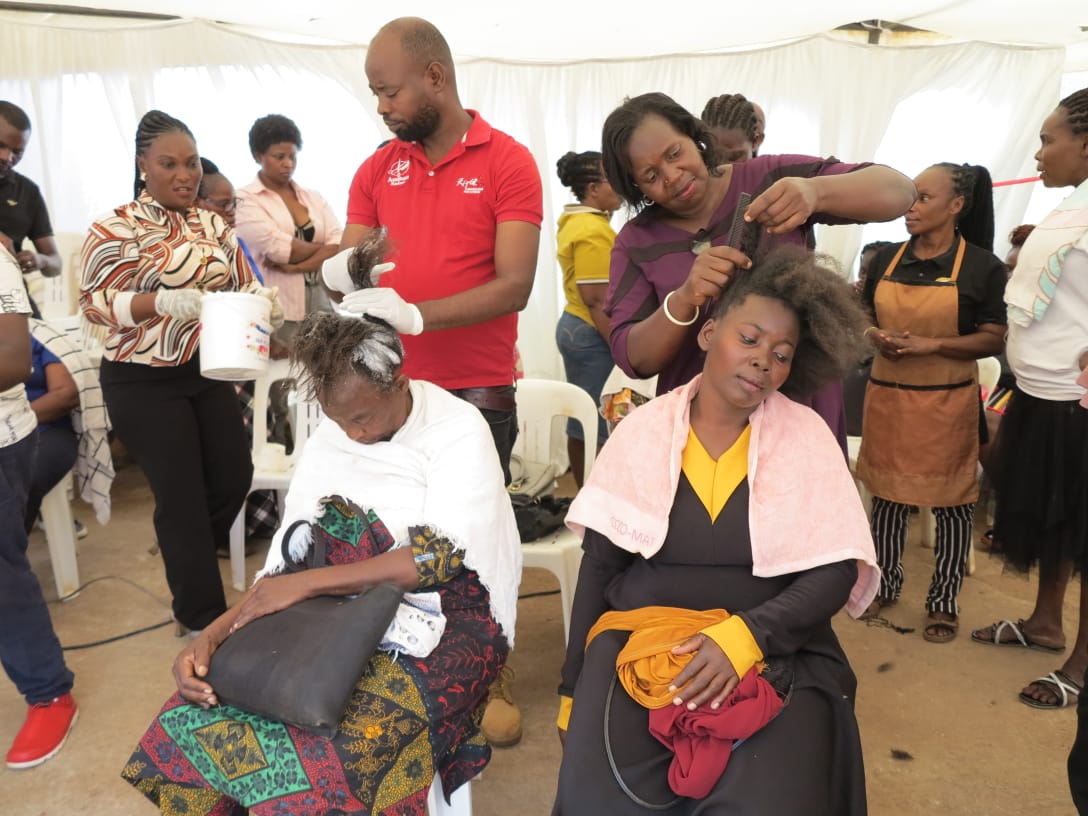
KAWEMPE: Salon operators across Uganda have been urged to register their businesses and form Savings and Credit Cooperative Organisations (SACCOs) to improve access to government support, affordable financing and business growth opportunities.
The call was made by Julius Byaluhanga of the Private Sector Foundation Uganda (PSFU) during a meeting with members of the Federation of Uganda Salons and Beauty Professionals in Kawempe.
Byaluhanga said formalising salon businesses would enable government agencies to identify operators more easily, extend targeted support and promote compliance with tax obligations.
"When salon businesses are registered, it becomes easier for the government to know who is operating and how best to support them. Registration also promotes transparency in tax payment while helping business owners expand their incomes and contribute to the country's development," Byaluhanga said.
He also encouraged salon operators to organise themselves into SACCOs, saying collective savings and access to affordable credit would strengthen their businesses and improve financial resilience.
SACCOs have become one of the government's preferred channels for extending affordable credit and implementing wealth creation programmes, particularly for small and medium-sized enterprises.
The Chief Executive Officer of the Federation of Uganda Salons and Beauty Professionals, Celestine Kamanyire, said the meeting was organised to equip salon operators with practical business management skills and prepare them to benefit from government initiatives targeting the private sector.
"We organised this meeting to prepare our members to run their businesses efficiently, avoid unnecessary challenges and position themselves to benefit from government programmes and other opportunities available to the private sector," Kamanyire said.
Participants also underwent training in financial literacy, including saving, bookkeeping and proper money management practices aimed at promoting sustainable business growth.
However, salon operators appealed to the government to reduce taxes on imported salon equipment and beauty products, arguing that the high cost of supplies continues to erode their profits.
"The taxes imposed on salon products and equipment are too high. If the government reduced them, many salon businesses would survive and grow, creating more jobs and improving our livelihoods," one participant said.
Uganda's beauty and personal care industry is largely driven by small and informal enterprises, with many salon operators yet to formally register their businesses, limiting their access to financing, government support programmes and other business development opportunities.
Industry stakeholders say greater formalisation and financial inclusion could help the sector create more jobs, increase tax compliance and contribute more significantly to the country's economy.
