
A few years ago, reaching many factories inside the Kampala Industrial and Business Park in Namanve was an ordeal.
Heavy trucks became stranded on muddy roads during the rainy season, flooding cut off sections of the park, and investors struggled to develop land that lacked basic infrastructure.
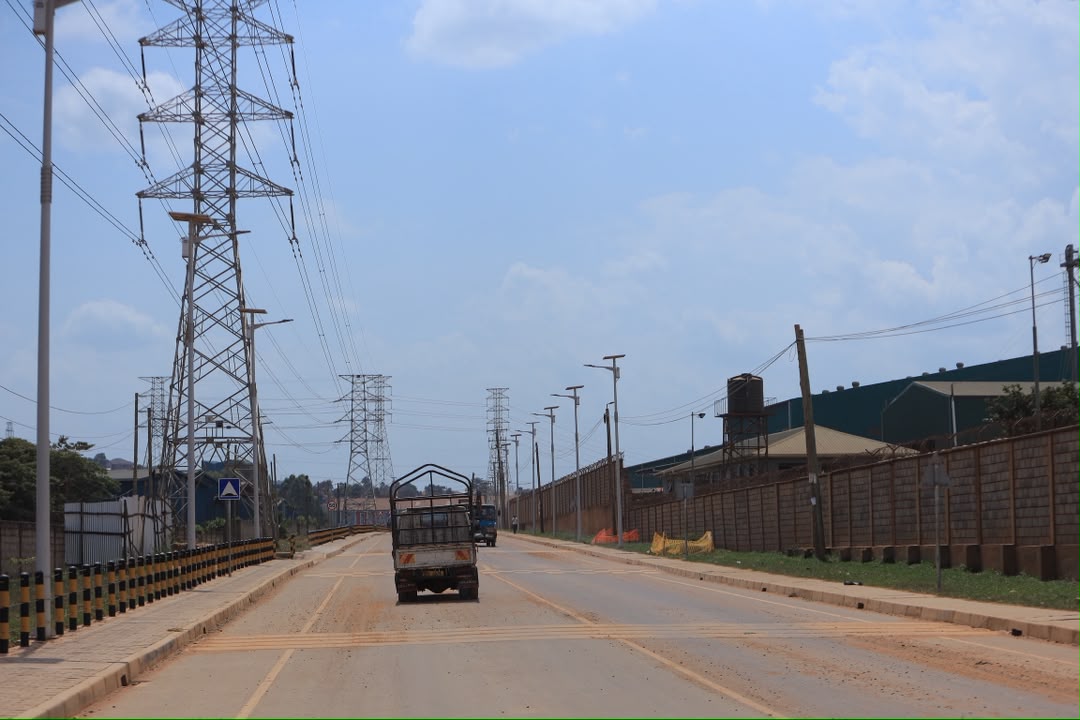
Today, the landscape tells a different story.
Paved roads now link factories across the 2,400-hectare industrial park. Solar-powered streetlights illuminate major routes, extensive drainage channels have reduced flooding, while new factories continue to emerge across what has become Uganda's largest industrial hub.
The transformation is being driven by the Namanve Industrial Park Infrastructure Project, a €215 million investment financed through a partnership between the Government of Uganda and United Kingdom Export Finance (UKEF).
The project is being implemented by the Uganda Investment Authority (UIA), with Lagan DOTT Namanve Ltd serving as the contractor.
The infrastructure programme is now about 80 percent complete and is expected to be substantially finished by the end of the year.
Government views the project as a key pillar of its Tenfold Growth Strategy, which aims to increase Uganda's economy from about $50 billion today to $500 billion by 2040 through industrialisation, value addition and export-led growth.
Engineering an Industrial City
According to Eng. Andrew Bamanya, Country Representative of Lagan DOTT Namanve Ltd, constructing modern infrastructure on what was largely wetland presented significant engineering challenges.
"We started construction in 2018, but much of this area was essentially swamp," Bamanya said.
"Before laying the roads, we had to stabilise the ground through surcharging to create a firm foundation. It was time-consuming, but necessary to ensure the infrastructure lasts for decades."
The investment has coincided with rapid industrial expansion.
When construction began, only about 15 factories were under development despite more than 30 investors having acquired land.
Today, approximately 480 factories have been established within the park, with nearly 280 already operational.
Figures from the Uganda Investment Authority and the Uganda Revenue Authority indicate that businesses operating in the park contribute about $3 billion annually in tax revenue.
Bamanya said the park has also generated about 28,000 direct jobs and an estimated 150,000 indirect jobs through supply chains and supporting businesses.
"When you compare an infrastructure investment of about €215 million against annual revenues of approximately $3 billion, the economic value becomes very clear," he said.
Infrastructure Driving Investment

The completion of roads and utilities has transformed investor confidence, according to project officials.
Industrial plots that were previously difficult to access are now connected by paved roads, electricity, water supply, fibre-optic connectivity, drainage systems and improved security infrastructure.
Gerry Cawley, International Business Director at Lagan, said reliable infrastructure gives investors the confidence to commit long-term capital.
"Infrastructure is far more than roads and drainage. It creates confidence for investors. When businesses know they can access reliable roads, utilities and services, they invest with certainty," he said.
Government agencies say demand for industrial land remains strong, with nearly all serviced plots in the park already allocated.
Communities Seeing the Impact
The benefits extend beyond factory owners.
Residents of neighbouring Butto Village say the improved drainage system has significantly reduced flooding that previously disrupted transport and damaged homes during heavy rains.
Oscar Okiring, a resident of the area, said the project has also improved security and created employment opportunities.
"Before these roads were built, this area was isolated whenever it rained. Today we have better roads, improved drainage and increased security. Many young people have found employment during construction and in the factories," he said.
Truck drivers transporting goods into the industrial park also report shorter delivery times and lower transport costs.
Walusimbi Shafiq, who regularly delivers cargo to factories in Namanve, said the upgraded road network has made logistics more predictable.
"Previously, trucks would spend hours navigating muddy roads, especially during the rainy season. Today, movement is much smoother, transport costs have reduced and businesses can plan deliveries with confidence," he said.
Foundation for Industrial Growth
Beyond roads, the project includes stormwater drainage, water distribution networks, electricity infrastructure, fibre-optic connectivity, solar street lighting and CCTV surveillance.
Eng. Jameson Olonya, Contract Manager at DOTT Services, said the investment is intended to create an industrial ecosystem capable of attracting investment and supporting long-term economic growth.
"Our goal has never been simply to complete an infrastructure project, but to create an industrial environment where businesses can thrive, investors have confidence, and communities benefit through employment and improved livelihoods," Olonya said.
He added that the project is expected to be substantially completed before the end of the year.
As Uganda pursues its goal of building a US$500 billion economy by 2040, industrial parks such as Namanve are expected to play an increasingly important role by providing manufacturers with serviced land, modern infrastructure and efficient logistics to support production and exports.
For residents living around the park, however, the transformation is reflected in everyday life: reduced flooding, better roads, improved security and new employment opportunities in what was once largely inaccessible wetland but is now one of Uganda's fastest-growing industrial centres.
