
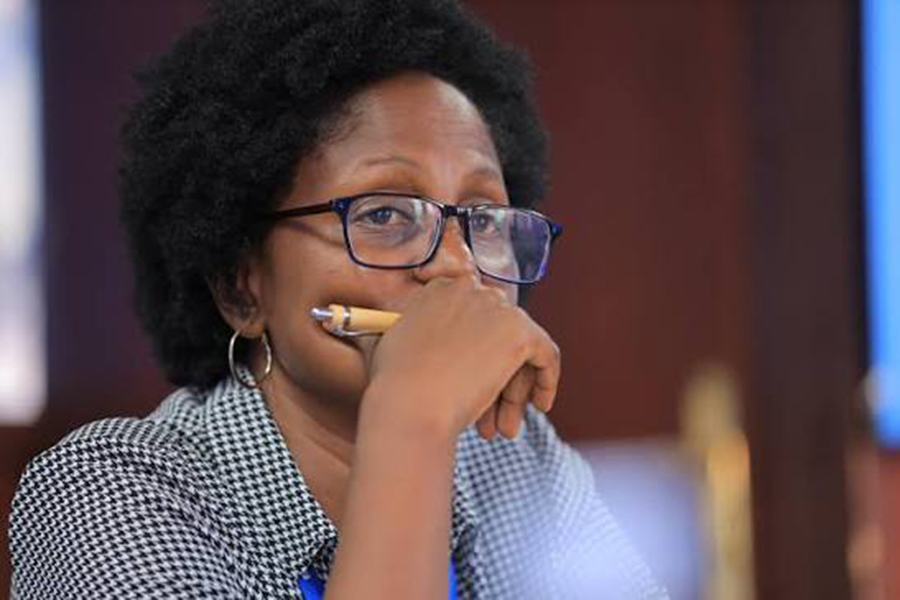
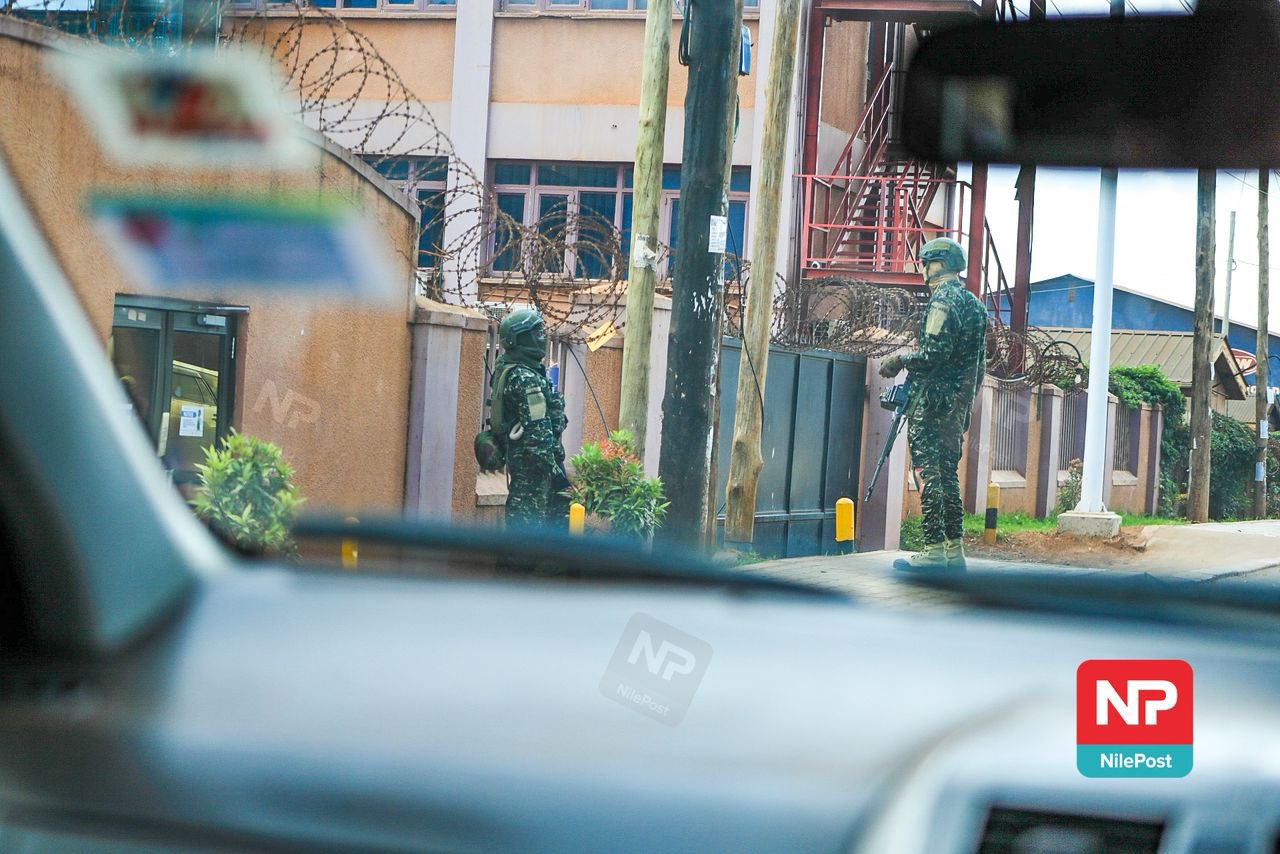
On May 3, 2013, Daniel Kalinaki was kicked out of Daily Monitor into exile at Nation Media Group's headquarters in Nairobi, Kenya. Two weeks later, security operatives sealed off Monitor Publications Limited's headquarters in Namuwongo, declaring the premises a crime scene.
Thirteen years later, history appears—at least to many inside the company—to be echoing itself.
On April 1, 2026, Kalinaki exited Nation Media Group Uganda once again, this time entirely relieved of his duties. Barely three months later, security operatives raided the company's operations and shut down its media platforms.
Coincidence? Perhaps.
Inside Monitor, however, the parallel has become impossible to ignore.
For many current and former employees, Kalinaki's greatest strength extended far beyond editing stories and mentoring reporters. He was widely regarded as one of the newsroom's finest strategists, able to steer one of Uganda's most outspoken newspapers through repeated political storms while preserving its editorial identity.
That balancing act often unfolded far from the newsroom floor. Difficult conversations were held behind closed doors. Tempers were cooled. Compromises were struck. Yet the paper largely retained the editorial independence that made it both admired by readers and distrusted by those in power.
Twice Kalinaki has departed. Twice the government has delivered what many inside Monitor regard as one of its most crushing blows. While it is controversial to suggest he could have stopped it, the temptation to draw conclusions is benign.
Yes, this time, however, the crisis feels profoundly different.
In 2013, the Uganda Police Force was the public face of the confrontation, with then Inspector General of Police Gen Kale Kayihura leading investigations surrounding the so-called Muhoozi Project letter authored by Gen David Sejusa.
Today, the military occupies centre stage.
That distinction has shaped how many employees perceive the current crisis—not simply as another confrontation between the State and an independent newspaper, but as a far more uncertain chapter whose ending nobody inside the organisation can confidently predict.
The emotional toll is already evident. The usually vibrant Daily Monitor newsroom WhatsApp groups, once filled with story tips, assignment discussions, headline debates and newsroom banter, have reportedly fallen into an eerie silence.
Journalists who only days ago were chasing breaking news now spend their time anxiously waiting for news about their own future. Editors who routinely argued over front-page leads are instead discussing whether there will even be another front page.
Several staff members describe the organisation as existing in limbo. Nobody knows when operations will resume. Nobody knows under what conditions they will resume.
And perhaps most unsettling of all, nobody knows who will still be there when they do.
That uncertainty deepened on Saturday evening.
Phillip Wafula Oguttu, co-founder and shareholder of Monitor Publications Limited, said on Capital Gang that he would be listening to President Museveni's national address, expecting the President to address the closure of Nation Media Group Uganda.
He never did.
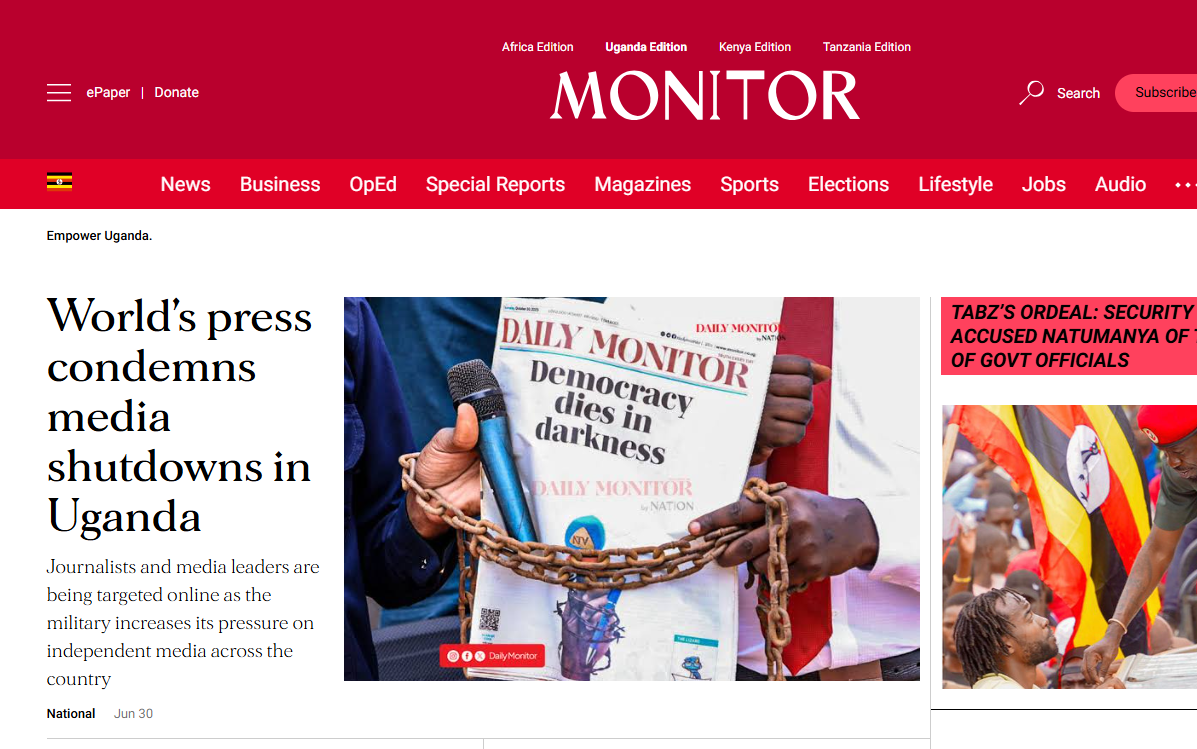
For many employees hoping for clarity, the silence from the country's highest office proved almost as unsettling as the closure itself. Behind the scenes, attention has increasingly shifted to negotiations over the company's future.
Appearing on Capital Gang, Wafula disclosed that legal action against the government was under active consideration.
"I'm very sure we shall take the government to court; whether they ban the newspaper or close the whole media house," he said, recalling that following the 2013 closure, Monitor successfully sued the government and was awarded Shs3 billion in compensation.
Wafula also confirmed reports that discussions surrounding the reopening of NMG-U had included proposals for sweeping institutional changes, particularly within the editorial leadership.
"I understand the State wants us to sack some of our managers, including the managing director and some editors. But that will not happen. We would rather close than allow the State to choose staff for us," he said.
Those remarks have only intensified speculation inside the company.
When NMG's new Tanzanian owners travelled to Uganda last week to negotiate the reopening of the business, they first met veteran journalist Andrew Mwenda at Serena Hotel before proceeding to the Special Forces Command headquarters in Entebbe for talks with Chief of Defence Forces Gen. Muhoozi Kainerugaba.
But here at Serena Hotel, Mwenda was on the other side of the fence prepping the visitors ahead of their closed-door meeting with the Commander of Defence Forces (CDF), General Muhoozi Kainerugaba at the Special Forces Command (SFC) headquarters in Entebbe.
On phone, he issued orders for lead cars to be availed for the guests.
"The terms and conditions have been logged," Mwenda said following the talks. "The government simply wants them to be professional. As a core condition of the agreement to move forward, NMG must hire professional editors and recruit professional journalists who will adhere strictly to a mandate of objective reporting."
Wafula said it was worrying that the MD was left out of the meeting that involved the same organisation whose entire operations in Uganda she leads. And while he maintains the idea of Nsibirwa being removed is far from possible, the reality is thorny.
A couple of staffers have intimitated to this writer that Ms Nsibirwa is likely to be exiled in Kenya or Tanzania as Rostam Aziz and his son Saam Aziz seek to cut a compromise.
Already, they have moved several steps back by shutting down operations of Daily Monitor entirely. When the State raided the Namuwongo-based newspaper headquarters, Monitor continued to defiantly run its operations through digital platforms and also published print daily using "Luweero Methods".
But it emerged later that as part of the negotiations the State had demanded they stop it altogether. The Monitor website last published on June 30 with an editor confirming they had been asked to cease publishing until further notice.
Suggestions that Ms Nsibirwa and other editors could be exiled would not be new. On Friday, May 3, 2013, then managing director Alex Asiimwe announced that Managing Editor Daniel Kalinaki was leaving to take up a secondment at parent company, the Nairobi-based Nation Media Group.
Kalinaki had been redeployed as managing editor – regional content, to oversee and generate content for the group’s media platforms in East Africa.
Asiimwe replaced Kalinaki with Chief Sub-editor Don Wanyama to end a power struggle that pitted top government officials who were not happy with the way Kalinaki covered their dining table yet Asiimwe reported to Nairobi at the time that these were major advertisers.
The concerns especially from the Office of the Prime Minister in the midst of a major corruption scandal was to the effect that Kalinaki had to be fired. But Nairobi could not afford to take that decision and instead saw exiling him as a window to not lose him completely.
It is like déjà vu for NMG, only that the scale is bigger than a PS and involves the two most powerful individual figureheads in the country.
The augeries for Ms Nsiribirwa and the editors being targeted look dour. According to Mwenda - who speaks for the Patriotic League of Uganda (PLU), Gen Muhoozi presented NMG executives with a detailed intelligence file compiling five years of published content from NTV Uganda, Daily Monitor, and KFM, which authorities described as evidence of persistent political bias.
"The report presented clear evidence that 97% of NMG's top cover stories were negative toward the government," Mwenda revealed.
"Every single infraction committed by the state was reported with heavy exaggeration. In fact, if you looked at their top 100 stories concerning the government, all 100 were aggressively negative.
"Conversely, their top 100 stories regarding the political opposition were strictly sympathetic. It forced a very serious question inside the room: How sure are we that this media house has not been completely infiltrated?"
If Ms Nsibirwa did not attend the meeting, it probably was because Gen Muhoozi did not want her presence or that NMG decided it was safer that the MD who had been threatened with arrest was safer away.
Or that discussing her fate would be too uncomfortable to do in her presence.
