
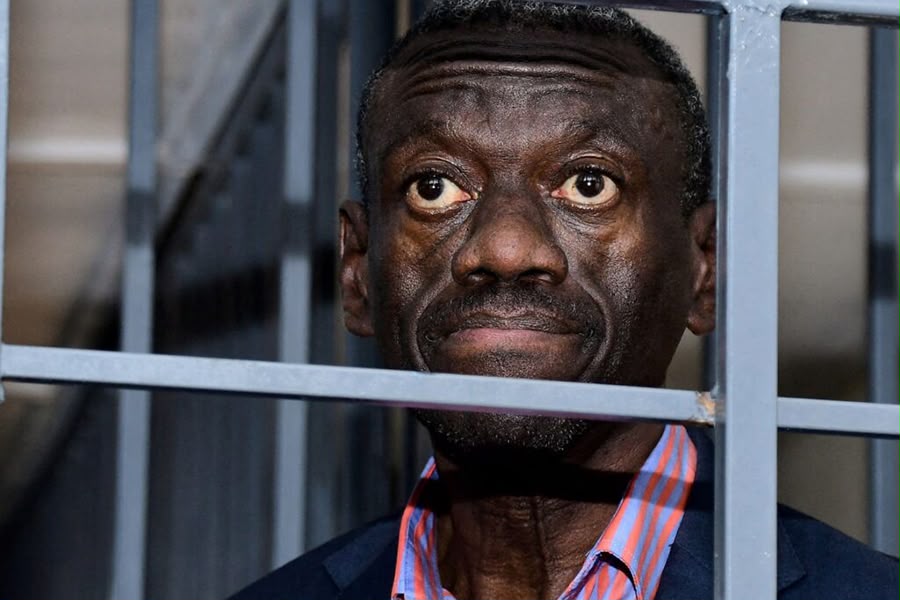
The Uganda Law Society (ULS) has called on the Judiciary to publicly and unequivocally condemn President Yoweri Museveni's remarks on the pending treason trial of veteran opposition leader and four-time presidential candidate Dr. Kizza Besigye, as well as his renewed push to abolish bail, describing the comments as unconstitutional executive interference in the administration of justice.
In a statement dated July 4, 2026, and signed by ULS President Isaac Ssemakadde, the Society strongly criticised the President's public comments on the ongoing criminal proceedings against Besigye and urged the Chief Justice, Judiciary Top Management, and all judicial associations to denounce what it described as attempts to undermine judicial independence.
"The Uganda Law Society (ULS) strongly condemns President Yoweri Kaguta Museveni's public comments on the pending trial of Dr. Kizza Besigye and his stated intention to abolish bail," the statement read.
According to the Law Society, the President's comments amount to sub judice contempt of court because they discuss the merits of an active criminal case and could prejudice the accused's constitutional right to a fair hearing.
The Society argued that the remarks also aggravate existing contempt allegations involving the President's son, Chief of Defence Forces Gen. Muhoozi Kainerugaba, which it said form part of the alleged human rights violations underlying the current stay of proceedings.
ULS further described the President's renewed criticism of bail as an unconstitutional attack on Articles 23 and 28(3)(a) of the 1995 Constitution, which guarantee personal liberty and the presumption of innocence while reserving decisions on bail exclusively for the courts.
"Bail is a judicial function, not subject to executive directive," the statement said.
The Society maintained that abolishing bail through a blanket policy would violate several international legal instruments, including the United Nations Standard Minimum Rules for Non-custodial Measures (Tokyo Rules, 1990), the African Commission's Luanda Guidelines (2014), and the United Nations Basic Principles on the Independence of the Judiciary (1985), particularly Principles 1, 2 and 4, which prohibit governmental interference with judicial functions.
ULS warned that continued public commentary by the President on active court proceedings undermines judicial independence and erodes public confidence in the justice system.
"Banning bail will not protect witnesses. It will instead punish the innocent and shield systemic failures from scrutiny," the statement added.
The Society demanded that President Museveni immediately stop making public comments on ongoing court cases, including Besigye's trial, and refrain from attempting to influence judicial decisions relating to bail.
It also called on the Judiciary to publicly condemn the President's remarks without delay, arguing that such action would be consistent with the position previously taken by Magistrate Sheilla Gloria Atim in Uganda v. Miria Matembe (Luzira Criminal Case No. 132 of 2026).
"Judicial officers have a duty under the UN Basic Principles to defend their independence," the statement noted.
The Law Society further urged the government to address what it described as the real challenges affecting Uganda's justice system, including systemic judicial delays, political persecution, corruption, weak witness protection mechanisms, and military and executive interference in civilian judicial processes.
"The ULS remains resolute in defending the rule of law, constitutionalism, and the independence of the Judiciary," the statement concluded.
The ULS statement followed President Museveni's national address on Saturday, during which he accused Besigye of frustrating his own prosecution by refusing to stand trial over treason charges.
"You see Dr Besigye creating scenes in the courts of law. It's like a theatre," Museveni said.
"Besigye has created drama in courts of law. Why should the legal system for so long allow an accused person to just refuse to be tried? Is that a good system?"
The President argued that if Besigye believed the charges against him were politically motivated, the courtroom was the appropriate forum to challenge the prosecution's case.
"Why would this great democrat and human rights fighter, Dr Kizza Besigye, spend so many calories on refusing to go to trial where he would have the opportunity to prove his innocence and expose the undemocratic behaviour of Museveni and his family?" he asked.
On bail, Museveni argued that suspects released before trial often interfere with investigations and intimidate witnesses.
"There is the issue of bail, even when the accused can interfere with the case. There have been instances of magistrates giving bail to village thieves who can threaten local agriculture," he said.
"We oppose bail because the accused come out and attack witnesses. If we continue like this we won't have any witnesses."
The President further stated that it had been "almost two years" since Besigye's arrest and alleged that the opposition leader had spent that period refusing to face trial while misusing the legal process.
Besigye and his political aide, Hajj Obeid Lutale, were arrested in Nairobi in November 2024 and initially charged before the General Court Martial with treason and misprision of treason.
The military proceedings were later discontinued after the Supreme Court ruled that civilians cannot be tried before military courts, prompting the state to transfer the case to the civilian justice system and file fresh charges before the High Court.
The proceedings were subsequently delayed after Besigye embarked on a hunger strike to protest his continued detention beyond the constitutional limits, prompting renewed public debate over prolonged pre-trial detention and access to justice.
Following the transfer of the case to the civilian courts, disagreements over legal representation emerged after Besigye insisted that former Kenyan Justice Minister Martha Karua lead his defence alongside Kampala Lord Mayor Erias Lukwago.
Karua was later deported to Kenya after Ugandan authorities declared her persona non grata, despite her stating that she had travelled to Uganda solely to represent Besigye in court.
Lukwago was subsequently arrested and charged with misprision of treason, leaving Besigye without the two lawyers he had identified to lead his defence.
Appearing before court on Wednesday, Besigye said he had instructed the remaining members of his legal team to withdraw because he did not want them to risk arrest over their involvement in his case.
He also told the court that he would not appoint another lead lawyer to replace Karua and Lukwago, creating a fresh impasse as the state seeks to proceed with the civilian trial.
