
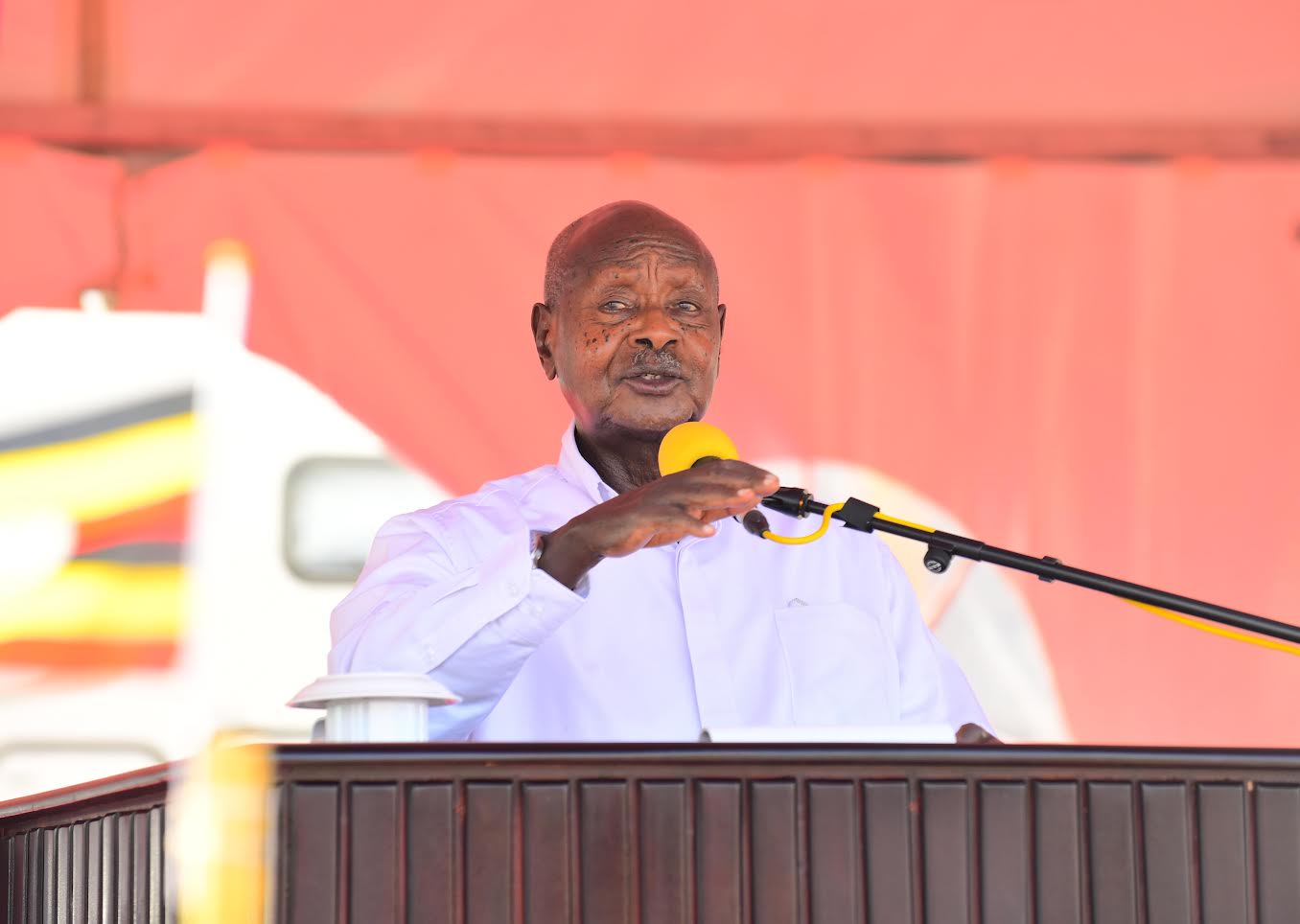
President Yoweri Museveni has dismissed claims that Uganda is sliding back to the dark days that existed before the National Resistance Movement (NRM) came to power in 1986, arguing that the country’s transformation over the last four decades has created foundations that cannot easily be undone.
In a national address delivered from Entebbe on July 4, 2026, Museveni used the opportunity not only to respond to concerns raised by religious leaders on justice, human rights and governance, but also to make a broader case for Uganda’s socio-economic transformation and the need to protect the gains achieved since liberation.
At the centre of his message was a rejection of the narrative that Uganda is returning to the era of fear, insecurity and lawlessness that characterized previous governments.
According to the President, the phrase “Wakili, twebaka tulo” – a popular expression that emerged after the NRM took power to describe the restoration of peace and security – remains one of the movement’s greatest achievements.
He argued that the real meaning of the past was a period when citizens could be arrested without due process and disappear without trace, while today, despite political disagreements and legal disputes, institutions remain functional and those accused of crimes continue to appear before courts of law.
The President maintained that recent actions by security agencies should not be viewed as a reversal of democratic gains but rather as efforts to address long-standing gaps in accountability, corruption and impunity that have slowed Uganda’s development journey.
Beyond security and governance, Museveni devoted a significant part of his address to defending Uganda’s economic progress and the investment environment that has been built over the years.
He argued that one of the biggest threats to Uganda’s growth is the deliberate spread of misinformation that portrays the country as unstable and unsafe for business.
According to him, negative narratives have often scared away potential investors and tourists who later discover a completely different reality once they visit the country.
“Some investors and tourists are scared away from coming to Uganda on account of those false stories,” Museveni noted, adding that many visitors are surprised by the level of progress they find upon arrival.
The President’s comments reflect a long-held belief within government circles that Uganda’s development story is often overshadowed by narratives that focus exclusively on challenges while ignoring achievements in infrastructure, industrialization, security, education and wealth creation.
Mr Museveni has in the recent past focused his addresses on pointing to the broader transformation of Uganda’s economy since 1986, arguing that peace and stability created the conditions necessary for investment, enterprise and production to flourish. He argues that while gaps remain in governance and service delivery, the overall trajectory of the country remains positive.
The President cites the expansion of economic opportunities, growth in household participation in the money economy, increased industrial activity and improved infrastructure as evidence that Uganda has moved significantly from where it stood four decades ago.
The President, on Saturday, highlighted what he described as a continuing counter-offensive against corruption, crime and abuse of office, pointing to cases where individuals involved in wrongdoing have been exposed and prosecuted. According to Museveni, tackling corruption remains essential if Uganda is to sustain its transformation agenda and attract more investment.
On environmental protection, another issue raised by the Inter-Religious Council, the President defended government efforts to restore wetlands and protect natural forests, arguing that environmental conservation is critical for safeguarding Uganda’s long-term economic future.
He warned against the continued destruction of wetlands and forests, noting that these ecosystems play a vital role in maintaining rainfall patterns and supporting agricultural productivity. He pledged that government operations to restore degraded wetlands and protect forests would continue despite resistance from encroachers.
The President also used the address to rally citizens to take a more active role in governance and accountability. He encouraged Ugandans to report corruption wherever it occurs and to use local leadership structures, particularly the upcoming LC1 and Women Council elections, to elect leaders committed to fighting corruption and promoting community development.
Underlying much of the President’s address was a broader message about the relationship between stability, investment and development.
His argument was that countries attract investment when investors have confidence in security, predictability and the rule of law. Conversely, persistent instability, political violence and negative perceptions can discourage investment, slow economic growth and undermine job creation.
For Museveni, Uganda’s transformation story is therefore not only about roads, factories, schools and hospitals, but also about maintaining an environment in which citizens and investors have confidence in the future.
