
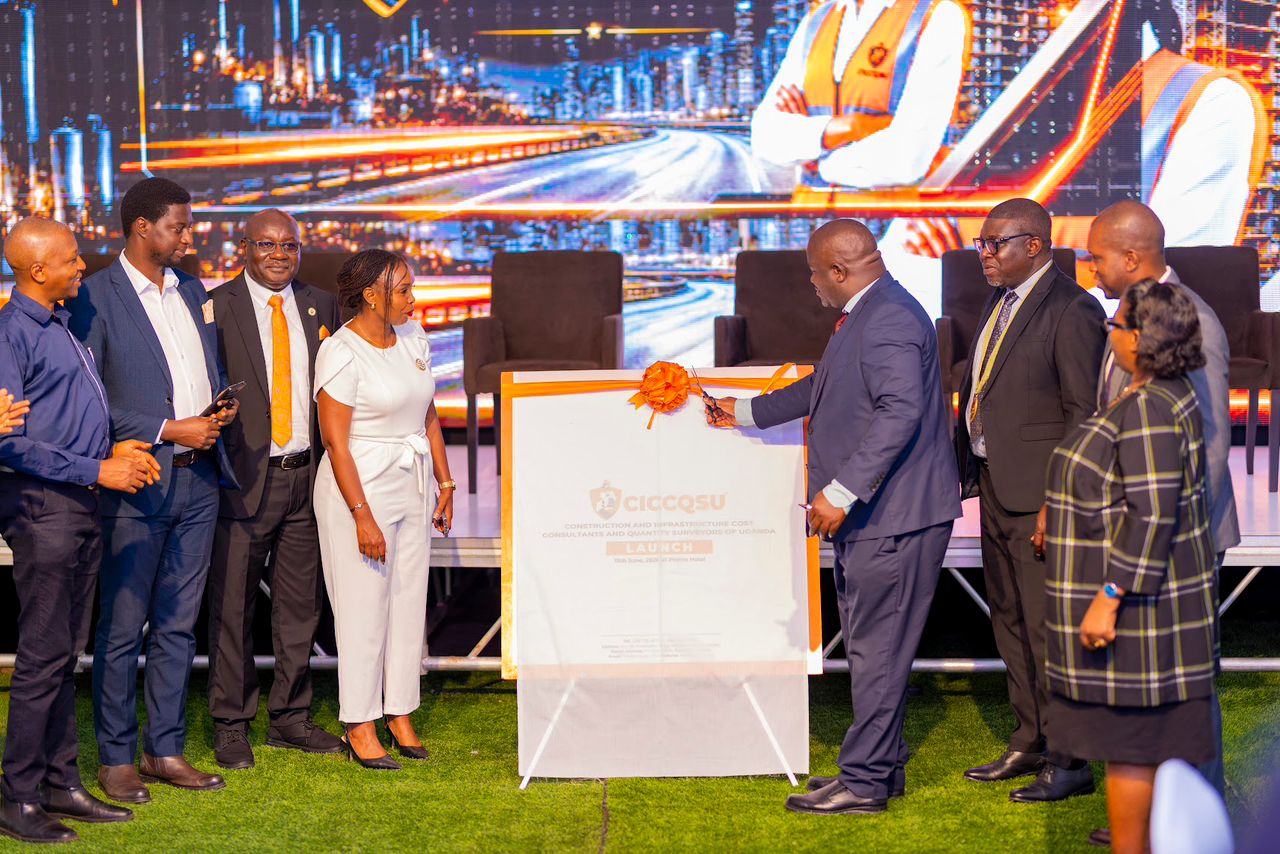
The Ministry of Works and Transport has challenged quantity surveyors to speak “uncomfortable truths” about project costs and affordability, warning that Uganda continues to pay a heavy price for poorly scoped and costed infrastructure projects.
The call was made on Friday during the launch of the Construction and Infrastructure Cost Consultants and Quantity Surveyors of Uganda (CICCQSU), a new professional body formed to strengthen cost management, accountability and professional standards in the construction sector.
Representing the Minister of Works and Transport, Commissioner for Public Structures, Architect Eng Edward Ssimbwa said Uganda has invested more than Shs25 trillion in infrastructure over the past two decades, yet public concerns over value for money remain significant.
“The country needs professionals who can speak the truth, even when the truth hurts,” Dr. Ssimbwa said, urging quantity surveyors to take on a more strategic role in linking design decisions to affordability and preventing costly project overruns.
He warned that poor planning and inaccurate costing continue to undermine infrastructure development, stressing that professionals must uphold ethical standards and provide independent advice on project costs.
The launch of CICCQSU comes amid concerns over a shortage of professionally registered quantity surveyors despite growing demand for their expertise in major infrastructure projects.
According to the association’s inaugural chairperson, Victor Odongo, Uganda produces about 150 quantity surveying graduates annually, but only around 30 attain professional registration each year.
Odongo described the gap as a major challenge for the profession and said the new body would focus on mentorship, skills development and professional registration.
He said quantity surveyors must adapt to emerging technologies and the increasing complexity of modern infrastructure projects, including those in the oil and gas sector.
“AI is taking over manual tasks, and the quantity surveyor must evolve so that our nation gets real value,” Odongo said.
He added that the association would also prioritize dispute avoidance and contract management, noting that many construction projects are delayed or become more expensive because of contractual disputes.
The launch attracted regional attention, with the President of the African Association of Quantity Surveyors (AAQS), Matthew Ngulube, describing the development as a significant milestone for the profession across the continent.
Ngulube urged the new association to invest in research and local construction cost databases to improve decision-making and ensure projects are delivered within budget.
“A professional association that controls knowledge controls the future of its profession,” he said.
He cautioned that the association’s success would depend on its ability to translate policy documents and professional guidelines into enforceable standards that improve project delivery.
The formation of CICCQSU follows a seven-year reform process triggered by the 2019 “Fit for Future” assessment, which recommended that quantity surveyors operate independently from the Institution of Surveyors of Uganda to better respond to changing industry demands.
The association now plans to push for an independent Quantity Surveyors Bill to regulate the profession and establish clearer standards for practice.
Officials said the body will also work closely with the Ministry of Works and Transport to strengthen financial discipline in public infrastructure projects and improve value for money.
