
The Government has introduced stricter regulations across all landing sites operating on Lake Victoria as part of renewed efforts to eliminate illegal fishing and protect fish stocks for future generations.
Among the new measures, each landing site will now be limited to a maximum of 200 fishermen and 66 boats. Mukene (silverfish) fishermen have also been banned from using lights while fishing, alongside several other restrictions aimed at promoting sustainable fishing practices.
The regulations were unveiled at Senyondo Landing Site in Mpigi District by the Deputy Commander of the Uganda People’s Defence Forces (UPDF), Lt Gen Samuel Okiding, during an engagement with fishermen on fisheries laws and regulations.
The government says the move follows continued cases of illegal fishing despite years of enforcement operations. Authorities cite practices such as harvesting immature fish, using undersized and illegal fishing nets, employing prohibited methods, and operating unauthorized boats as major threats to the sustainability of the fishing industry.
To combat the vice, security forces were previously deployed on Lake Victoria. However, illegal fishing remains widespread, prompting intensified enforcement operations that have in some cases led to confrontations with fishing communities.
Fishermen at Senyondo Landing Site accused security personnel of using excessive force during enforcement operations. They claimed officers frequently beat and arrested them, and confiscated fishing gear including boats and nets with limited recourse for appeal.
“The soldiers beat us, harass us and confiscate all our property. Fishing is our only source of livelihood. Our children depend on this work for school fees and survival,” fishermen said.
They further alleged that since the deployment of security forces on the lake, several fishermen have lost their lives while fleeing enforcement operations.
“Many fishermen have fallen into the lake while being chased by soldiers. Some have drowned and died. We wonder whether the soldiers were deployed to protect us or punish us,” they added.
The fishermen also questioned why enforcement efforts focus heavily on punishing users of illegal fishing gear rather than targeting those who import and distribute the equipment.
“Why doesn’t the government use the same energy to stop those importing illegal fishing nets? If the nets were not entering the country, fishermen would not be using them, and there would be no need for military enforcement on the lake,” they argued.
In response, Lt. Gen. Okiding urged fishermen to comply with legal fishing practices, including approved net sizes, authorized boats, and recommended fishing standards for different fish species.
He also outlined additional regulations that will now apply across all landing sites on Lake Victoria, including reducing the number of licensed fishermen and boats per site, requiring valid fishing permits for all fishermen, and restricting operations to approved vessels only.
The UPDF deputy commander further ordered the immediate closure of all illegal landing sites and warned that anyone found in possession of illegal fishing gear without proof of purchase could face up to eight years in prison.
Despite concerns raised by fishermen, Okiding said the government has plans to support fishing communities economically, including a Shs1 billion allocation for each district with fishing communities under a support programme.
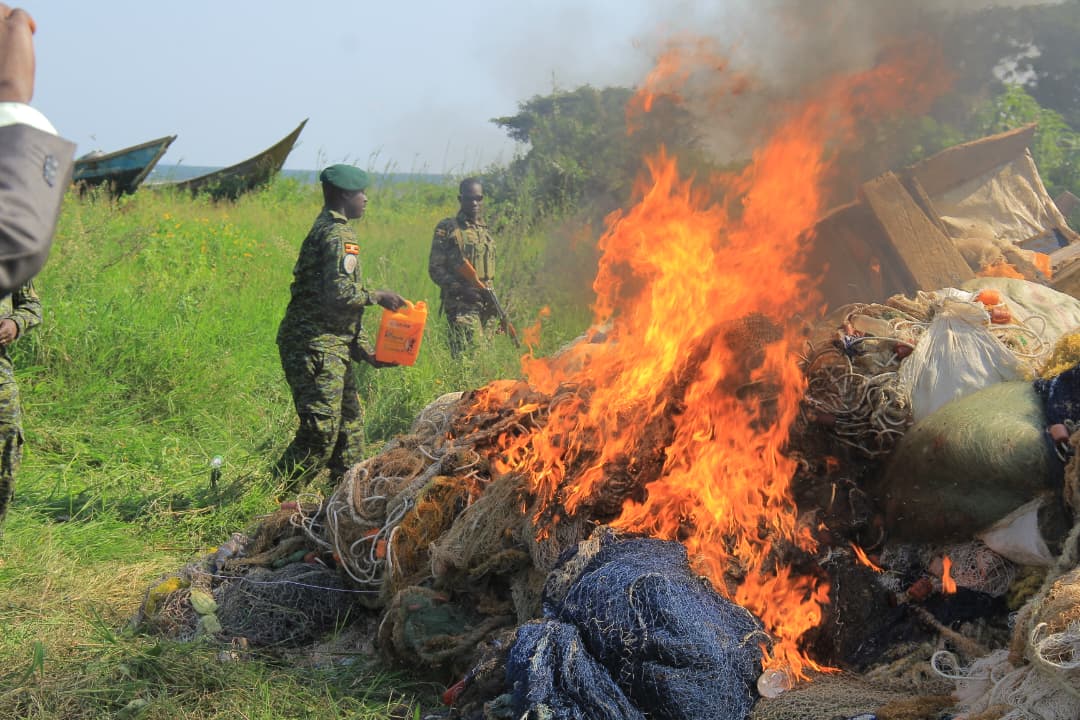
The event concluded with the destruction of confiscated illegal fishing gear, including banned nets and hooks that failed to meet required standards.
