
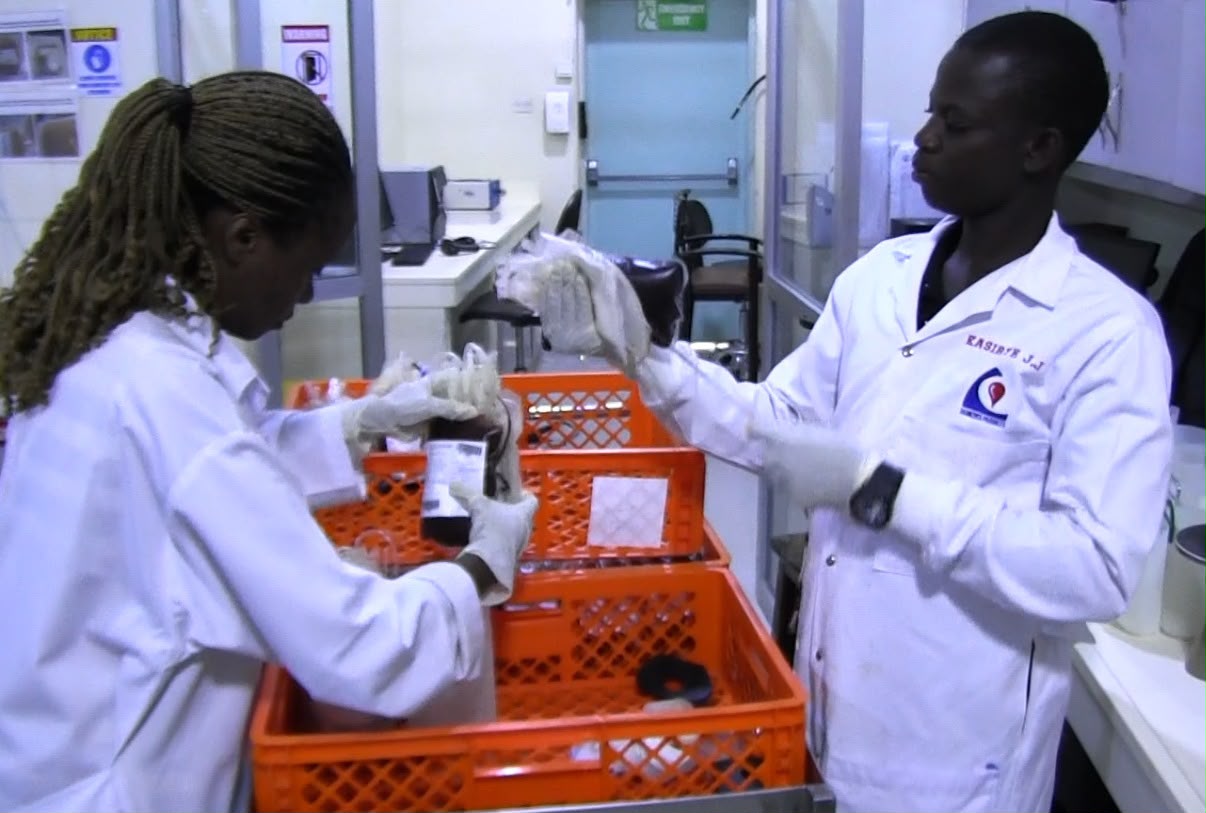
Children suffering from severe malaria-related anaemia account for more than 60 percent of Uganda’s blood consumption, placing increasing pressure on a national blood supply system that is struggling to keep pace with growing demand, the Uganda Blood Transfusion Service (UBTS) has said.
UBTS Executive Director Dorothy Kyeyune warned that the country continues to face a gap between the amount of blood needed by patients and the quantity collected from donors, despite ongoing campaigns to boost voluntary blood donation and improve blood safety.
“The main challenge as UBTS is meeting the demand for blood. The demand for blood surpasses the collection,” Kyeyune said in an interview with Nile Post.
She said blood remains a critical resource for treating children suffering from severe anaemia caused by malaria, mothers experiencing complications during pregnancy and childbirth, road crash victims, cancer patients and people living with sickle cell disease.
According to UBTS, children with severe anaemia linked to malaria consume the largest share of blood supplied to health facilities across the country.
“Most of our blood goes to children with severe anaemia due to malaria. They take more than 60 percent of our blood needs, followed by mothers with complications of pregnancy and childbirth, accident victims, cancer patients and sickle cell patients,” Kyeyune said.
The figures underscore the continuing burden of malaria in Uganda, where thousands of children require emergency blood transfusions each year after developing severe complications from the disease.
UBTS currently distributes blood free of charge to about 600 public and private health facilities nationwide.
However, maintaining adequate supplies remains a challenge due to rising demand, limited funding and low participation in blood donation among adults.
Kyeyune said the service continues to rely heavily on students because they are easier to mobilise through organised blood donation drives in schools.
“Many adults in our communities do not want to donate blood. That’s why most of our blood collections come from students in schools,” she said.
The dependence on students often results in shortages during school holidays when blood collection levels drop significantly while demand remains high.
Beyond collection challenges, the cost of processing blood remains substantial.
Kyeyune revealed that UBTS spends more than $100 to process a single unit of blood, covering donor mobilisation, collection, transportation, laboratory testing, storage and distribution.
“It costs more than $100 to process a unit of blood from vein to vein from the donor to the recipient,” she said.
She added that budget constraints occasionally affect the procurement of laboratory reagents required to test donated blood for HIV, hepatitis B, hepatitis C and other transfusion-transmissible infections.
To strengthen blood safety and improve screening efficiency, UBTS has recently deployed the Abbott Alinity blood screening platform, a modern testing system that increases laboratory capacity and improves the speed and accuracy of blood testing.
Speaking about the technology, Star Pharmaceuticals Ltd Chief Executive Officer Ani Prajith said the system incorporates advanced automation that significantly reduces manual intervention while increasing laboratory throughput.
According to Prajith, the machines can process a larger number of samples within a shorter period, enabling laboratories to handle increased workloads and deliver results more quickly.
“The new machines allow us to process more samples in a limited time. This means that whenever there is a higher testing demand, laboratories can generate results much faster than before,” he said.
Prajith said the technology also includes a digital monitoring platform that enables laboratory personnel and technical experts to monitor machine performance in real time.
He added that the equipment is connected to a remote support system that allows technical teams based in different parts of the world, including the United States, to continuously monitor performance and provide rapid troubleshooting when necessary.
Kyeyune credited the Alinity platform with enhancing Uganda’s ability to screen blood safely and efficiently.
“The newly acquired Alinity machine has greatly improved blood safety in Uganda and enhanced our capacity to test blood in a safe and quality-controlled manner,” she said.
Despite improvements in blood safety, Kyeyune said reducing demand for blood will require stronger investment in malaria prevention, maternal healthcare and road safety programmes.
“If we had good malaria control programmes, better maternal healthcare and stronger road safety interventions, the need for blood would reduce because many of these conditions are preventable,” she said.
Uganda currently operates 10 regional blood banks and is expanding its infrastructure through the construction of additional facilities in Jinja, Moroto and other parts of the country to improve access to safe blood.
Kyeyune urged more Ugandans to become regular voluntary blood donors, saying a sustainable blood supply remains critical to saving lives and supporting the country’s healthcare system.
