

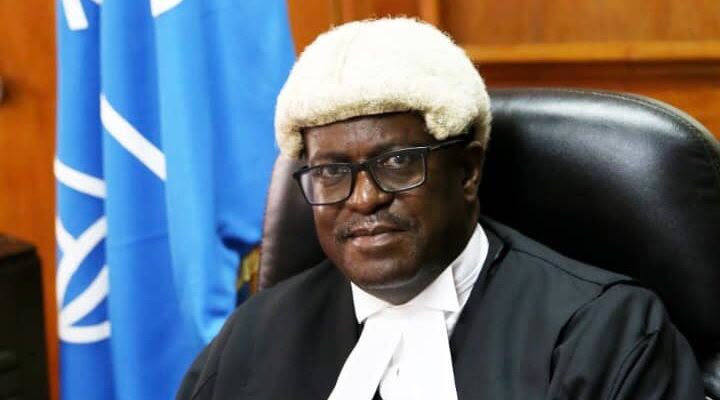
Zambia’s Chief Justice Mumba Malila has praised Uganda’s Judiciary for its innovative approaches to justice delivery, particularly the establishment and operation of specialized High Court divisions and the adoption of digital case management systems.
Justice Malila made the remarks during discussions with heads of Uganda’s specialized High Court divisions as part of his official familiarization visit to the country.
He is also the Chairperson of the Africa Chief Justices’ Alternative Dispute Resolution Forum (ACJADRF).
The visit is aimed at studying Uganda’s model of specialized courts and how they have been structured to enhance efficiency and access to justice.
According to the Judiciary, the engagement provided the Zambian delegation with a detailed understanding of the structure, operations, and legal framework governing Uganda’s specialized divisions, which have become a key pillar in the administration of justice.
Introducing members of his delegation, Justice Malila named Lady Justice Ann Kachenga Malata, who heads Zambia’s Economic and Financial Crimes Division, and High Court Registrar Sangwani Nyimbiki.
He said Zambia is keen to draw lessons from Uganda’s experience in establishing and operationalising specialized courts.
“These divisions, let me just get an idea as to how they are created. Where does the power lie, and related to that, how many divisions do we have?” he asked.
Justice Malila compared the legal frameworks in the two countries, noting that Zambia’s Constitution provides for only a limited number of court divisions, including the Family and Children’s Division.
He observed that other divisions such as the Commercial and Industrial Relations courts are not explicitly established under the Constitution.
He further explained that Zambia’s Constitution contains a provision empowering the Chief Justice to establish specialized courts through statutory instruments. Acting under this authority, he created the Financial Crimes Division, a move that was later challenged in court.
“Some lawyers and potential litigants raised concerns and challenged the decision in court. The matter eventually reached the Constitutional Court, which ruled that the Chief Justice indeed has the power to create such special courts,” he said.
Justice Malila noted that the ruling has since provided a stronger legal foundation for the expansion of specialized courts in Zambia. He added that he is now considering the establishment of a Lands and Environment Court.
Justice Prof. Andrew Khaukha, Executive Director of the Judicial Training Institute (JTI), said the engagement offered judicial officers from both countries an opportunity to exchange experiences and learn from each other.
He noted that Justice Malila’s interest reflects a broader continental push among judiciaries to strengthen innovation, efficiency, and specialization in justice delivery.
Heads of Uganda’s specialized High Court divisions made presentations on the mandates and operations of their respective courts.
These included Justice Michael Elubu of the Anti-Corruption Division, Justice David Matovu of the Criminal Division, Lady Justice Anne Mugenyi Bitature of the Commercial Division, Lady Justice Susan Okalany of the International Crimes Division, and Lady Justice Linda Tumusiime of the Industrial Court.
They outlined their jurisdictional mandates, case management approaches, operational procedures, and key achievements, giving the visiting delegation practical insights into Uganda’s specialized justice system.
The delegation also expressed particular interest in Uganda’s judicial reforms, especially the Electronic Court Case Management Information System (ECCMIS) and the plea bargaining programme.
Members of the delegation commended ECCMIS for improving efficiency through electronic filing, digital payments, online case tracking, and document management.
They also praised the plea bargaining system for helping to reduce case backlog and speed up the disposal of criminal cases.