
KAMPALA — Uganda is set to establish and operationalise its first national motorcycle helmet testing laboratory in a move aimed at improving helmet quality, strengthening enforcement and reducing road crash fatalities.
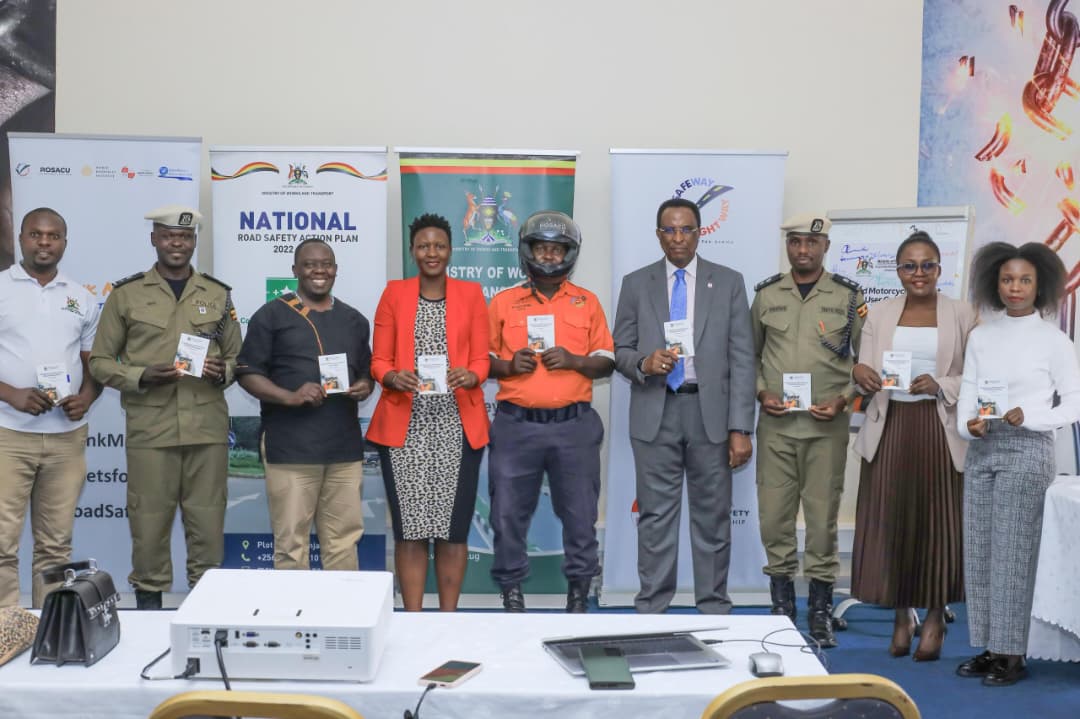
The development was announced during a stakeholder engagement meeting held at the Uganda National Bureau of Standards (UNBS) offices in Bweyogerere, bringing together officials from the Ministry of Works and Transport, Safe Way Right Way, the FIA Foundation, development partners and enforcement agencies.
Speaking at the meeting, Irene Namuyiga, Project Manager at Safe Way Right Way, said the proposed facility will play a critical role in ensuring that motorcycle helmets sold and used in Uganda meet internationally recognised safety standards.
The laboratory will be established and operated by the Uganda National Bureau of Standards (UNBS) and is expected to strengthen conformity assessment, market surveillance, consumer protection and enforcement of helmet standards.
According to stakeholders, the facility will test helmets against Uganda Standard US 774 as well as internationally recognised ECE 22.05 and ECE 22.06 safety requirements.
The laboratory is also expected to support enforcement efforts at both importation and manufacturing levels, reduce the circulation of counterfeit and substandard helmets, strengthen certification systems and contribute to broader road safety and public health objectives.
Namuyiga said the initiative is being implemented through a collaborative effort involving government institutions, development partners and road safety advocates.
Under the arrangement, Safe Way Right Way, the FIA Foundation and other partners will provide technical guidance, coordinate stakeholders, facilitate benchmarking visits, support public awareness campaigns and build technical capacity.
The Ministry of Finance is expected to support financing approvals, budget allocations and sustainability engagements for the laboratory's operations.
Meanwhile, enforcement agencies led by the Traffic Police will support the removal of counterfeit and non-compliant helmets from the market, enforce helmet regulations on roads and respond to alerts generated through verification systems.
The Ministry of Works and Transport will coordinate stakeholder engagement, support financing discussions with development partners and review existing motorcycle and tricycle regulations and standards.
Namuyiga also revealed plans for a helmet verification system that will enable consumers to authenticate products before purchase.
"The helmet verification system will allow consumers to verify authenticity through QR codes or USSD codes, confirm helmet verification and report suspected counterfeit products," she said.
She added that the system will automatically generate alerts to UNBS market surveillance teams whenever fake products are scanned, providing location-based intelligence to support enforcement actions.
Stakeholders described the helmet testing laboratory as a strategic intervention in Uganda's efforts to improve road safety and reduce the number of deaths and serious injuries associated with motorcycle crashes.
Motorcycles, commonly known as boda bodas, remain one of the country's most widely used means of transport and account for a significant proportion of road traffic injuries and fatalities.
Officials believe that strengthening helmet quality regulation, improving consumer protection and enhancing enforcement mechanisms will contribute significantly to safer roads and better public health outcomes.
The success of the initiative, stakeholders noted, will depend on sustained collaboration between government agencies, development partners, enforcement bodies, the private sector and the public.
