
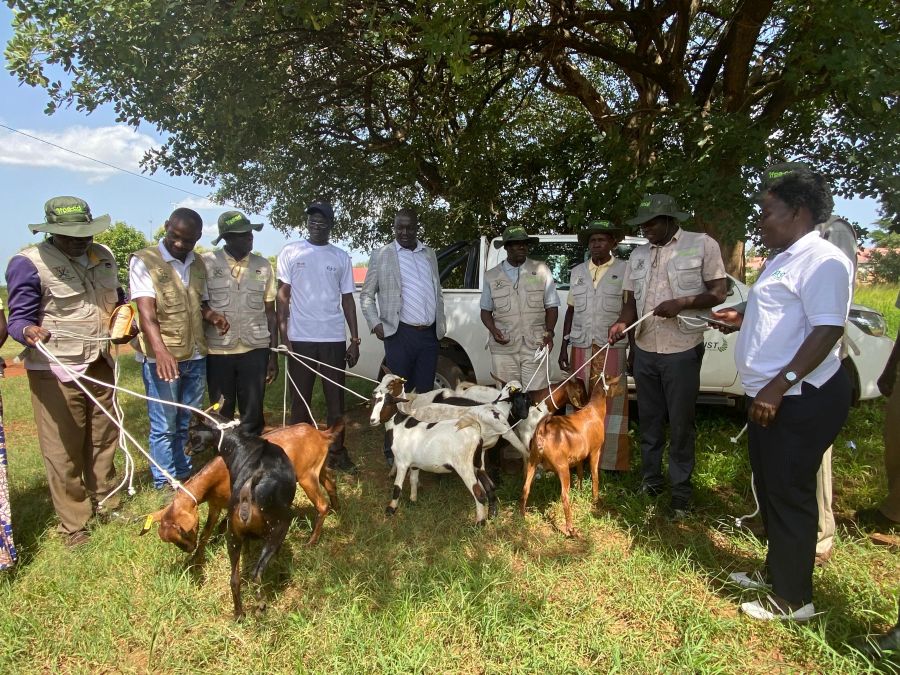
Uganda’s efforts to promote climate-smart agriculture and restore degraded landscapes are gaining momentum through a government-backed agroforestry initiative aimed at improving livelihoods in refugee-hosting and surrounding communities.
The Government of Uganda, through the Ministry of Water and Environment, and with financing from the World Bank, is implementing the Investing in Forests and Protected Areas for Climate-Smart Development (IFPA-CD) project. The programme seeks to strengthen sustainable forest management while increasing the benefits communities derive from forest resources within targeted landscapes.
A key component of the project focuses on refugee-hosting areas and is funded under the Refugee Sub-Window of the International Development Association’s 18th replenishment. It promotes tree planting and agroforestry practices on private and customary land, with the aim of improving landscape resilience and supporting livelihoods.
Under this framework, the Intensive Mixed-Use Agroforestry Systems on Household Plots (MAS) project was launched in early 2025 and is expected to run until June 2026. The two-year initiative is being implemented across 19 districts in northern and western Uganda, targeting communities hosting refugees and those within a five-kilometre radius of refugee settlements.
The Environmental Conservation Trust of Uganda (ECOTRUST) is leading implementation in five districts, while Catholic Relief Services (CRS) and the International Centre for Research in Agroforestry (ICRAF) oversee other areas. Although the MAS project is time-bound, ECOTRUST says it will continue supporting participating farmers through ongoing programmes such as the Trees Grow Back initiative to ensure sustainability beyond the project cycle.
The programme promotes integration of trees, crops and livestock to improve soil health, restore degraded ecosystems, increase food security and enhance household incomes.
To strengthen sustainability, implementing partners are supporting selected “model farmers” in parishes including Palabek Nyimur, Palabek Kal, Aceba and Agora, who are expected to demonstrate best practices and encourage wider community adoption.
According to Lamwaka Grace, the model farmers are central to driving behavioural change and improving household livelihoods.
“These farmers are our pioneers. We are working with them to improve their livelihoods while encouraging others in the community to adopt sustainable practices. The goal is to provide alternative income sources while conserving the environment,” she said.
As part of the initiative, selected farmers have received ruminant livestock, including goats, as both an incentive and a means of improving household income alongside tree-growing activities.
One of the beneficiaries, Alice Achan, said the integration of livestock into her agroforestry farm is already transforming her household’s economic outlook.
“When these animals grow and multiply, I will be able to sell them to pay school fees for my children and support my family. I will also reinvest in farming,” she said.
A key feature of the IFPA-CD project is its emphasis on gender equality and social inclusion, with particular focus on ensuring women actively benefit from agricultural and environmental programmes.
Odong Cosmos said empowering women in such initiatives is both equitable and economically beneficial.
“Women have historically carried most of the agricultural burden. Their active participation in such projects ensures they directly benefit and improve household livelihoods,” he noted.
Local leaders have also expressed confidence that the programme will have lasting impact beyond its implementation period, citing continued institutional support and community ownership.
Justine Peace Odur said collaboration with ECOTRUST has been instrumental in strengthening environmental conservation and livelihood support in the region.
“Even after this programme ends, we are confident that ECOTRUST will continue to support farmers and environmental protection efforts in this area,” she said.
The project is part of broader national efforts to promote climate resilience, restore degraded ecosystems and strengthen sustainable livelihoods through integrated land-use systems.
