
For many years in Uganda, the relationship between economic survival and environmental conservation has often been viewed as a trade-off. Smallholder households seeking to meet basic needs such as food and school fees have frequently relied on clearing land for agriculture or harvesting trees for fuel.
However, this narrative is gradually shifting as new conservation finance models demonstrate that protecting the environment can also generate long-term income for rural communities.
This shift is being highlighted as the world marks World Environment Day under the theme “Inspired by Nature: For Climate. For Our Future,” which places global attention on climate action, sustainability, and ecosystem protection. The observance comes amid growing evidence that communities can achieve stronger economic resilience by preserving trees rather than cutting them down.
Uganda’s biodiversity-rich regions—including the Mount Elgon landscape in the East and the Queen Elizabeth and Murchison-Semliki landscapes in the Albertine Rift—are increasingly experiencing climate-related pressures. Land degradation in these ecosystems has heightened vulnerability to floods, landslides, erratic rainfall patterns, and prolonged dry spells, all of which continue to threaten livelihoods, food security, and ecological stability.
In response, the Environmental Conservation Trust of Uganda (ECOTRUST) has, over the past 27 years, implemented a performance-based conservation finance approach aimed at turning land restoration into a viable, community-driven enterprise.
At the centre of this model is the Trees for Global Benefits (TGB) initiative, which operates under the international Plan Vivo standard. The programme incentivises smallholder farmers to adopt agroforestry practices by integrating indigenous tree species into farming systems, while earning long-term environmental and financial returns.
One of the programme’s early participants, farmer Betty Masamba Kalema, joined the initiative in 2003 after being introduced by Wilson Turyahikayo. She integrated tree seedlings into her coffee plantation, combining food production with forestry.
Over time, the trees have provided both ecological and economic benefits. Carbon payments have enabled her to meet household needs, pay school fees, and support vulnerable children in her community.
Beyond income generation, Kalema says the trees have improved her household’s resilience. The canopy provides shade during prolonged dry seasons, while sustainably harvested firewood has supported domestic energy needs and generated additional income through sales to neighbours. Timber from mature trees has also contributed to housing construction, reducing reliance on purchased materials.
ECOTRUST says the TGB model is designed to scale such outcomes by transforming smallholder farmers from climate-affected communities into environmental entrepreneurs.
According to the organisation, the agroforestry approach delivers dual benefits: environmentally, tree cover stabilises soil, reduces erosion, and improves moisture retention; economically, farmers benefit from participation in voluntary carbon markets, creating a steady income stream linked to conservation outcomes.
Looking ahead, ECOTRUST has outlined a five-year strategic plan targeting improved livelihoods and climate resilience for an estimated 16.5 million people across 33 districts. The plan also aims to support the restoration and improved management of at least 60,000 hectares of degraded land.
The restoration work will be distributed across four ecological zones: the Northern Region, the Lake Victoria Basin, South Kigezi, and Eastern Uganda, with 15,000 hectares allocated to each.
Active restoration efforts are already underway in parts of the Mpologoma landscape in eastern Uganda.
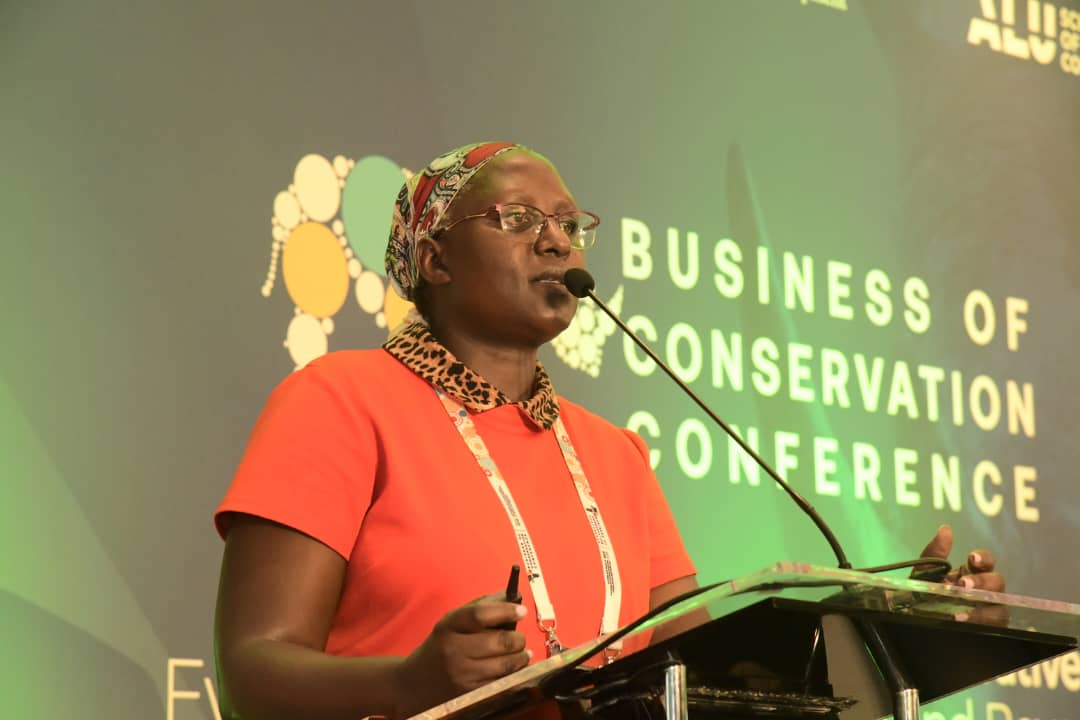
“Our strategy for the next five years is not just about expanding acreage, but scaling proven human-centred impact,” said Pauline Nantongo, Executive Director of ECOTRUST.
She added that expanding the model across different regions demonstrates that local communities are central actors in climate solutions rather than passive victims.
As climate pressures intensify, conservation practitioners argue that the most sustainable environmental strategy is one that aligns ecological protection with direct economic incentives for communities living closest to natural ecosystems.
