

A new international study has revealed that sexual harassment remains a persistent and widespread challenge in media workplaces across the world, with most victims choosing not to report incidents due to fear, mistrust of reporting systems, and concerns over retaliation.
The report, released by the World Association of News Publishers (WAN-IFRA) Women in News (WIN) in partnership with City St George's, University of London and BBC Media Action, examined working conditions in 21 countries across Sub-Saharan Africa, the Arab region, Southeast Asia, and Ukraine.
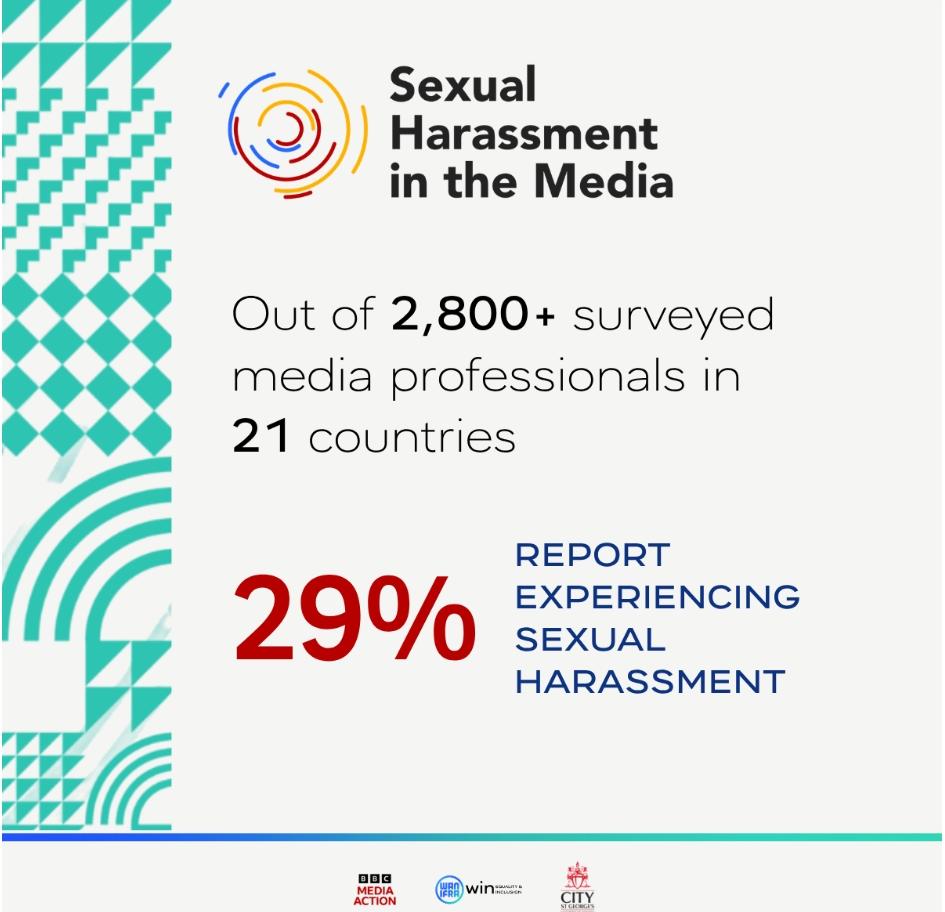
Researchers collected responses from more than 2,800 media workers, including journalists, administrators, producers, marketing staff, human resources personnel, and senior managers, making it one of the most extensive studies on sexual harassment in news organisations to date.
According to the findings, nearly one in every three media workers reported experiencing some form of sexual harassment at work. However, 69 percent of victims said they never reported the incidents to their employers.
The report indicates that fear of job loss, intimidation, weak institutional reporting systems, and lack of trust in management responses are among the leading reasons victims remain silent.
It further notes that many survivors feel unsafe reporting harassment due to fears of punishment, humiliation, or lost career opportunities.
Women were found to be disproportionately affected. Globally, women were 2.4 times more likely to experience verbal sexual harassment and nearly twice as likely to face online sexual harassment compared to men.
While cases of physical assault and rape were reported at lower levels, the study warned that such incidents remain a serious concern in newsroom environments.
About 25 percent of respondents reported experiencing physical harassment, while five percent of women and four percent of men identified themselves as survivors of rape.
The report also highlighted significant regional disparities. African countries recorded the highest prevalence of sexual harassment at 33 percent, followed by the Arab region at 31 percent.
Southeast Asia recorded 19 percent, while Ukraine, included in the study for the first time, registered the lowest rate at 12 percent.
Experts behind the research warned that harassment has consequences beyond individual suffering, affecting newsroom performance, morale, and journalistic credibility.
Dr. Lindsey Blumell said sexual harassment causes lasting emotional and professional harm for victims. “Experiencing harassment reduces job satisfaction, increases the likelihood of leaving the media industry, and contributes to serious mental and physical consequences for survivors,” she said.
The study further found that even when incidents are reported, organisations take action in only about 65 percent of cases, and responses are often described as informal or inadequate.
Some respondents reported pressure to withdraw complaints or resign. “A female colleague reported harassment by her direct manager. The complaint was later withdrawn and she was persuaded to resign,” one respondent stated in the report.
Media experts say the findings point to deeper structural issues within newsroom cultures, including power imbalances, weak accountability systems, and insufficient employee protection mechanisms.
Valeria Perasso noted that unsafe newsroom environments undermine journalism itself. “Unsafe and unequal newsroom cultures limit who can participate, lead, and shape editorial decisions. In the end, journalism suffers,” she said.
The report recommends stronger workplace policies, improved reporting systems, regular staff sensitisation, and enhanced support for survivors as key steps toward safer and more inclusive media environments.
Susan Makore said media organisations must go beyond policy creation and actively change workplace culture.
“When the majority of cases continue going unreported, it reflects a deeper failure of trust and accountability. Media houses must invest in awareness, training, and stronger reporting systems to ensure harassment is not normalised,” she said.
Researchers urged media organisations, governments, and press freedom advocates to treat the findings as a wake-up call to strengthen protections and improve working conditions for media workers globally.
