
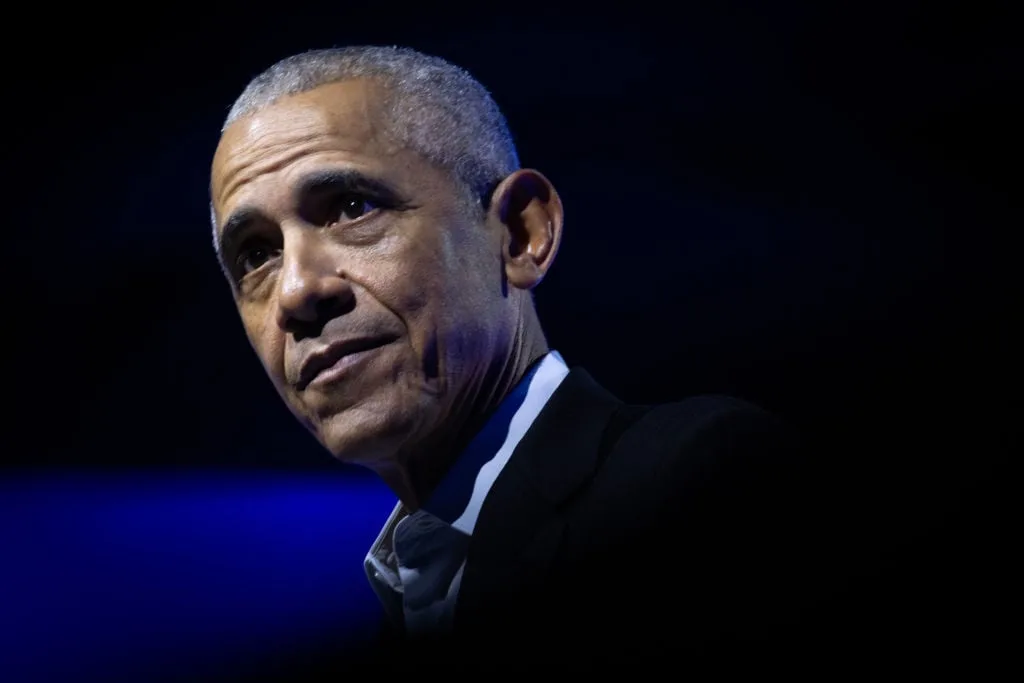
Former US President Barack Obama has defended the 2015 Iran nuclear agreement, saying it achieved its core objective of limiting Tehran’s nuclear programme without triggering a wider war in the Middle East.
The agreement, formally known as the Joint Comprehensive Plan of Action (JCPOA), was signed in July 2015 between Iran and six world powers — the United States, United Kingdom, France, Russia, China and Germany — during the Obama administration.
It placed strict limits on Iran’s uranium enrichment, reduced its nuclear stockpile, and introduced intensive monitoring by the International Atomic Energy Agency (IAEA) in exchange for relief from international sanctions.
In remarks to CBS, Obama said the deal succeeded in rolling back Iran’s nuclear capacity significantly while avoiding military confrontation.
“We got 97 percent of their enriched uranium out,” he said, adding that the agreement was implemented “without firing a missile” and without escalating into regional conflict.
“We didn’t have to kill a whole bunch of people or shut down the Strait of Hormuz,” Obama added, referring to concerns at the time that tensions could have disrupted global energy routes or escalated into direct military confrontation.
The deal, however, began to unravel in 2018 when then US President Donald Trump withdrew Washington from the agreement, arguing that it failed to address Iran’s ballistic missile programme and regional influence.
The US exit was followed by the reimposition of sweeping sanctions on Tehran, which in turn prompted Iran to gradually scale back its compliance with the deal’s restrictions.
Since then, efforts to revive the agreement have stalled, while tensions between Iran, the United States, and Israel have continued to escalate.
The region has seen repeated exchanges of strikes and counterstrikes involving Iranian forces or Iran-backed groups and Israeli or US interests, particularly in Syria and other flashpoints across the Middle East.
Diplomatic tensions have also been reflected in wider geopolitical forums. Iran has in recent months called on BRICS nations to condemn what it describes as violations of international law by the United States and Israel, amid continuing regional instability and disputes over energy security.
Analysts say the collapse of the JCPOA and its failure to be restored has contributed to a more volatile regional environment, with fewer diplomatic guardrails in place compared to the period immediately following the 2015 agreement.
While Washington and Tehran have both signalled openness to negotiations at various points, deep mistrust and competing regional alliances continue to block a full return to the framework once seen as a major breakthrough in nuclear diplomacy.
Additional report by agencies
