
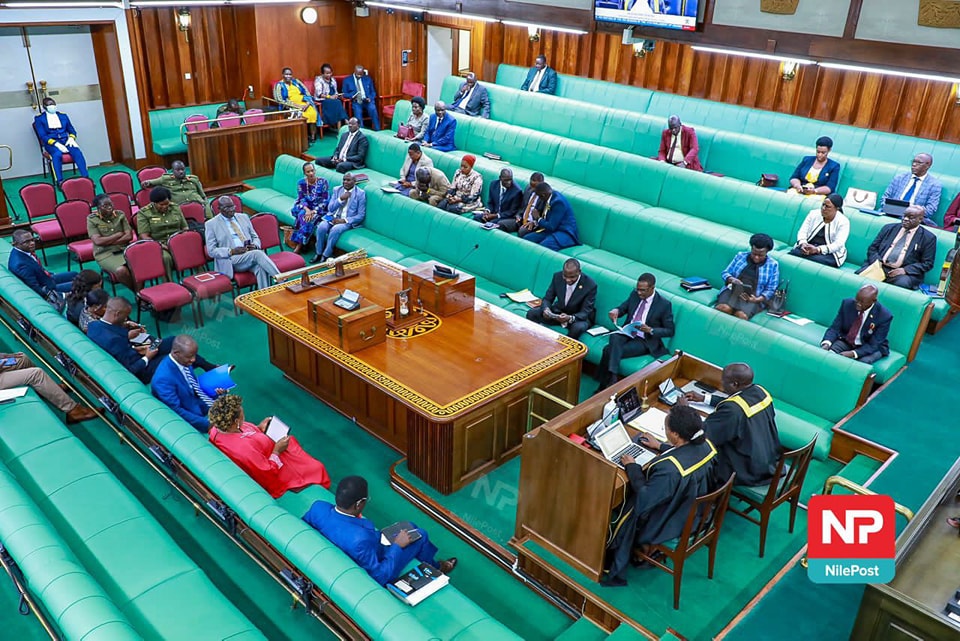
As the 11th Parliament enters its twilight, a widening divide has emerged between the record number of laws passed and the perceived erosion of the House's institutional independence.
While its leadership celebrates a high-speed “assembly line” of legislation, critics and policy experts warn that Parliament has traded its oversight mandate for a facilitative role in advancing Executive interests.
The closing phase of the 11th Parliament is marked by growing confrontation with the public over both legislation and the conduct of its members. By March 2024, the House had passed at least 143 bills, a figure presented as evidence of efficiency.
However, the quality and public reception of these laws suggest a more complicated reality.
Legislation such as the UPDF Amendment—which reinstated the trial of civilians in military courts—the Computer Misuse Act, the Anti-Homosexuality Act, and the rationalization of the Uganda Coffee Development Authority (UCDA) have all triggered widespread public dissent.
MP Ibrahim Ssemujju Nganda argues that this legislative output masks a surrender of constitutional authority. “This Parliament has passed the highest number of bills in terms of quantity,” Ssemujju said.
“The two Speakers believe every piece of legislation must pass, but the quality is poor. We surrendered our liberty to military actors. We will be judged largely by the UPDF Amendment, which brought back military courts for civilians, and the coffee rationalisation, which effectively brought the military into parliamentary processes.”
Internal structural weaknesses have further undermined the House’s ability to enforce accountability. Reports indicate that key committees, such as COSASE, are operating at less than 50 percent efficiency, with multiple reports stalled due to the absence of treasury memorandums from government.
MP Eddie Kwizera noted that committee leadership is often “imposed” on members, leading to demotivation and weakened scrutiny of public expenditure, including controversial loans and the acquisition of shares in companies such as Roko.
For five years, Parliament has also reportedly awaited a comprehensive tax policy that has yet to materialize.
Timothy Chemonges, Executive Director of the Centre for Policy Analysis, describes the current Parliament as an “extension of the Executive.” He argues that legislators have failed in their primary constitutional duty.
“The legislators who swore to protect the Constitution have failed at their first duty, trading oversight for facilitation,” Chemonges said. “Little more can be expected of a House that has surrendered its authority.”
The 11th Parliament has also faced sustained backlash over allegations of internal corruption, including claims of financial “bonanzas” and unaccounted-for public funds benefiting individuals within the institution.
Despite the Speaker’s earlier commendation of the Second Session’s output—where 38 bills were passed compared to 23 in the first—critics argue that the Parliament’s legacy will not be defined by legislative volume, but by the constitutional ground it ceded to the Executive.
