
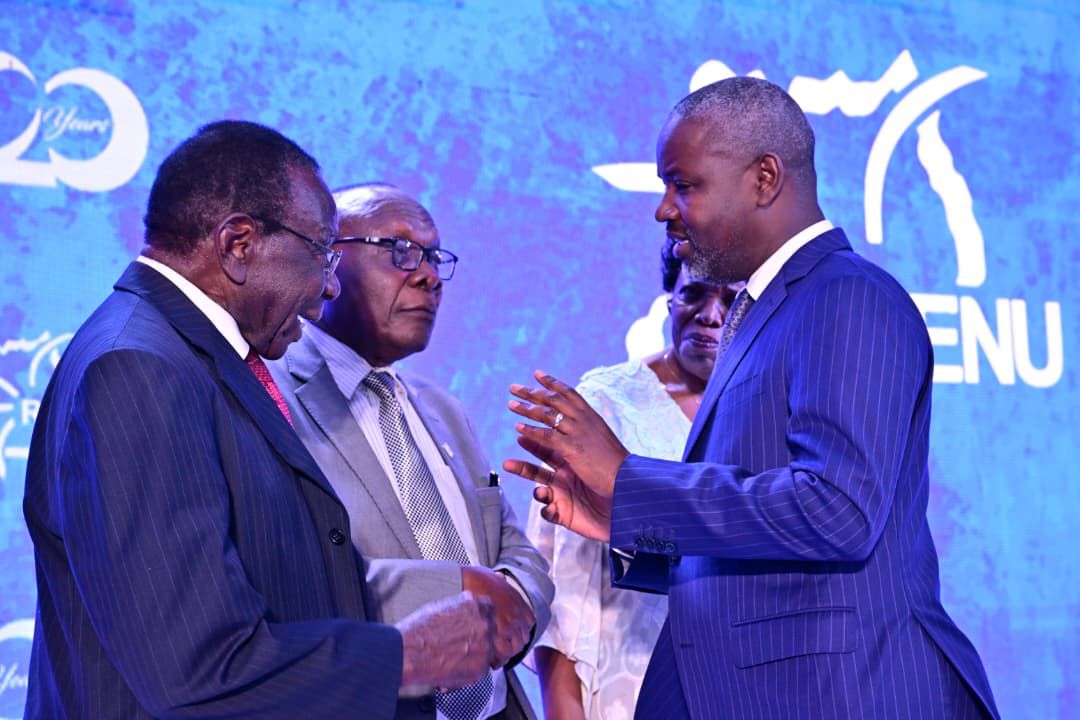
Deputy Speaker Thomas Tayebwa has called for a decisive shift in Uganda’s digital agenda, urging stakeholders to move beyond building connectivity infrastructure and focus on translating it into national competitiveness and innovation.
Speaking at celebrations to mark 20 years of the Research and Education Network for Uganda (RENU), Tayebwa described the milestone as both a moment of reflection and a launchpad for a more ambitious phase of digital transformation.
He credited RENU with fundamentally changing how Uganda’s universities and research institutions operate, noting that two decades ago, reliable and affordable internet access remained a major barrier, leaving institutions largely isolated.
“Today, that reality has changed fundamentally,” Tayebwa said, pointing to expanded connectivity that has enabled collaboration, e-learning, and integration into the global knowledge ecosystem.
Established in 2006, RENU has grown into a central pillar supporting Uganda’s digital economy, aligning with national development frameworks such as Vision 2040, which identifies ICT as a key driver of socio-economic transformation.
Tayebwa emphasized that in an increasingly knowledge-driven global economy, digital infrastructure is no longer optional.
Countries investing in connectivity, research, and innovation, he said, are positioning themselves to remain competitive.
He underscored the human dimension of digital access, highlighting its impact on students, researchers, and professionals across sectors.
“This is about a student in a rural district accessing global academic resources for the first time. It is about a researcher collaborating across continents, a lecturer extending knowledge beyond the classroom, and a doctor accessing critical data to improve patient outcomes,” he said.
The Deputy Speaker pointed to the COVID-19 pandemic as a defining moment that exposed the critical role of digital readiness.
Institutions connected through RENU were able to sustain learning and research activities during lockdowns, demonstrating the resilience enabled by strong digital infrastructure.
“That experience taught us a critical lesson—digital infrastructure is essential for resilience,” he said.
Tayebwa also commended efforts to expand connectivity to underserved and rural institutions, stressing that inclusive access remains essential to building a knowledge-based society.
Looking ahead, he outlined priorities for the next phase, including extending connectivity across all levels of education, investing in emerging technologies such as artificial intelligence, strengthening research output, and ensuring sustainability of digital systems.
“The world is moving fast. Technologies like AI and big data are reshaping how knowledge is created and applied. Uganda must not only adopt them—we must help shape them,” he said.
He welcomed RENU’s ongoing initiatives to develop advanced digital services and AI infrastructure, describing them as critical to positioning Uganda within the global innovation landscape.
Tayebwa reaffirmed Parliament’s commitment to supporting policies and investments that strengthen digital infrastructure and innovation ecosystems, while emphasizing the importance of sustained partnerships among government, academia, the private sector, and development partners.
“The success we celebrate today is the result of collaboration,” he said. “This is the model we must continue to build on.”
He concluded by launching the next phase of RENU’s growth, urging stakeholders to treat the anniversary not as a culmination, but as a starting point for deeper impact.
“The foundation is strong. Now is the time to ensure every institution is connected, every learner is empowered, and every researcher has the tools to innovate,” Tayebwa said.
