
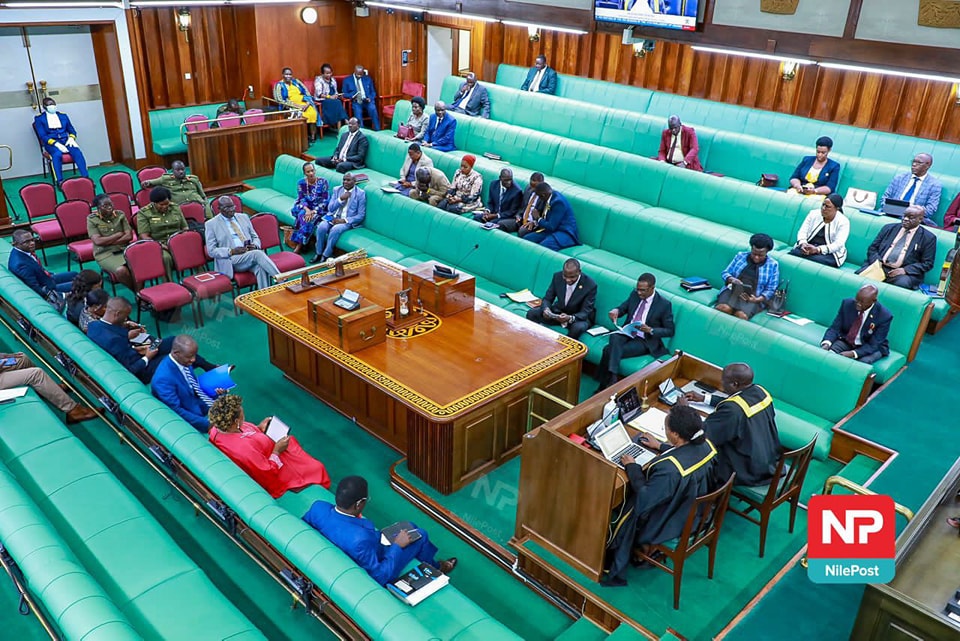
Parliamentary scrutiny of the Protection of Sovereignty Bill intensified on Thursday as MPs on the joint committee engaged the Ministry of Internal Affairs and the Attorney General over a series of proposed amendments that seek to regulate foreign influence, political activity, and funding in Uganda.
The meeting, chaired by Baka Mugabi, was convened to consider revised proposals presented by government officials, including Minister of State for Internal Affairs David Muhoozi, who appeared on behalf of the ministry in the absence of the substantive minister, Kahinda Otafiire, the reported sponsor of the bill.
MP Asuman Basalirwa questioned the absence of Otafiire from the proceedings, asking why the minister who authored the bill was not present to defend it, and raising concern over the limited participation of the state minister.
Basalirwa also challenged the procedural handling of the amendments, arguing that significant revisions should trigger renewed consultations with stakeholders.
“You have stated that the sponsor has amendments to consider but wouldn’t it be procedurally right after the amendments that we reopen the consultation of the stakeholders to submit again on the revision,” Basalirwa said, adding that he sought guidance from the chair on the matter.
Chairperson Baka Mugabi noted that the co-chair was away attending a presidential anti-tick vaccine launch, and proposed that the committee first determine whether further stakeholder consultations were necessary before proceeding.
Presenting the government’s position, David Muhoozi said the amendments were aimed at safeguarding Uganda’s autonomy while responding to concerns raised during earlier deliberations.
He said most submissions focused on clarifying the scope of the bill, particularly the definition of an “agent of a foreigner” and the intent of proposed offences such as economic sabotage.
Muhoozi clarified that the bill was not intended to discourage foreign funding but to regulate its use where it influences prohibited political or economic activities.
Other officials elaborated on proposed changes, including narrowing definitions, removing references to non-resident Ugandans in certain clauses, and limiting ministerial discretion in determining who qualifies as a foreigner.
They also outlined provisions related to registration of agents, declaration of funding sources, and approval timelines for certificates of operation, including a proposed 14-day decision window.
However, MPs raised concerns over the breadth of definitions and potential for abuse. One member argued that terms such as “foreign interest,” “economic sabotage,” and “political activity” remained vague and open to interpretation.
Questions were also raised about whether legitimate political participation, policy disagreement, or civic mobilisation could be misclassified under the proposed framework.
MP Fox Odoi questioned whether parts of the bill overlapped with existing anti-money laundering laws, suggesting that some provisions might already be addressed under current legislation.
The Attorney General maintained that the amendments were not redundant, arguing that the bill addresses the use of legitimate funds for prohibited activities rather than illicit financial flows alone.
MP Wilfred Niwagaba raised constitutional concerns, questioning whether the bill infringes on fundamental freedoms and urging reconsideration or withdrawal of the proposal in its current form.
Soroti City Woman MP Juliet Adeke warned that the legislation, as structured, risked categorising ordinary Ugandans engaging in civic or political activity as agents of foreign interests.
The committee is expected to continue reviewing the amendments before determining whether further consultations with stakeholders will be required prior to the bill’s progression.
