
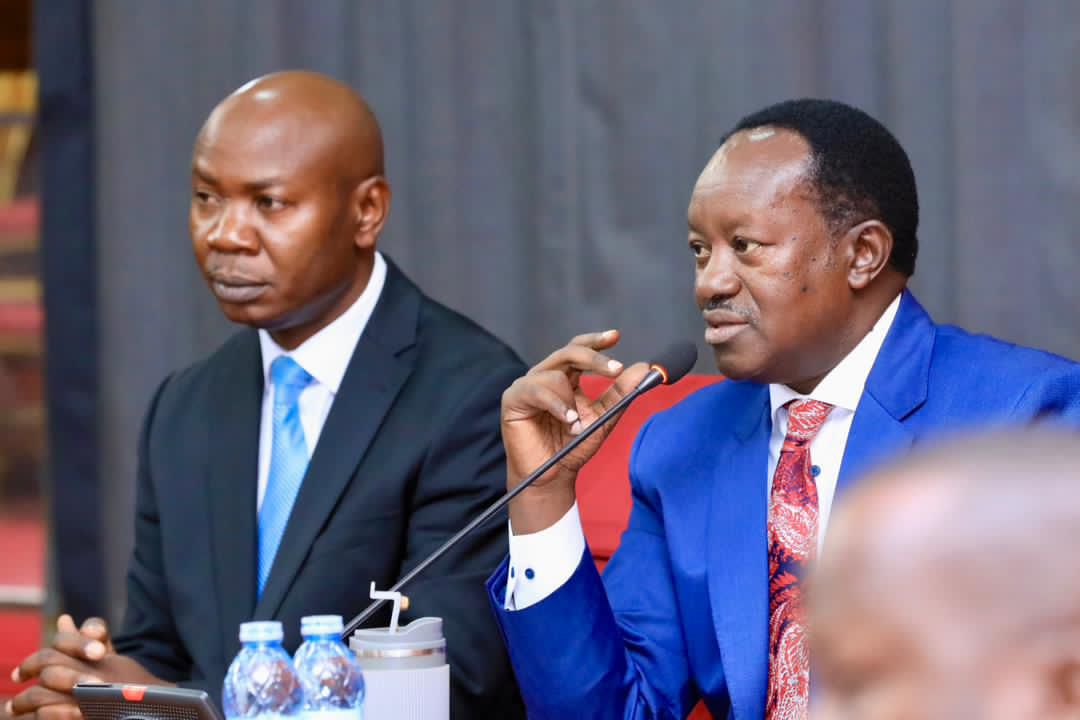
Tempers flared during a virtual sitting of Parliament’s Joint Committee on Defence and Internal Affairs, and Legal and Parliamentary Affairs, as Ugandans in the Diaspora pushed back against provisions in the proposed Protection of Sovereignty Bill, 2026.
Appearing via Zoom, members of the Ugandan community abroad warned lawmakers that the Bill, in its current form, risks profiling citizens living outside the country as “foreign agents” and creating a divide between Ugandans at home and those abroad.
The session, which drew submissions from various Diaspora representatives, turned particularly tense as contributors challenged the logic behind classifying non-resident Ugandans as external actors.
Timothy Kangwagye, a prominent voice in the Diaspora community, argued that such a classification goes beyond semantics and reflects a deeper policy stance that could have lasting consequences on national unity and economic ties.
He also addressed concerns raised by lawmakers about the potential misuse of remittances sent home by Ugandans abroad.
“We send $2.5 billion home for our families, not for politics,” Kangwagye said. “Is there a likelihood that funds could be sent for the wrong reasons under the guise of family support? It is possible. But today, technology exists to detect such activities. Do not stand between us and our families; if you are worried about crime, strengthen the laws, don’t exclude us.”
The debate escalated further when Engineer Brian Kwesiga, former President of the Uganda North America Association (UNAA), cautioned MPs against assuming that vulnerability to foreign influence is limited to citizens living outside Uganda.
Kwesiga argued that internal actors could just as easily be influenced or used in ways that affect national interests.
“Why do you think it has to be residents abroad? You can also be used against Uganda, just like a boda-boda man,” he said, adding that even within Parliament, individuals could be targeted through financial or political influence.
He warned that the Bill risks creating what he described as a “trust deficit” between the state and its Diaspora, discouraging investment, engagement, and participation in national development.
The economic contribution of Ugandans abroad was also highlighted during the session. Gloria Nalule, Executive Director of the Uganda Global Forum, told the committee that 77 percent of Diaspora respondents want the Bill amended.
She warned that classifying Ugandans abroad as foreigners could create a “two-tier citizenship” system and undermine the vital role remittances play in supporting households across the country.
The Joint Parliamentary Committee continues to engage stakeholders on the proposed legislation as debate intensifies over how to balance national security concerns with the rights and economic contribution of Ugandans living abroad.
For many in the Diaspora, however, the message remains firm: safeguarding sovereignty should not come at the expense of citizenship.
