
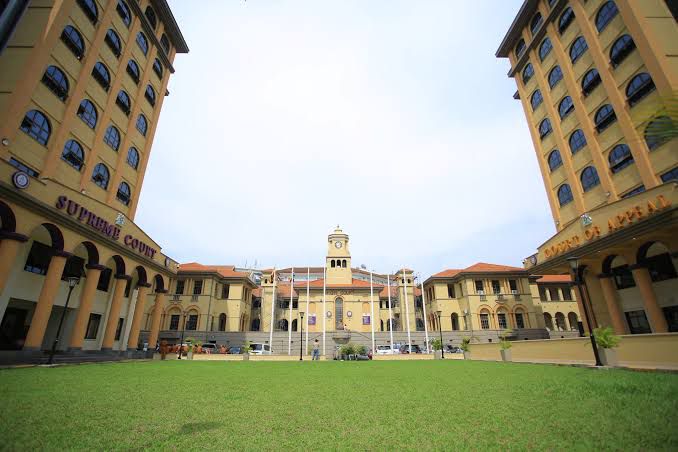
The Constitutional Court of Uganda will tomorrow, April 15, 2026, sit in Kampala for a one-day session during which 12 constitutional petitions are scheduled for hearing, with several matters raising far-reaching constitutional and governance questions.
The session will be presided over by a five-judge panel comprising Justice Cheborion Barishaki, Justice Oscar John Kihika, Lady Justice Margaret Tibulya, Lady Justice Cornelia Kakooza Sabiiti, and Justice Musa Ssekaana.
According to the cause list issued by Deputy Registrar Jane Mugala, the Court is expected to hear petitions touching on succession law, electoral regulation, criminal justice, digital speech, reproductive rights, and judicial administration.
Among the key matters is Lufunya Derrick & Another vs Attorney General & Another, where the petitioners challenge a directive issued by the Chief Justice on September 22, 2023, regarding the renewal of Letters of Administration in estates previously governed under the 1912 Buganda Succession Law.
The Court will also hear Twinobusingye Saverino vs Robert Kabushenga & Attorney General, in which the petitioner alleges that statements published on X (formerly Twitter) were false, offensive, and intended to undermine the coffee value addition programme, allegedly violating constitutional provisions on equality and protection of the law.
In Plinth Consultancy Services & Another vs Attorney General, the petitioners contest an administrative decision attributed to then Principal Judge Dr. Flavian Zeija, challenging the transfer of a trial judge from the Commercial Division and the reassignment of the matter to another judicial officer.
A constitutional challenge in Kalali Steven vs Attorney General questions the legality of provisions under the Penal Code Act on indecent assault, arguing that they are discriminatory against men.
The petition also raises issues concerning the role of magistrates in handling complaints brought by private prosecutors under the Magistrates Courts Act.
The Court will further consider a petition by FIDA Uganda challenging the Health Training Institutions Rules and Regulations (2021), particularly provisions requiring mandatory pregnancy testing and disclosure by students.
The petitioners argue the rules violate constitutional guarantees on dignity, privacy, and protection from cruel, inhuman, and degrading treatment.
In Ronald Katushabe alias Justice Hunter vs Attorney General & Electoral Commission, the petitioner challenges provisions of the Presidential Elections Act and the 2025 Presidential Elections Nomination Guidelines, arguing that nomination fees and signature thresholds unfairly restrict political participation.
The Court will also hear Gimbo Hajira & 2 Others vs Attorney General, where the petitioners challenge sections of the Penal Code Act criminalising abortion, arguing that the provisions fail to account for circumstances such as rape, incest, mental health considerations, and the dignity and autonomy of women.
Other petitions on the cause list are expected to be addressed within the same session, underscoring the Court’s increasingly heavy constitutional docket.
The one-day sitting highlights the continued centrality of the Constitutional Court in arbitrating high-stakes disputes on governance, rights, and institutional accountability in Uganda.
