
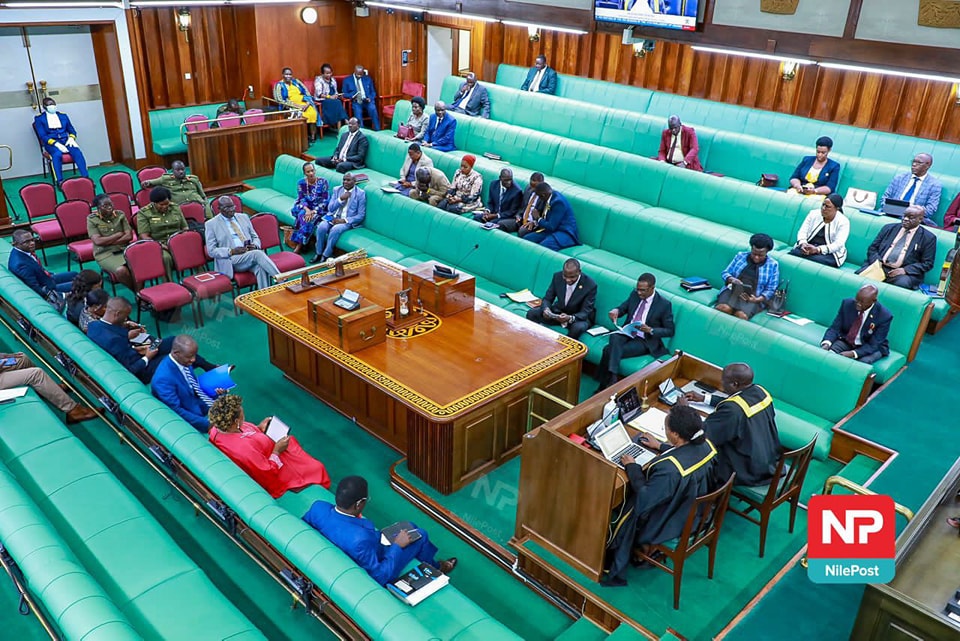
The Uganda Law Society (ULS) has warned against a reported proposal to extend the parliamentary term from five to seven years, cautioning that any such constitutional amendment must pass a strict public-interest test.
The concerns were raised during an appearance on The Big Talk, a political programme on Next Radio, where ULS Vice President Anthony Asiimwe and Brandon Kintu shared their views.
Asiimwe said the legal body would oppose the move if it fails to meet constitutional standards.
“And that test is this: if you are proposing an amendment to the Constitution, is it for the benefit of the people?” he said.
“If this rumour of a seven-year term in Parliament has any truth to it, as the Radical New Bar, we will definitely oppose it until it passes the litmus test.”
He stressed that the Society is mandated by law to defend the interests of citizens.
“Whereas some people bring these proposals to benefit specific individuals, we have a mandate under Section 3 of the Uganda Law Society Act to protect the citizens and members of the public,” Asiimwe said.
According to Asiimwe, while the Constitution allows amendments, any changes that undermine the will of the people will face legal resistance.
“The Constitution is very clear as far as amendments are concerned. It is okay to have amendments, but any amendment that affects the Constitution to the extent of undermining the will of the people will be challenged,” he added.
Kintu acknowledged that discussions about extending the parliamentary term have surfaced before during reform consultations, though they were never implemented.
“Some conversations start as rumours. In one of the preparations where the Minister of Constitutional Affairs was working on reforms, such a statement — a term of seven years — came up,” he said.
He noted that while such a proposal might appeal to legislators individually, it raises broader democratic concerns.
“A colleague who is just entering Parliament would be excited… every MP would be excited about a seven-year term. From an individual perspective, it may seem like a good proposal because it guarantees a job for seven years. However, when viewed from the standpoint of democracy and constitutionalism, it poses a significant challenge,” Kintu said.
He warned that passing such an amendment could trigger political tension and public backlash.
“Politically, if this proposal is passed, it will cause a political crisis in the eyes of the people. We shall have very heated debates, and legislation will be affected,” he said.
Kintu also emphasised that Parliament must avoid legislating in its own interest.
“Parliament, being a legal institution mandated to enact laws, is aware that it cannot do something that benefits itself. Therefore, even if these extension proposals are brought forward, they cannot benefit the 12th Parliament,” he added.
The remarks have added momentum to a growing public debate, with legal experts urging that any constitutional reforms must uphold democratic principles and maintain public trust.
