
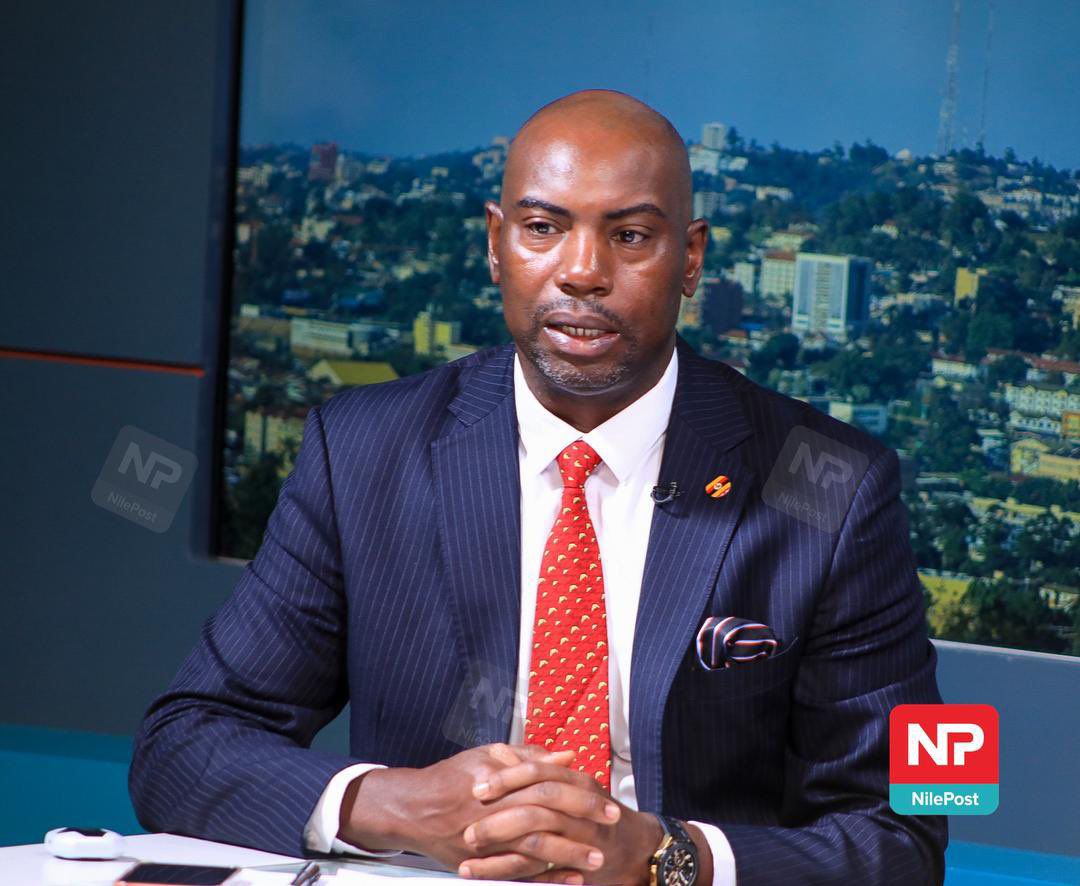
Sheema Municipality Member of Parliament and Budget Committee Member Dickson Kateshumbwa has outlined the government’s commitment to fulfilling its post-election promises, even as Uganda prepares to implement what is expected to be its largest national budget to date.
Speaking during NBS Morning Breeze on Thursday, Kateshumbwa noted that the government, under the ruling National Resistance Movement (NRM), has already agreed on key priority areas that will guide expenditure in the upcoming financial year.
However, Kateshumbwa acknowledged that despite the scale of the proposed budget, competing needs across sectors remain substantial.
“We’ve just come out of elections and there are promises NRM made to Ugandans. We’ve agreed on priority areas for the budget,” he said, adding that while this will be the biggest budget in Uganda’s history, “the needs are much more,” with numerous priorities still unfunded.
Kateshumbwa pointed to infrastructure spending as one of the major drivers of economic transformation, revealing that approximately Shs 6.9 trillion has been earmarked for the sector. He emphasized the importance of considering the broader economic impact of such investments, particularly along the value chain.
“When the government invests Shs 6.9 trillion in infrastructure, you have to look at the whole value chain. For example, a foreigner working on a project won’t import tomatoes for cooking—those will be sourced locally, benefiting Ugandan farmers and businesses,” he said.
In addition to infrastructure, Kateshumbwa highlighted direct grassroots funding as a key feature of the budget. He revealed that Shs 2.4 trillion has been allocated to go directly to citizens at the parish level, a move aimed at stimulating local economies and enhancing household incomes.
Kateshumbwa’s remarks come in the wake of broader government disclosures about the Financial Year 2026/27 budget framework. In Wednesday’s plenary session, the Minister of State for Finance, Planning and Economic Development, Henry Musasizi, announced that the official Budget Speech will be delivered on June 11, 2026.
Presenting the Draft Annual Budget Estimates, Musasizi revealed that the proposed national budget stands at Shs 84.29 trillion, signaling an ambitious fiscal plan designed to sustain economic growth and structural transformation.
According to Musasizi, the budget aligns with Uganda’s Fourth National Development Plan (NDPIV) and the government’s Tenfold Growth Strategy. It will also mark the first financial blueprint to implement the NRM Manifesto for the 2026/27–2030/31 period.
The budget places strong emphasis on the ATMS development strategy—Agro-Industrialization, Tourism Development, Mineral-Based Industrial Development, and Science, Technology, and Innovation, including ICT and the creative arts industry. These sectors are expected to play a pivotal role in driving Uganda’s long-term economic expansion.
Significant allocations have also been directed toward large-scale infrastructure and strategic projects. These include the development of the Standard Gauge Railway, rehabilitation of the Meter Gauge Railway, construction of the Kampala–Jinja Expressway, expansion of national road networks, and electrification of industrial parks.
Additionally, funds have been earmarked to support Uganda’s preparations for the 2027 Africa Cup of Nations (AFCON27), positioning the country to effectively co-host the continental tournament.
In the social sector, the budget proposes salary enhancements for primary school teachers, arts teachers in secondary schools, and instructors in Business, Technical, and Vocational Education and Training (BTVET) institutions. These measures are intended to improve service delivery and strengthen human capital development.
To finance the ambitious expenditure plan, the government has introduced tax policy measures projected to generate Shs 1.741 trillion in additional domestic revenue, reinforcing fiscal sustainability.
