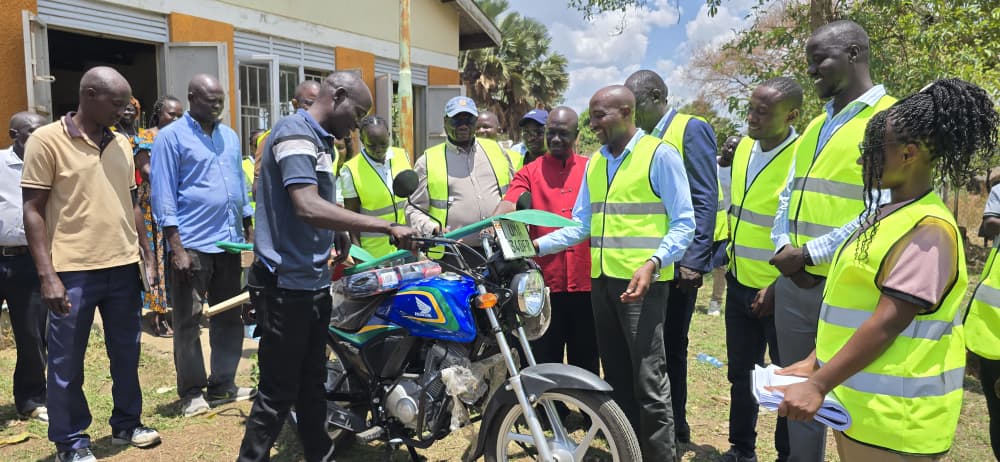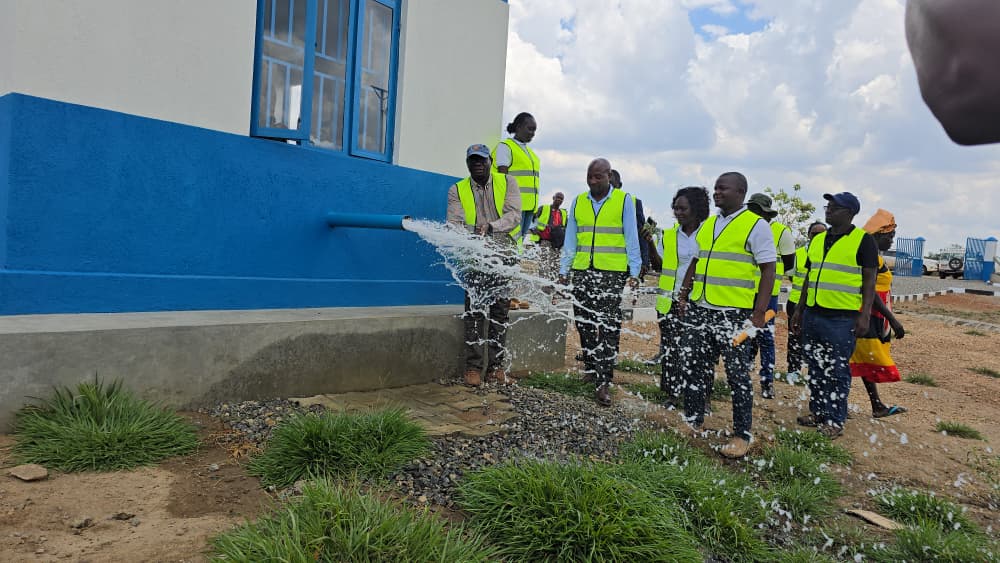
The Government has commissioned a series of multi-billion-shilling piped water supply systems in Northern Uganda aimed at improving access to safe and clean water for thousands of refugees and host communities that have long struggled with water shortages.
The projects, implemented by the Ministry of Water and Environment with support from the Germany, cover Rhino Camp Town Council, Lobule Refugee Settlement, Aara-Dufile Rural Growth Centre, and Boroli Refugee Settlement in the West Nile sub-region.
Officials say the infrastructure will help ease pressure on water sources in refugee-hosting districts where the population has grown rapidly in recent years.
According to Eng. Richard Matua, Assistant Commissioner at the Ministry of Water and Environment, the systems were constructed at a cost of more than Shs15 billion and are expected to significantly improve water coverage while reducing waterborne diseases.
“These piped water systems are meant to increase access to safe and clean water for both refugees and host communities. We expect this investment to greatly improve sanitation and reduce diseases caused by unsafe water,” Matua said.
In Rhino Camp Town Council in Madi-Okollo District, the government constructed a piped water supply system worth Shs3.45 billion to serve six villages with an estimated population of 13,731 people annually over the next 20 years.
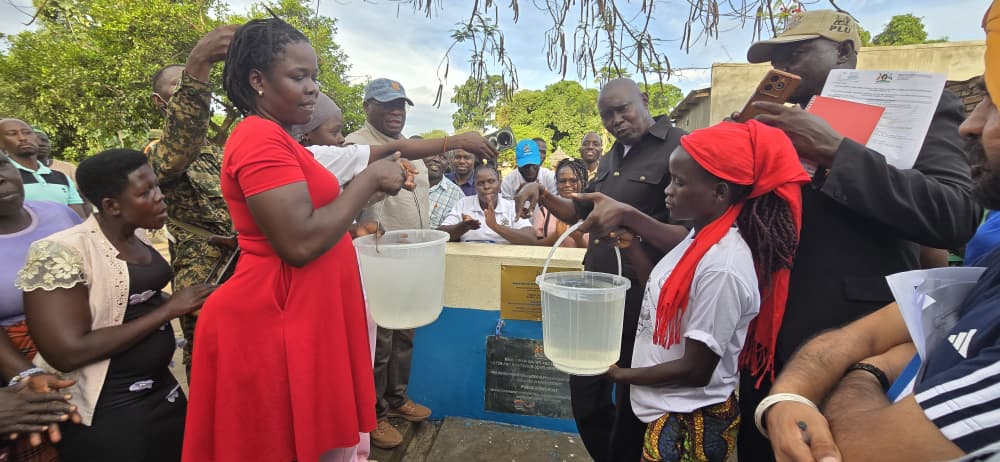
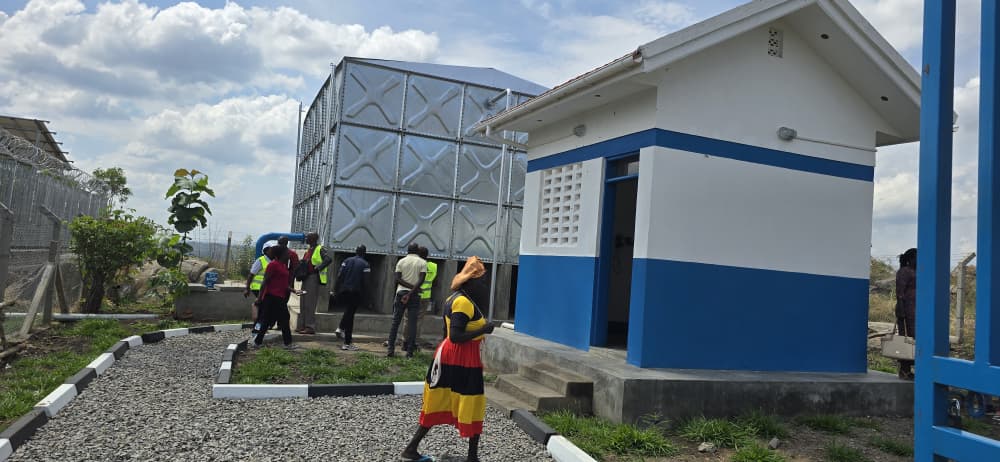
The facility includes solar-powered boreholes, elevated storage tanks, yard taps, and public standposts designed to ensure reliable access to safe water within the community.
“The system is designed to run on solar power and distribute water through standposts and yard taps so that people can access safe water near their homes instead of walking long distances,” Matua explained.
Residents welcomed the development, saying it will relieve them from the burden of trekking long distances in search of water, particularly during the dry season when many depend on rivers and open wells.
Maria Dradriga, a resident of Rhino Camp, said the lack of clean water had exposed families to frequent illnesses.
“We have been sharing water with animals in the river and sometimes the water was dirty. Our children have been suffering from stomach diseases, but now we are happy that clean water has come closer to us,” she said.
Matua cautioned residents against relying on unsafe water sources, noting that untreated water exposes communities to serious health risks.
“We encourage people to use this piped water because water from rivers and swamps is not safe. Many diseases in these communities come from contaminated water,” he said.
Emmy Mitala, the Resident District Commissioner of Koboko District, said the investment will help reduce pressure on social services in refugee-hosting areas.
“Our districts host many refugees, and this has put a big strain on water sources. These new systems will improve hygiene, reduce conflicts at water points, and promote peaceful coexistence between refugees and host communities,” Mitala said.
The Koboko District LC5 Chairperson, Asirafu Mambu, welcomed the project, noting that access to safe water has been one of the major challenges affecting development in the district.
“Water shortage has been a serious problem in many parts of Koboko. People have been depending on unsafe sources, which affects their health and productivity. This project will improve the well-being of our people and support economic activities,” he said.
He urged communities to protect the infrastructure from vandalism to ensure it benefits residents for many years.
Uganda currently hosts more than 1.6 million refugees, most of whom are settled in Northern Uganda, placing significant pressure on water, sanitation, and other social services.
Government officials say similar projects will continue to be rolled out in refugee-hosting districts to ensure sustainable access to safe water for both refugees and host communities.