
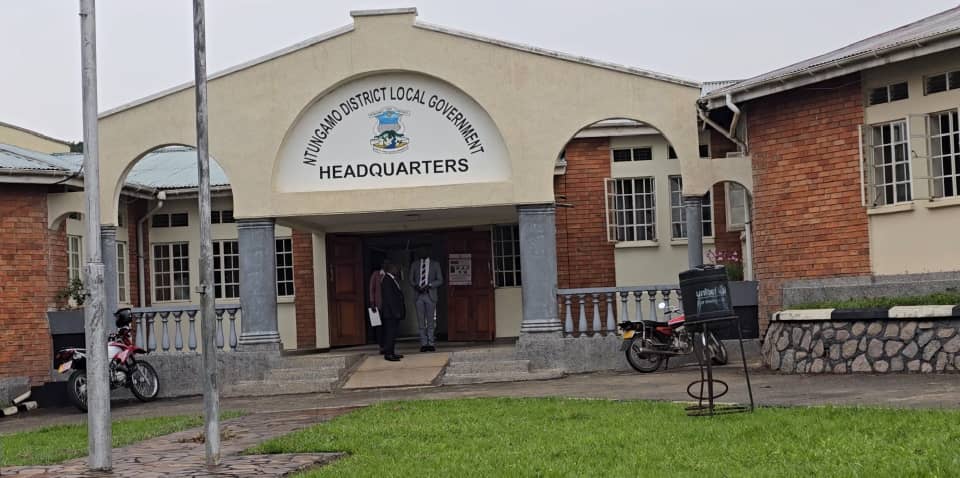
tungamo District Local Government has recorded a significant boost in local revenue collection, surpassing its annual target of Shs947 million after collecting Shs1 billion and 37 million months before the close of the financial year.
District authorities attribute the improved performance to tighter enforcement of tax systems, structural reforms and enhanced digital revenue tracking mechanisms aimed at strengthening service delivery.
The district’s Chief Administrative Officer, Fildeus Kizza, described the collection as a major milestone.
“This is a very big collection in terms of what we targeted the last financial year. We have already asked the Ministry of Finance to give us a supplementary budget because we have exceeded our target of Shs947 million. I expect even to add more,” Kizza said.
He revealed that the district will introduce monthly revenue mobilisation meetings to address gaps that previously affected collections.
“What has been affecting us somehow are the gaps that have been existing. We have now advertised and we are in the process of filling all the positions of sub-county chiefs, town clerks, parish chiefs and town agents. By end of March every parish will be having a substantive parish chief or town agent,” he added.
Authorities say part of the revenue growth stems from stricter contractual terms requiring market tenderers to pay two months in advance before commencing operations, significantly reducing defaults.
Despite the progress, some residents say public awareness about taxation remains low.
Denis Anyebembire, a trader, said vendors pay market dues without fully understanding their purpose.
“We pay taxes whether we have worked or not, for as long as we go to markets. We don’t know why we pay these taxes,” he said.
Another resident, Anis Mugabe, noted that some traders completely default because they lack information.
“Most people don’t pay. This affects service delivery. They don’t pay in time,” he said.
Former LC5 chairperson Denis Singahakye emphasised the importance of local revenue in driving development.
“We want to encourage our people to know that local revenue is a cornerstone of development. They should be sensitised because markets act as a source where people sell their products but also act as a base of local revenue collection,” Singahakye said.
The revenue surge follows ongoing reforms, including refurbishment of the old prison facility, which will be rented out to generate additional income once completed. Key administrative positions are being filled, and monthly revenue meetings now reward high performers while sanctioning poor performers.
Looking ahead, the district plans to introduce property tax across the entire district effective 1 July. The district council has already approved a six percent tax rate on assessed property values.
Kizza said the rollout will follow a valuation exercise conducted with support from the Ministry of Finance and the Ministry of Local Government.
“Next financial year we are targeting to start collecting property tax in the whole district. The report was brought to council and council approved the charge rate of six percent of the value of the property," he said.
"Beginning April, we are going to start mobilising people. On July 1 we shall begin collecting that tax. We ask people to support us because whatever we collect, we take it back in form of services that we render."
Ntungamo has 31 lower local governments, including 12 town councils. In November 2025, the district strengthened digital revenue systems by distributing new ICT equipment to 11 town councils to enhance monitoring and accountability.
