
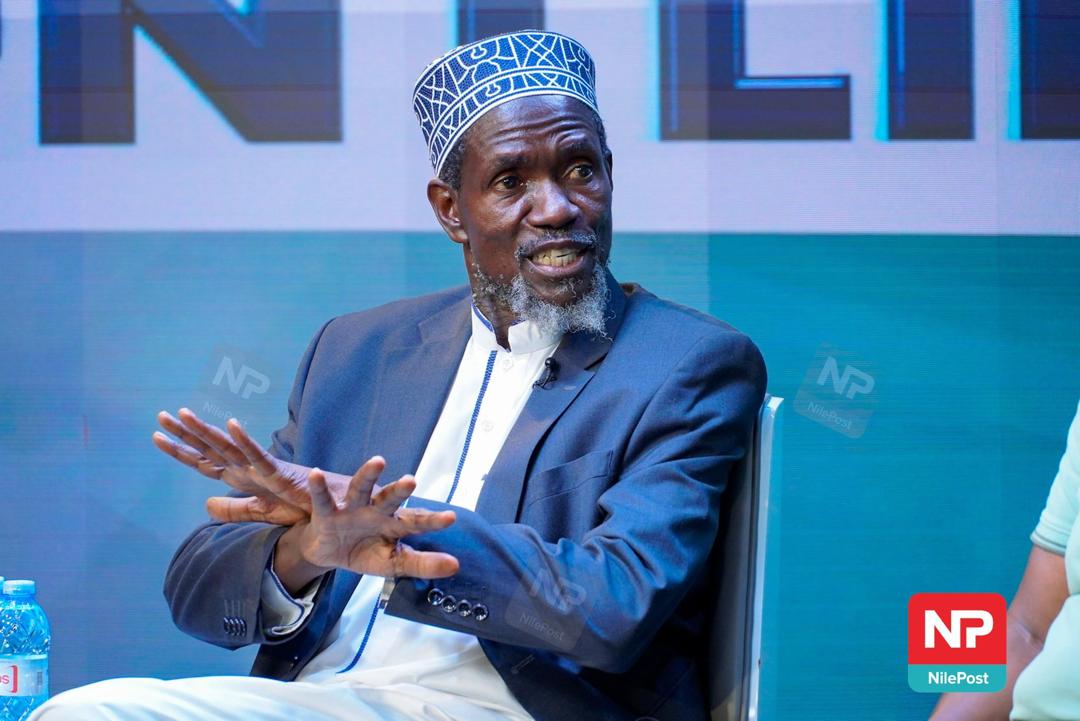
Renowned political analyst and Islamic cleric Imam Idi Kasozi has raised sharp concerns over the integrity of campaign Memorandum of Understanding (MOUs) and the conduct of political campaigns across the country, amid growing tensions between opposition actors and security forces.
Speaking during NBS Frontline on Thursday, Kasozi questioned the process through which the campaign MOUs were formulated and signed, asking whether political parties were genuinely involved in drafting the agreements or merely presented with documents to endorse.
“Those MOUs that the parties signed did the parties involved participate in crafting these MOUs, or were they simply given papers to sign?” he said.
The MOUs were signed between the Electoral Commission (EC) and agents of presidential candidates as a framework to guide campaign activities across the country.
However, Kasozi argued that the realities on the ground suggest a disconnect between the agreements and their enforcement.
He further cautioned against trivialising political campaigns, noting that they are inherently competitive and often volatile.
“Campaigns aren’t a party where people go to sing and enjoy. Everybody is trying to demonstrate how strong their party is, and that can sometimes lead to flaunting of rules and guidelines,” he said.
Kasozi also criticised the nature of political discourse during campaigns, saying it is dominated by hostility rather than substantive debate.
“These campaigns are largely guided by complaints, accusations and counter-accusations, not issues,” he observed.
In one of his most controversial remarks, the cleric lamented what he described as widespread political deception driven by voter ignorance.
“Unfortunately, our population is largely ignorant, so if you want to get their votes, you have to lie to them. This is typical of African leaders,” he said.
Kasozi’s remarks come at a time of heightened political tension, particularly surrounding campaign activities of the National Unity Platform (NUP) and its presidential candidate, Robert Kyagulanyi Ssentamu, popularly known as Bobi Wine.
Across several regions, hundreds of NUP supporters have been arrested during or after rallies addressed by Kyagulanyi. In Kawempe, eyewitnesses reported a heavy deployment of police and military personnel, both in uniform and plainclothes. Security operatives were accompanied by sniffer dogs, with reports alleging that some handlers unleashed dogs on opposition supporters.
Bobi has accused security forces of violently assaulting his supporters and deliberately disrupting his campaign convoy. He cited a November incident along the Mbarara–Ibanda Road, where supporters traveling to a rally in Bwizibwera, Mbarara District, were allegedly attacked.
According to Bobi, individuals “wearing NRM T-shirts and carrying Museveni posters” participated in coordinated assaults against NUP supporters during the incident.
Following the arrests, detainees were arraigned before various courts across the country and charged with a range of offences, including obstruction of police officers, robbery, malicious damage to property, and traffic-related violations such as driving without licences, riding without helmets, and operating uninsured vehicles.
Several individuals were also charged with participating in unauthorised military-style drills, allegedly linked to a February 12, 2025 parade held at NUP’s Makerere–Kavule headquarters to mark Bobi Wine’s 43rd birthday.
Among those facing charges are prominent NUP figures, including Alex Waiswa Mufumbiro, the party’s Deputy Spokesperson and Nakawa East MP aspirant; Saudah Madaada, Kampala Central Woman Lord Councillor aspirant; Dorren Kaija, NUP School Coordinator; and six of Kyagulanyi’s close aides, notably Edward Ssebufu (Eddie Mutwe)and Achileo Kivumbi. All the accused have pleaded not guilty.
NUP leadership has repeatedly called on security agencies to respect the law, protect all citizens equally, and allow political actors to campaign freely without intimidation.
The party maintains that continued diversion of campaign routes, arrests of supporters, and alleged use of excessive force undermine
democratic principles and threaten the credibility of the ongoing electoral process.
