
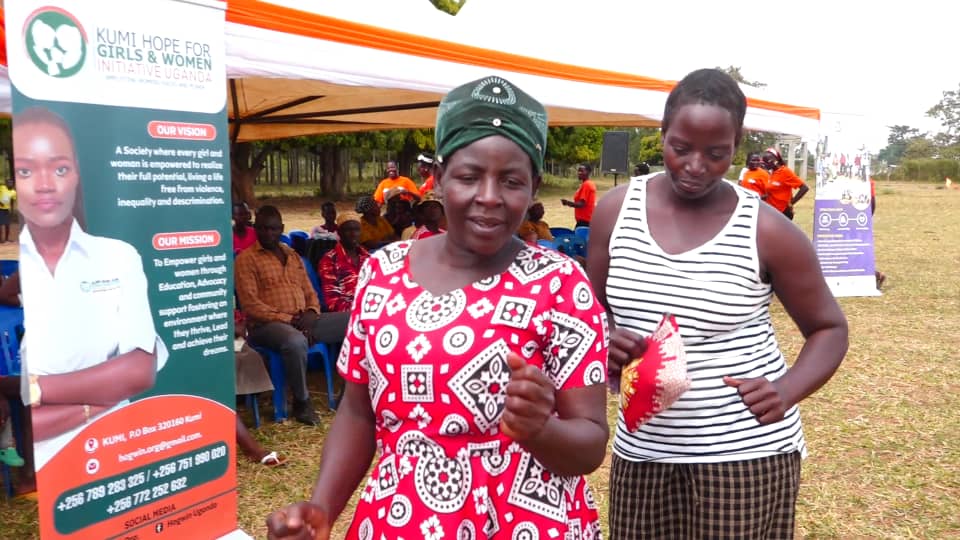
Activists, local leaders, and community members in Kumi District have renewed calls for permanent solutions to end gender-based violence (GBV) against women and young girls, as the global 16 Days of Activism campaign concludes across the country.
Speaking during a community engagement at Kanyumu Secondary School in Kumi, Luke Twaseje, the Country Coordinator for Men Engage Uganda, said the fight against GBV must become a year-round commitment, backed by collective action from families, community leaders, and government stakeholders.
“Every 10 minutes, a woman is killed somewhere in the world because of violence,” Twaseje said. “Here at home, we have countless women and girls suffering silently. We have no excuse—we must unite and end violence against girls and women.”
Twaseje added that Men Engage Uganda, together with Kumi Hope for Girls and Women Initiative, is working closely with communities to promote awareness, engage men as allies, and drive behavioural change.
“Men have always been seen as perpetrators, but we are saying men can be part of the solution. Bringing men into this conversation helps us create a more equitable society,” he said.
Earlier in the day, activists held a peaceful procession through Kumi Town, drawing support from men and youths who cheered on the campaign message.
Local leaders raised alarms over the worsening GBV situation in the district. Kumi District Vice Chairperson Sam Akol expressed concern, noting that seven out of every ten families have experienced some form of domestic violence.
He attributed the problem to persistent traditional beliefs that place men above women, fueling conflict and abuse within households.
“Many still believe women are inferior and men must assert dominance. These outdated attitudes are causing suffering,” Akol said.
“We want a community where everyone is equal and conflicts are resolved amicably without resorting to violence.”
He urged families to adopt modern conflict-resolution methods and called for ongoing community sensitization to shift harmful cultural norms.
The Deputy Resident District Commissioner of Kumi, James Kyomia, commended civil society groups for sustaining activism throughout the 16 days and noted that the district security committee is working to ensure justice for victims.
Citing a recent case in Ongino Sub-county, where a family dispute led to the death of a child, he stressed the deeply rooted nature of the problem.
“We have ensured that suspects are handled by security and brought before courts of law,” James said.
“We are engaging political, religious, and cultural leaders to change the mindset of our men who still believe women should shoulder all domestic responsibilities.”
James also highlighted the impact of GBV on girls’ education. At Kampala Home Principles Secondary School, the headteacher revealed that out of 195 girls enrolled in Senior One, fewer than 100 remain by Senior Four—many affected by violence, early marriage, and neglect.
The leaders jointly called for stronger community action, improved parenting, and sustained support for young girls.
They appealed to individuals and organizations to collaborate with local initiatives to protect women and girls.
“Our hands are open,” Twaseje said. “Anyone willing to support this cause is welcome. Women and young girls need us more than ever.”
Elizabeth Aciro, Executive Director of Kumi Girls for Hope, described GBV as a persistent and dangerous problem in the community.
As Uganda concludes the 16 Days of Activism, Kumi District hopes that consistent education, dialogue, and enforcement will help build a future where women and girls can live free from fear, violence, and discrimination.
