

The Rwandan government has rejected responsibility for the recent escalation of violence in South Kivu, eastern Democratic Republic of the Congo, and condemned what it calls deliberate violations of the recently negotiated Washington Accords by DR Congo and Burundi.
In a statement issued by the Ministry of Foreign Affairs and International Cooperation on December 10, 2025, Kigali said the responsibility for ceasefire violations, ongoing attacks and fighting in South Kivu, DR Congo cannot be placed on Rwanda.
"Rwanda condemns the Congolese Army (FARDC) and the Burundian Army (FDNB), together with its coalition of the DRC-backed FDLR genocidal militias, Wazalendo and foreign mercenaries, and have been systematically bombing civilian villages close to the Rwandan border, using fighter jets and attack drones, and which the AFC/M23 has said it has been forced to counter,” the statement said.
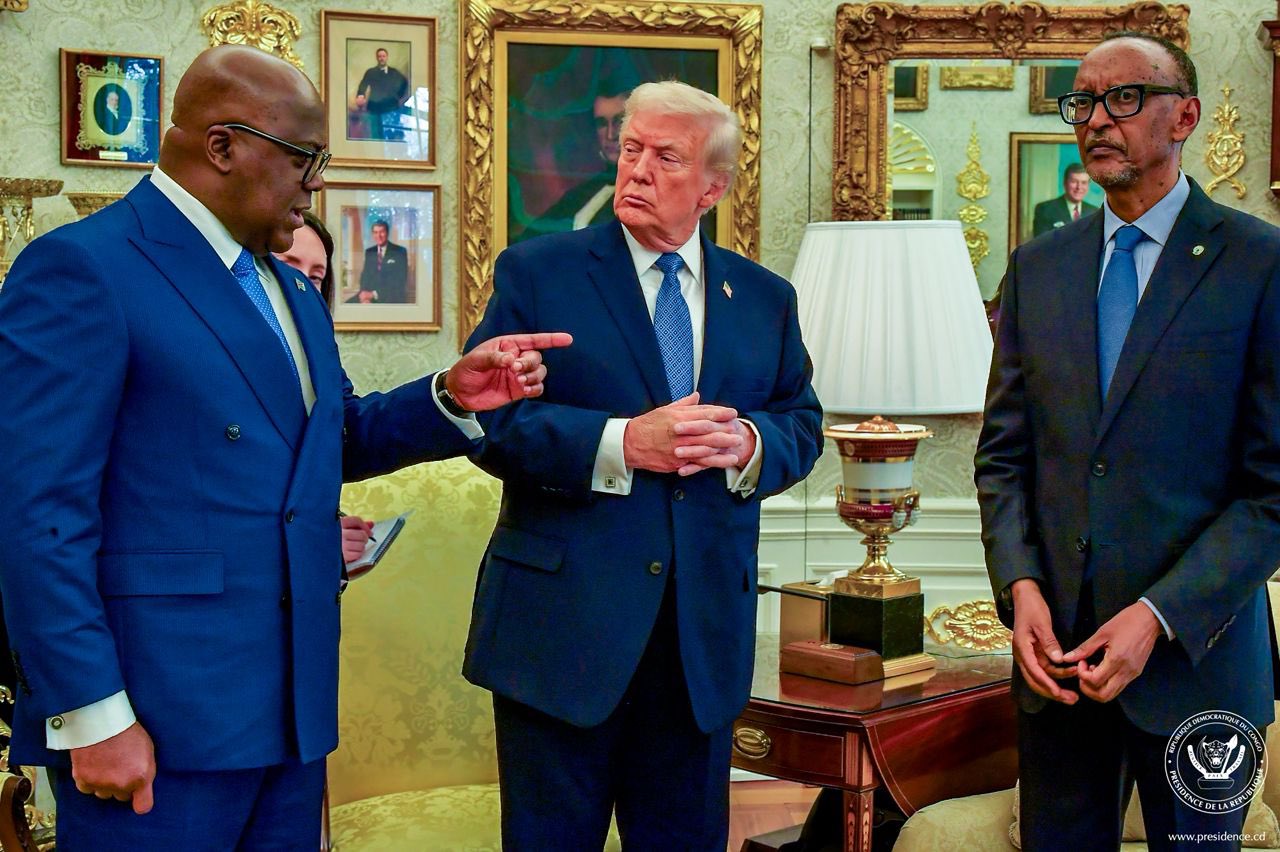
Hostilities intensified in swathes of South Kivu in the days before the December 4 Washington Accords signed by Rwandan President Paul Kagame and his Congolese counterpart Felix Tshisekedi before President Trump at the White House.
The M23, who have been making advances and capturing several towns in South Kivu, have accused Congolese national army and their Burundian and militia backers of bombing civilians populations including schools, and infrastructure.
The group claims several civilians have been killed in the bombings but Kinshasa instead accuses M23 of breaching the ceasefire and making advances, as well as targeted killing of civilians.
In the statement, the Rwandan government highlighted the humanitarian impact of the attacks, noting that “as a result of this past week's bombing of Kamanyola from Burundi, over 1000 Congolese citizens have fled across the border to Bugarama, in Southern Rwanda, where they are accommodated at the Nyarushishi Transit Camp.”
Kigali further warned that the Burundian Army has mobilized “close to 20,000 troops in South Kivu in the service of the Government of DR Congo, and notably laid siege to Banyamulenge villages in Minembwe in a deliberate attempt to starve the residents.”
Rwanda’s foreign ministry criticized the DRC for refusing to observe the ceasefire.
“The DRC has openly stated that it would not observe any ceasefire, and was fighting to recapture territories lost to AFC/M23, even as the peace process unfolded," the statement said.
"The details of this continued pursuit of a military solution was brought to the attention of the international community… and most of the information was publicly available. The international community has not demanded an end to these attacks prepared for months by DR Congo and instigated in the past week."
The statement also noted DR Congo's failure to fulfill commitments under previous agreements, writing: “In addition, the failure of DR Congo to neutralize the FDLR as stipulated in the June 2025 Peace Agreement continues to delay the resolution of the conflict in Eastern DRC, the ultimate goal of the Washington Accords.
"It is now clear that DR Congo was never ready to commit to peace, even as President Tshisekedi participated in the 4th December ceremony, as if forced to sign the Accords.”
According to Kigali, these violations have serious implications for both civilians and regional security: “These deliberate violations of recently negotiated agreements constitute serious obstacles to peace, resulting in the continued suffering of the population in Eastern DR Congo, as well as a security threat to Rwanda's western border.”
Rwanda urged a return to diplomacy and the full implementation of agreements.
“A return to full implementation of the Washington Accords is an urgent priority, as is the conclusion of the remaining annexes of the Doha Agreement between DR Congo and AFC/M23. This is the most viable path forward for peace, stability and prosperity in the Great Lakes region,” the statement concluded.
The statement comes amid renewed fighting in South Kivu, where M23 forces have made significant advances, capturing strategic areas near the Burundi border and intensifying displacement of civilians, with thousands reportedly fleeing across borders in search of safety.
The Kinshasa government has rejected the M23 occupation and continue to demand their total withdrawal. The rebels have established a parallel government in eastern DR Congo with control over vast mineral-rich territories.
Tshisekedi has vowed not to cede even a "piece of soil" to M23 and their backers that he is said is Kigali. He accuses Rwanda of having expansionist interests.
The escalation of hostilities and renewed accusations, barely a week after the signing of the Washington Accords, leaves a lot to be desired about the effectiveness of the agreement and casts doubts on whether it can be implemented.