
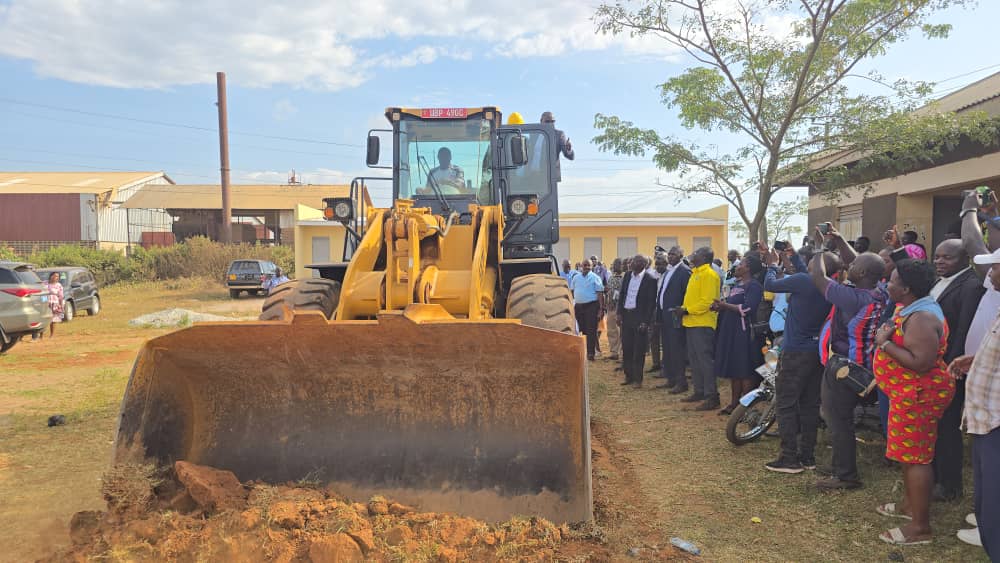
Mbale District has finally broken ground on its long-awaited headquarters, ending years of uncertainty following the district’s elevation to city status and prolonged delays over controversies surrounding the project.
The Shs 9 billion government-funded administrative complex was officially flagged off on Tuesday by the Ministry of Local Government, raising hopes for improved service delivery and providing the district a permanent home outside the city centre.
The ceremony coincided with the unveiling of Mbale Town Council.
The groundbreaking at the former Busoba Subcounty drew excitement from local leaders and residents.
The complex will house council chambers, administrative offices, and conference facilities.
The Minister for Local Government, Raphael Magyezi, was represented by Commissioner Paul Okot Okello, who assured that funding would be sustained through to project completion.
“Government has already released 1.5 billion to kickstart construction. This is part of our commitment to decentralization, improved service delivery, and local economic development,” Okot said.
The Ministry also announced plans to introduce standard architectural designs for local governments, noting that many stalled projects in the past resulted from overly ambitious plans that exceeded financial capacity.
“But this will guide future projects,” said Okot.
National Housing and Construction Company (NHCC), contracted to execute the project, pledged quality and timely delivery.
“Since I hail from the region and visit every weekend, I will personally monitor progress,” said NHCC Board Chairperson Wanjusi Wasyeba.
NHCC Executive Director Engineer Kenneth Kaijuka warned that the project could take up to nine years if the government continues phased funding of Shs1 billion per year.
He urged collaboration with Housing Finance Bank to accelerate financing.
“Beyond two years, the project could escalate to Shs11, 12, or even Shs15 billion. More importantly, the district will struggle to function effectively until completion, as offices for different administrative levels and the speaker are scattered,” Kaijuka said.
For Mbale District leaders, Tuesday’s ceremony marks a turning point.
The new headquarters will host council chambers, administrative blocks, and modern service facilities—a significant upgrade from the outdated city-based offices currently in use.
Mbale District Chairperson Mafabi Muhammad recalled the controversies that stalled the project, attributing its realization to joint efforts among leaders and stakeholders.
Resident District Commissioner Stanley Bayole, who helped resolve land disputes, praised the police for facilitating the project and pledged close supervision, citing his successful completion of a similar project in Bulambuli.
Residents say the development restores the district’s identity and promises better service delivery closer to the people.
