
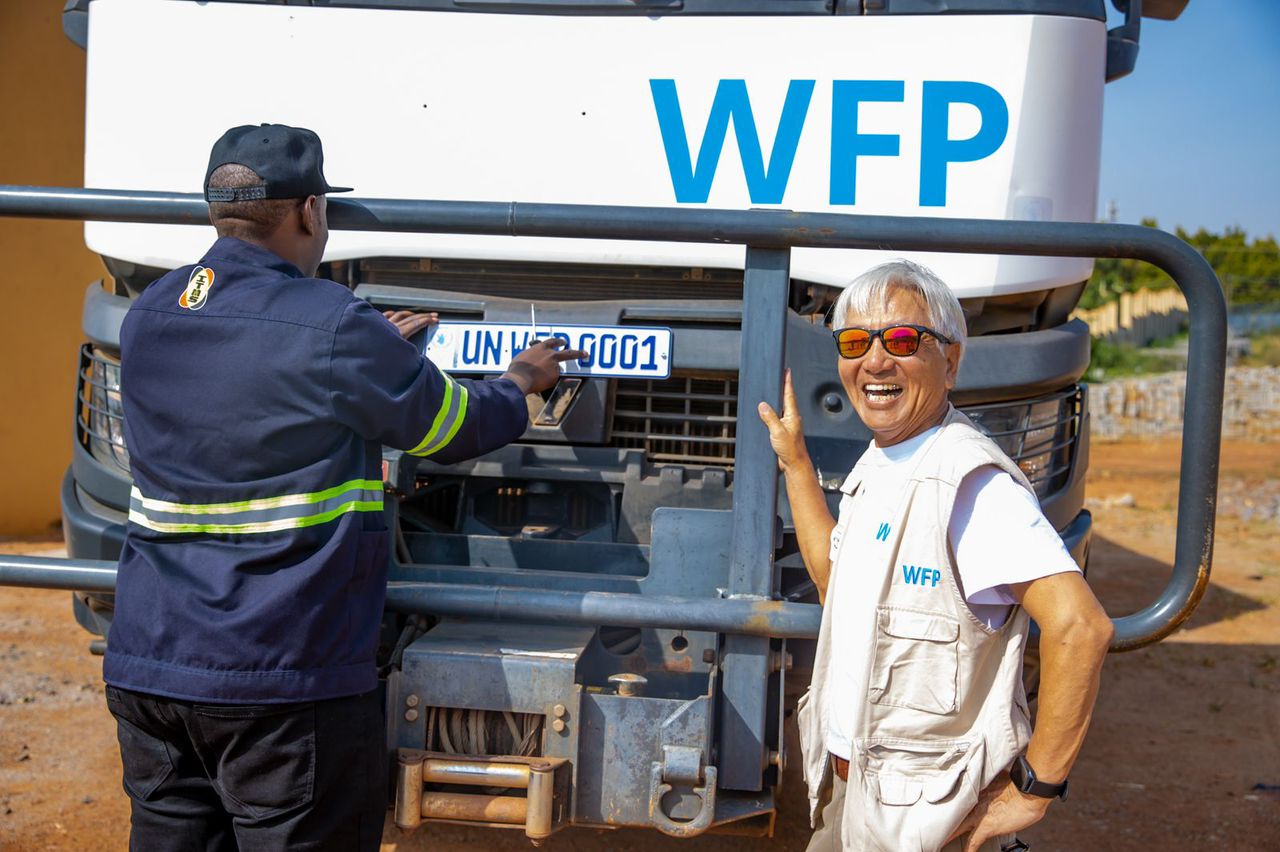
Uganda and the United Nations World Food Programme (WFP) have signed a historic agreement to establish a WFP Global Fleet Hub in Kampala, accompanied by the launch of special registration plates for humanitarian vehicles.
The move is aimed at improving cross-border aid delivery and enhancing the country’s role in regional humanitarian logistics.
The handover ceremony, attended by officials from the Office of the President, the Ministry of Works and Transport, the Ministry of Foreign Affairs, and the Intelligent Transport Monitoring System (ITMS) Project, marked the official unveiling of the Ugandan-manufactured WFP plates.
Minister of Foreign Affairs Jeje Odongo said the initiative underscores Uganda’s leadership in humanitarian action.
“Uganda has consistently been at the forefront of humanitarian response, hosting Africa’s largest refugee population while upholding regional solidarity,' he said.
"By hosting the WFP Global Fleet Hub, we are extending our humanitarian leadership across the continent. This agreement shows that investing in logistics infrastructure and removing bureaucratic barriers saves lives—not just in Uganda, but throughout Africa.”
He added that the special number plates integrate advanced hardware and software solutions, representing a historic milestone in digitalising vehicle registration and enhancing security features.
Minister of Works and Transport Gen. Edward Katumba Wamala highlighted Uganda’s strategic advantage. “Uganda’s central location in East Africa, combined with our robust transport infrastructure and progressive trade facilitation policies, makes Kampala the ideal choice for this continental logistics hub. These distinctive UN/WFP plates represent more than administrative efficiency—they symbolise our shared commitment to ensuring emergency supplies reach those in need without delay.”
The agreement focuses on three key objectives: issuing distinctive UN/WFP plates to streamline cross-border humanitarian operations, removing bureaucratic barriers that delay aid, and promoting regional integration to reduce costs and transit times while strengthening the logistics ecosystem.
WFP Uganda Country Director Marcus Prior described the hub as a “rapid-deployment centre for humanitarian emergencies across Africa,” noting that Kampala will now serve as a launch point for coordinated responses to crises.
“These special plates are more than administrative tools—they are instruments of life-saving action,” he said.
ITMS Project Manager Damir Makhmutov lauded the initiative, saying it would accelerate national development and strengthen Uganda’s leadership in international humanitarian programmes.
“We are proud of the government’s vision and determination to transform the transport sector," he said.
"It is an honour to contribute to this historic step. Initiatives like this will accelerate national development and strengthen Uganda’s leadership in international humanitarian programmes across the continent.”
In 2024, WFP Uganda delivered 173,745 metric tons of food assistance to over 2 million people nationwide, transported 10,000 metric tonnes of partner relief supplies, and facilitated 33,000 metric tonnes of deliveries to neighbouring countries including Burundi, DR Congo, Kenya, South Sudan, and Ethiopia.
The new Global Fleet Hub is expected to further expand this regional impact.
