
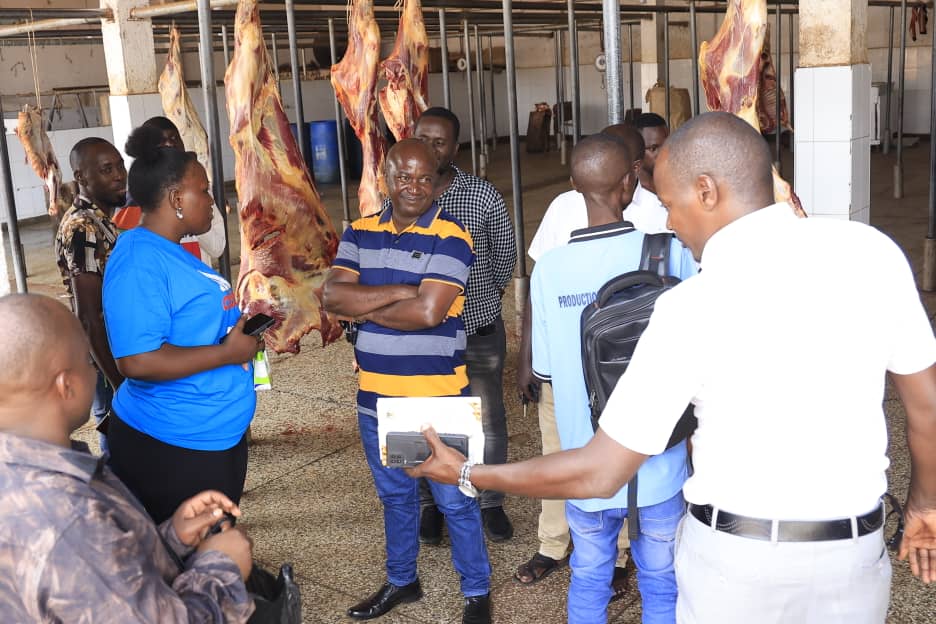
Wakiso District authorities have imposed strict measures blocking the movement of cattle, goats, and sheep from all abattoirs until thorough veterinary checks are completed, following reports of a tuberculosis-like disease detected in livestock.
The directive was issued after reports circulating in the media prompted district officials, led by the District Veterinary Officer, Dr Bamundaga Kyobe Godfrey, and the Chairperson of the Production and Marketing Committee, Nyanzi Faizo, to inspect several abattoirs to assess hygiene and enforce compliance.
“We could not sit back after hearing these reports,” Nyanzi said during the inspection. “The good news is that the disease has not spread widely. But in some facilities, we found meat kept in unacceptable conditions, with carcasses already showing signs of spoilage.”
Dr Bamundaga stressed that no meat will be allowed to leave any licensed facility without proper checks.
“We have instructed all abattoirs to ensure a veterinary officer is present to inspect every carcass before it is released to the public,” he said.
Local council leaders have also tightened hygiene enforcement, introducing additional requirements aimed at ensuring abattoirs maintain proper sanitation and acquire appropriate equipment.
“We are tightening hygiene requirements and encouraging facilities to invest in quality-assuring tools,” the leaders noted.
However, some operators say they need government support to meet the new standards. Musinguzi Boaz, one of the abattoir managers, said the regulatory demands are becoming increasingly difficult to meet.
“We are ready to comply, but the taxes and fees imposed on us are too high,” Musinguzi said. “Government should support us so we can maintain quality without running at a loss.”
Another operator, Kajoba Michael, shared similar concerns, saying operational costs threaten their ability to stay in business.
“We are struggling to stay afloat because of the expenses. We need relief if we are to meet all these requirements,” he said.
District authorities say routine inspections will continue until the livestock health situation stabilizes and all facilities meet the required hygiene and safety standards.
