
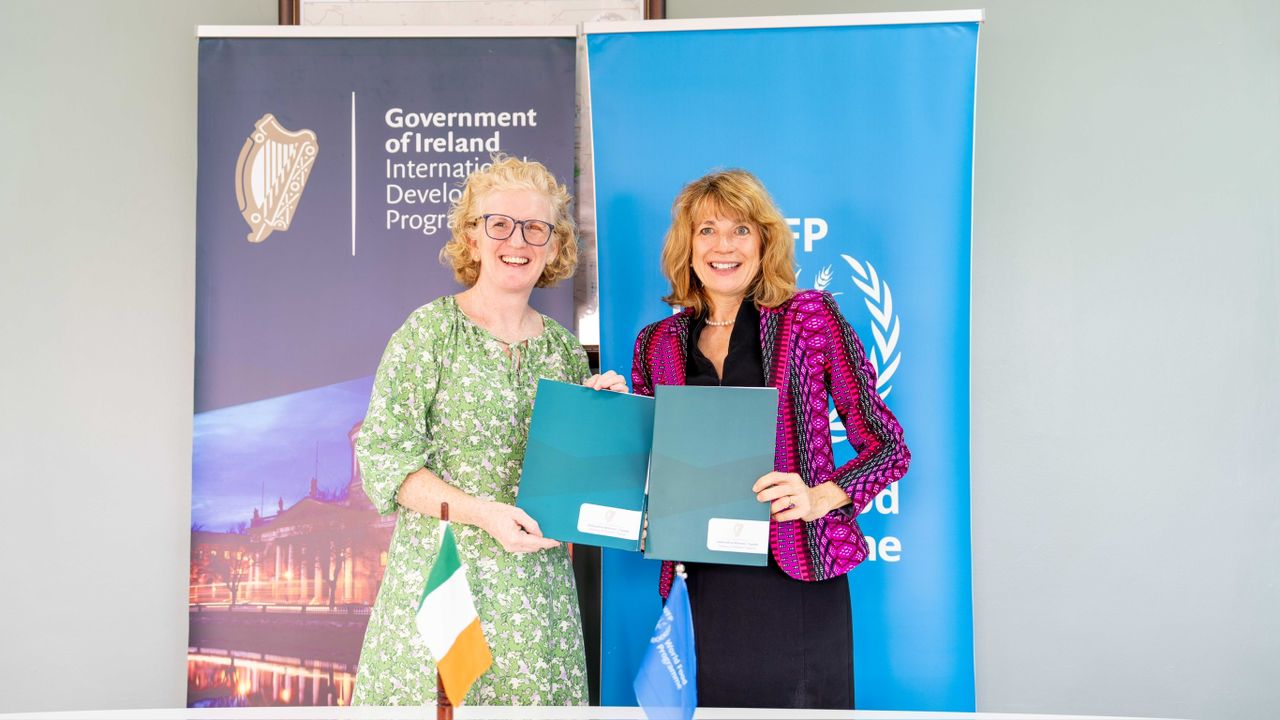
The Government of Ireland has contributed EUR 4.5 million (Shs 18.4 billion) to the United Nations World Food Programme (WFP) in Uganda to strengthen food security and resilience among vulnerable communities in Karamoja and refugee-hosting regions.
The support will benefit about one million people, including refugees and Ugandan host communities, through food assistance, school meals, cash transfers, and livelihood initiatives.
WFP said the funds will address persistent hunger in Karamoja by procuring food for school feeding programmes, restoring degraded land, and promoting crop diversification. The contribution will also back government social protection programmes designed to mitigate the impact of droughts and floods.
In refugee-hosting areas, cash assistance will target the most vulnerable refugees, including the elderly, while livelihood projects will help both refugees and host communities transition from aid dependency to self-reliance. Uganda currently hosts 1.9 million refugees, the largest number in Africa, mainly from the Democratic Republic of Congo, South Sudan, and Sudan.
“This contribution from Ireland is not just about emergency food assistance it’s about helping people build the foundations for a more stable and self-reliant future,” said Lauren Landis, WFP Country Director in Uganda.
Ireland’s Ambassador to Uganda, Mags Gaynor, said the funding reflects her government’s commitment to tackling food insecurity and empowering smallholder farmers. “By investing in resilient food systems and empowering smallholder farmers, we are helping communities break the cycle of hunger and build a better future,” she said.
Over the past five years, Ireland has provided EUR 18 million (Shs 73.8 billion) to WFP operations in Uganda, underscoring its role as a key partner in addressing hunger and displacement challenges.
