

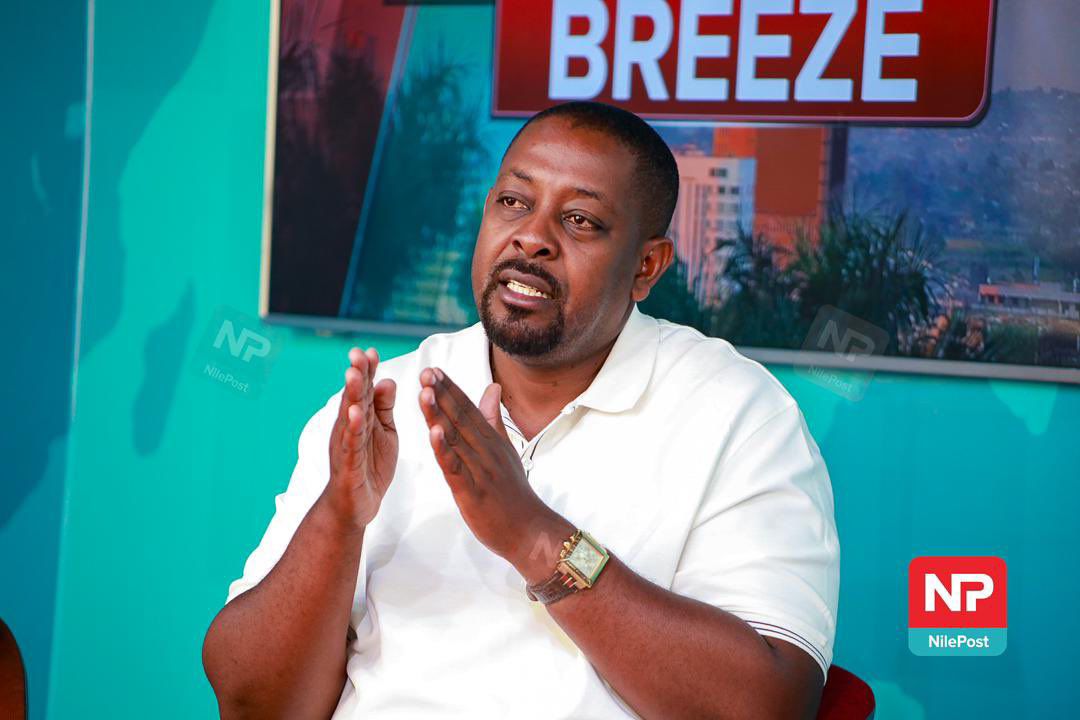
Kazo County Member of Parliament Dan Kimosho has called for reforms in Uganda’s political eligibility criteria, urging that candidates vying for key leadership positions, particularly the presidency, should possess at least a university degree.
Speaking during NBS Morning Breeze on Friday, Kimosho noted that while Uganda’s democratic framework allows anyone to pick presidential nomination papers, the current openness has led to what he termed a “vulgarisation” of leadership.
“Because of the enabling environment, everyone is at liberty to pick nomination papers for the presidency and participate. However, expressing interest in the presidency doesn’t amount to anything. Let’s not take the expression of interest seriously, let’s wait for the people who actually get nominated,” he said.
Kimosho argued that the country should gradually raise the minimum academic qualifications for political positions.
“Now even in primary school, we require teachers to have degrees. One of Parliament’s duties is oversight, and we need to get to a place where a certified accountant comes to Parliament to account to an equivalent. It’s high time we look at these academic qualifications,” he added.
His remarks come as the number of Ugandans picking presidential nomination forms continues to climb.
As of Thursday, at least 138 people have so far expressed interest in contesting for the highest office in the land ahead of the next elections. Among the youngest are 22-year-old university student Abigail Victoria Ayeza and 20-year-old Kampala International University student Vonita Nassanga.
The rising figures have triggered debate over the seriousness and competence of some aspirants.
Critics argue that the process has, in some cases, devolved into a theatre of political drama, with individuals appearing more as comedians than credible candidates.
Historical trends show a sharp contrast between expressions of interest and actual nominations.
In 2011, 56 Ugandans picked presidential nomination forms, but only six were nominated. In 2016, 48 expressed interest, with just eight appearing on the ballot. In 2021, the number dropped to 36 expressions of interest, with 11 candidates duly nominated.
Kimosho’s proposal to set higher educational thresholds is likely to spark further debate on whether tightening requirements would enhance governance or undermine inclusivity in Uganda’s political landscape.