
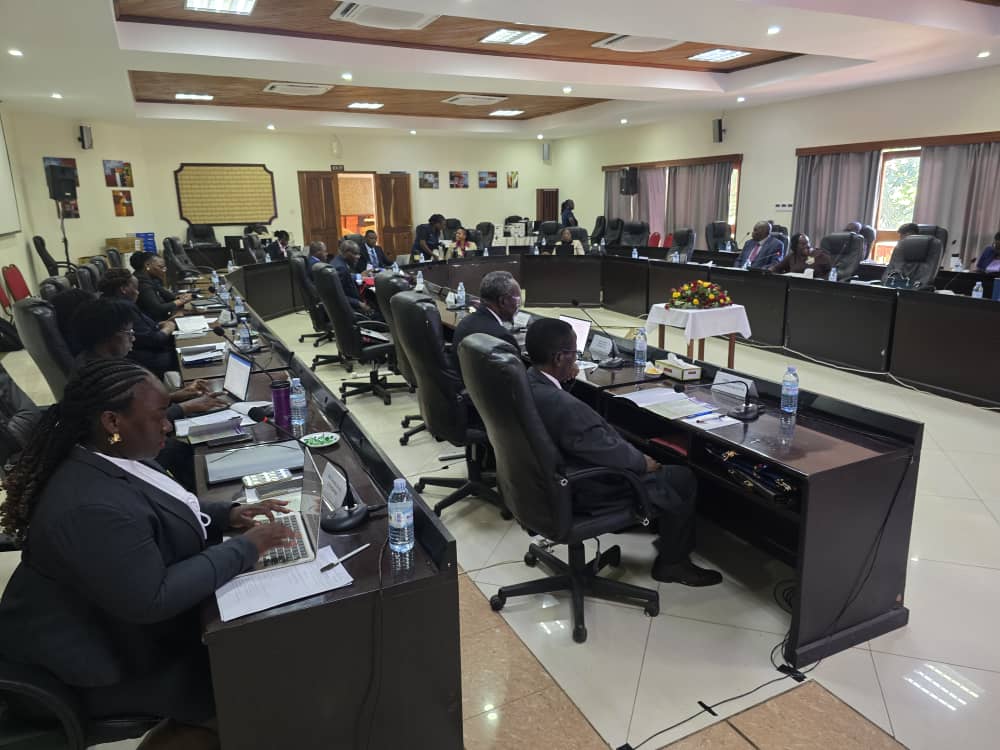
For the first time in the history of Uganda’s jurisprudence, the 2026 Presidential Election Petition will be filed electronically through the Judiciary’s Electronic Court Case Management Information System (ECCMIS), marking a significant departure from the traditional, paper-heavy procedures previously used at the Supreme Court.
The announcement came on Monday during the opening of a four-day training for Supreme Court Justices in Jinja City, organised by the Judicial Training Institute (JTI).
The training focuses on case management, judgment writing, and practical use of ECCMIS ahead of the presidential election petitions expected in January next year.
The adoption of ECCMIS aims to streamline petition handling and eliminate logistical burdens such as physically transporting large volumes of documents, a challenge highlighted in 2021 when independent lawyer Male Mabirizi delivered his petition to the Supreme Court in a truck due to the sheer quantity of paperwork.
Chief Justice Alphonse Owiny-Dollo commended the Justices for their commitment to continued learning, noting that their readiness reflects the Judiciary’s integrity and competence.
“As the nation approaches the 2026 Presidential Elections, it is incumbent upon the Judiciary—particularly the Supreme Court—to ensure institutional readiness befitting its constitutional mandate,” he said.
The Chief Justice reminded the Justices of their responsibilities under Article 104 of the Constitution, which designates the Supreme Court as the original and final court for presidential election petitions.
“This is a responsibility no other institution bears. It is grounded not only in law but also in the public’s trust,” he said, emphasizing the unique challenges of presidential petitions, including tight timelines, intense public scrutiny, and critical questions about legitimacy and democratic governance.
Justice Michael Chibita, Chairperson of the JTI Governing Council, noted that some Justices have never handled a presidential election petition, making the training essential.
“Even those of us who were part of previous petitions still have something new to learn. For example, electronic filing never happened last time. This time, we will review petition documents using laptops—even from home,” he explained.
He added that the JTI believes no judicial officer is “too senior” to undergo training. “When you stop being trained, you start dying intellectually,” he said.
Chibita also stated that the Judiciary is open to training lawyers on ECCMIS, provided the request is formally made through the Uganda Law Society.
The ongoing training brings together experts from Uganda, Kenya, Zambia, and Malawi, who will guide Justices on ICT use in court processes, updates in jurisprudence, and constitutional requirements.
Justice Lillian Tibatemwa-Ekirikubinza, who chaired the opening session, underscored the importance of the training in preparing Justices for the public and political scrutiny that accompanies presidential petitions.
“These cases attract significant national attention and media coverage. Training helps ensure the Justices remain grounded, maintain judicial integrity, and safeguard public confidence in the rule of law,” she said.
She noted that past election cycles revealed procedural bottlenecks, and the current training seeks to address them and improve practices for future petitions.
“The training is critical whether you are adjudicating such a case for the first time or are refreshing previous experience,” Justice Tibatemwa-Ekirikubinza added.
The four-day programme is expected to strengthen the Supreme Court’s preparedness to deliver timely, efficient, and credible justice during the 2026 presidential election petition process.
