
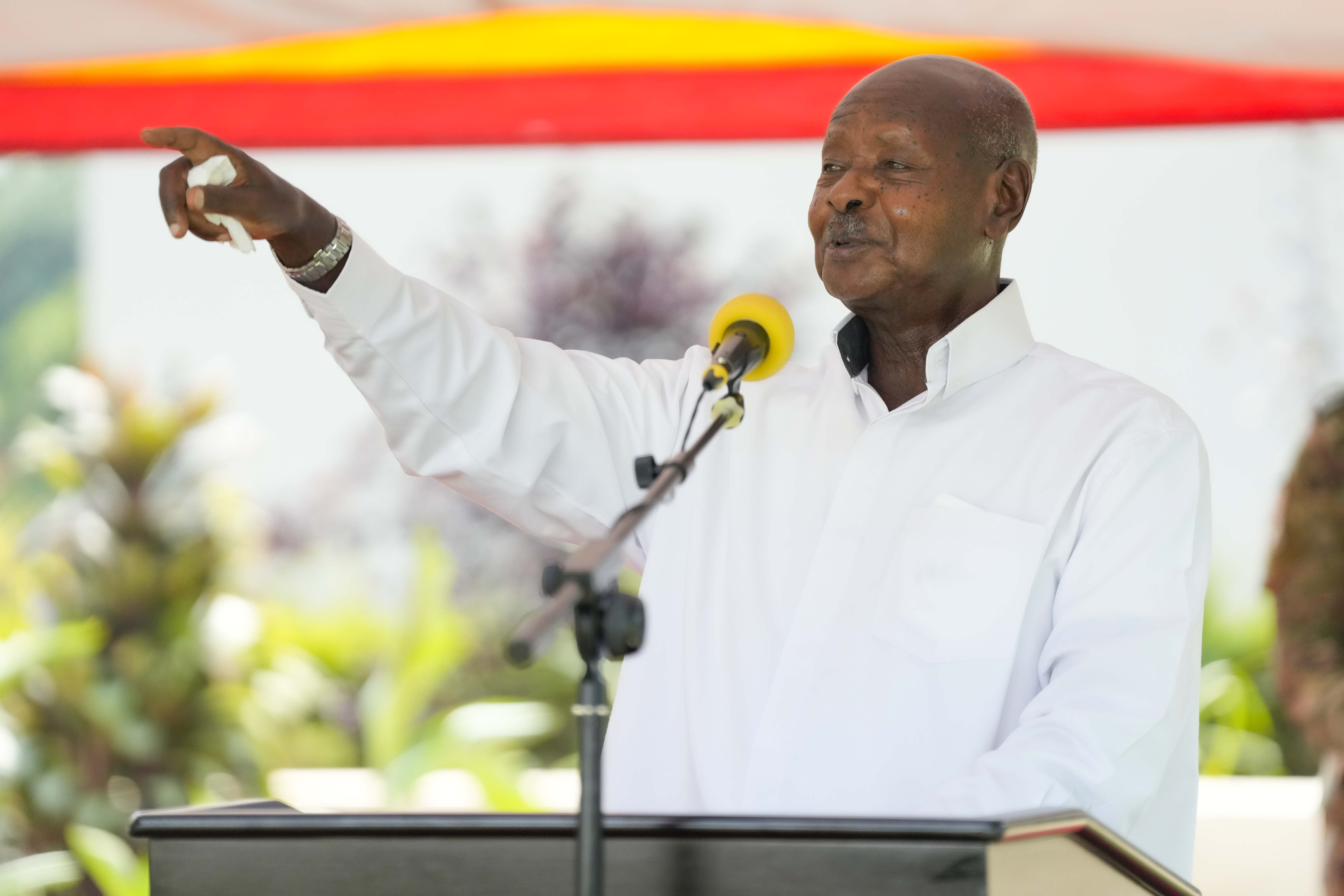
President Museveni has directed that indigenous fishermen take the lead in managing Uganda’s lakes, supported by the Uganda People’s Defence Forces’ Fisheries Protection Unit (FPU), in a landmark policy shift aimed at streamlining the fishing sector and empowering local communities.
The directive was issued during a high-level consultative meeting with fishing communities and key stakeholders at State Lodge, Jinja.
Attendees included representatives from indigenous fishing families, boat owner associations, fisheries officers, and community leaders from major lake regions.
President Museveni emphasized the importance of indigenous knowledge and cultural heritage in sustainable fishing, stating that Uganda must build on its ancestral skills-based economy — “emyooga” — to modernize the sector.
“This part of Africa is our ancestral home. We must empower those with ‘omwooga’ in fishing to lead the transformation of this sector,” the President said.
While affirming the UPDF's role in maintaining order on Uganda’s waters, Museveni stressed that military involvement must be temporary.
“Now that we have peace, let’s organize this sector and eventually return the army to the barracks,” he said.
He proposed that the FPU focus mainly on border waters and backing legally compliant fishers, while local communities take the lead in conservation and policing of breeding zones.
President Museveni urged fishermen to transition to pond-based fish farming, highlighting successful models in Limoto and Kawumu that generate over shs80 million annually.
“We misuse the wetlands and underutilize the drylands. We must organize domestic fish farming and conserve our resources,” he added.
To reduce reliance on lake fishing, the President announced government readiness to support communities in digging fishponds and expanding aquaculture education.
Recognizing the capital-intensive nature of fishing, the President proposed a special shs1 billion Fisheries Fund per SACCO, separate from the Parish Development Model, to empower organized fishing groups.
He instructed that these SACCOs be built around proximity and function, to ensure direct support reaches community members actively engaged in fishing and related activities.
Museveni vowed to criminalize the importation of banned nets and even the threads used to make them, based on intelligence from the Internal Security Organisation (ISO).
He also highlighted the need to protect fish breeding grounds (byondo) and gazette lake shores and swamps for environmental conservation. “These are our national parks in water. No one should build near or interfere with these zones,” he said.
The president instructed Third Deputy Prime Minister Rukia Nakadama to oversee the establishment of health and sanitation facilities, clean water access, and schools—especially boarding schools—on islands like Kalangala, Buvuma, and Koome.
President Museveni proposed that the Police establish a new marine safety and emergency response unit to enhance security on Uganda’s lakes, a matter to be discussed in Cabinet.
NRM Kalangala Chairperson Sunday Gerald Kayita called for uniform fishing regulations across East Africa, a proposal the President welcomed as part of wider regional coordination to combat illegal cross-border fishing.
To fast-track sector reforms, the President gave the Ministry of Agriculture, Animal Industry and Fisheries one month to complete and roll out new fishing regulations.
Citing the NRM’s 10-Point Programme, Museveni reiterated his long-standing commitment to an integrated, self-sustaining national economy. “We must modernize our people. Some economic models were designed to keep a few rich and the rest poor. I resisted that,” he stated
David Kato, the , chairperson of the Bakenye (indigenous fishermen), praised the president’s approach and emphasized the value of ancestral knowledge in managing fishing seasons and breeding zones.
Meanwhile, several attendees—such as Kalangala community members—welcomed plans to expand non-fishing livelihood options like small businesses, shops, and piggery projects.
This meeting, attended by top officials including First Deputy Prime Minister Rebecca Kadaga and Minister for the Presidency Milly Babalanda, sets in motion a transformative shift in Uganda’s fishing industry, balancing sustainability, indigenous empowerment, and modernization.
