

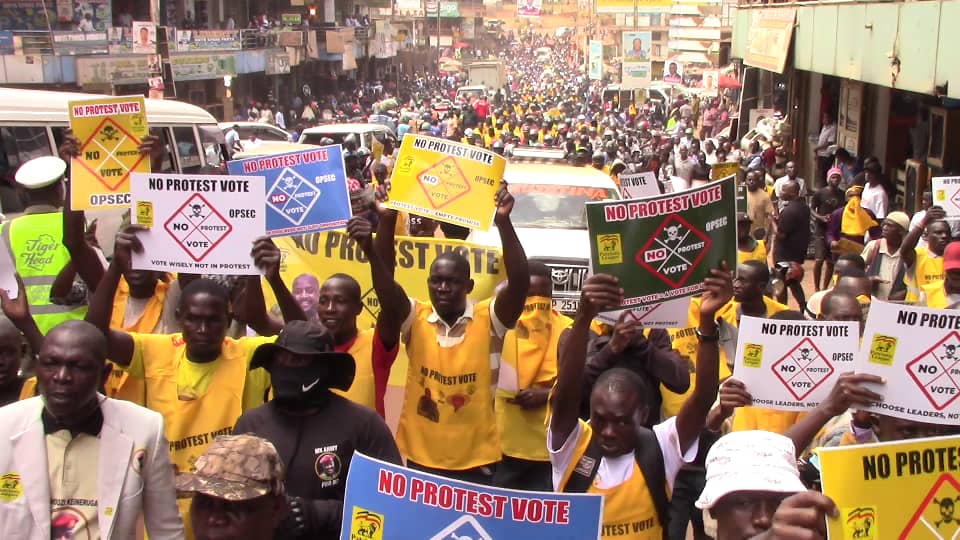
Members of the Patriotic League of Uganda staged a foot march through Kampala today to launch their “No Protest Vote” campaign, positioning it as a counter to the widespread protest‑vote push led by the National Unity Platform.
The PLU warned that it would not wait for security agencies to act against anyone attempting to provoke unrest during the upcoming elections.
The procession, which included bodaboda riders performing stunts, caused heavy traffic congestion. Police monitored the march but made no arrests.
At the launch, PLU Kampala coordinator Henry Kabanda said the campaign aims to protect peace and stability during what he described as a volatile election period.
He urged voters to cast their ballots and head straight home, discouraging post‑vote gatherings.
Kabanda claimed certain groups were mobilising to incite chaos and threatened that PLU supporters themselves would confront anyone involved in such disruption.
“We have identified people preparing to disrupt the elections, especially the so‑called foot soldiers, and we warn them. We shall not wait for security organs to arrest them. We shall be the first to take action because we are strong everywhere,” he said.
The PLU portrayal of its campaign emphasises safeguarding what they call national stability under the current government.
Supporters praised the status‑quo’s record on peace and security and said the PLU would not rely solely on state security institutions to maintain order.
The march concluded at Railway Grounds, where PLU further warned Ugandans against fleeing the country out of fear of alleged election‑related violence.
“There will be no unrest. We have introduced this No Protest Vote campaign to guarantee peace,” they said.
The PLU initiative comes against the backdrop of a rising push from NUP to turn the 2026 election into a “protest vote.”
Under this strategy, NUP encourages citizens—particularly the youth—to cast their ballots en masse as a peaceful but decisive expression of anger over decades of alleged poor governance, corruption, and human‑rights abuses under the ruling National Resistance Movement (NRM).
NUP insists the protest vote is not about boycotting elections or spoiling ballots but about voting for change, with ballots cast as a collective statement of resistance.
In response, a growing number of political actors caution that the protest‑vote strategy may yield mixed results.
Some warn it could weaken opposition unity — especially if ballots are spoilt or invalidated — and inadvertently benefit NRM by reducing credible opposition votes.
By launching “No Protest Vote,” PLU appears to be framing itself as protector of electoral order, urging stability over confrontation, and warning that protest‑vote mobilisation could destabilise society.
As election season intensifies nationwide, the contest between protest‑vote mobilisers and stability‑oriented groups like PLU could shape not just voter behaviour, but the tone of political engagement and public order in Kampala and beyond.
