
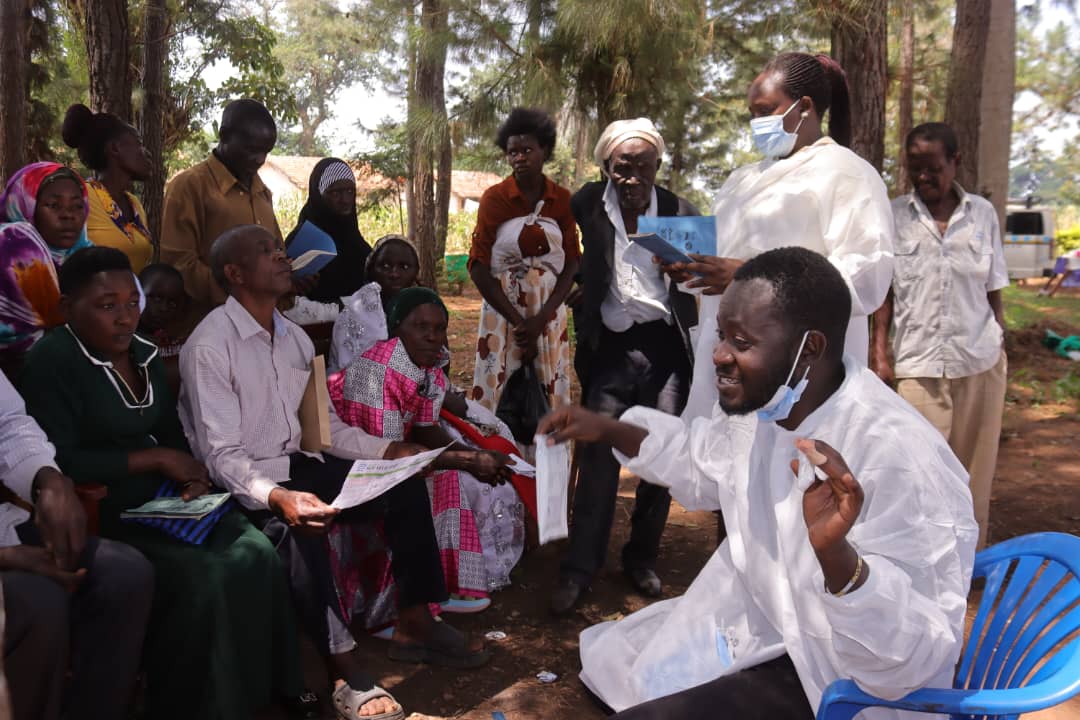
Hundreds of residents in Namalemba Sub-county, Bugweri District, turned up for a one-day free medical camp organized by the Rotary Club of Kibuli in partnership with Rotary Club Iganga and other stakeholders.
The health camp aimed at addressing the pressing healthcare needs of underserved rural communities in the Busoga sub-region.
The camp offered a wide range of medical services, including malaria testing and treatment, back pain management, cancer screening, HIV/AIDS testing, and general health education.
Health experts on the ground sought to tackle both chronic and common illnesses prevalent among the rural population.
Dr. Kharim Mwebaza Muluya, who coordinated the exercise and also serves as President of the Rotary Club of Iganga, highlighted malaria as one of the most persistent public health threats in the region.
“Malaria remains one of the leading causes of illness here, with an estimated 40% of the population affected by mosquito-borne infections,” Dr. Muluya noted.
“Busoga sub-region continues to struggle with a high burden of preventable diseases due to poverty and limited access to health facilities.”
He added that human activities are fueling the rise in illnesses, citing poor sanitation, stagnant water around homesteads, and failure to seek timely medical testing.
“If locals embraced regular testing and early treatment, we could significantly reduce the spread of these diseases,” he emphasized.
According to Dr. Angella Nakato Nakiganda, a young researcher with Ananda Centre for Cancer Research, early screening is key in the fight against cancer, especially breast and cervical cancer.
“For breast cancer, symptoms include a sunken nipple, orange peel-like skin, dimples on the breast, or unusual swelling. Cervical cancer may present through irregular bleeding and pain during sexual intercourse. Early detection can save lives.”
She added that breast cancer can sometimes be genetically predisposed, but many forms of cancer, particularly cervical, are linked to behavior.
“Cervical cancer often begins from around age 40 and is mostly linked to risk factors like unprotected sex, multiple sexual partners, and habitual drinking. Behavioral change and early screening are key to prevention,” she explained.
Captain Musiitwa Mulasa, President of Rotary Club Kibuli, said the club is committed to extending health services to hard-to-reach areas through such outreach camps.
“Many people suffer silently due to lack of access to healthcare,” Capt. Musiitwa said. “This camp gives them an opportunity to get diagnosed and treated. However, medicines are often not enough. We appeal to the government and partners to support these camps so that no one returns home without care.”
He added that Rotary Club Kibuli plans to hold at least seven more health camps across the country this year, though they face challenges in logistics and medical supplies.
“Most Rotarians are not medics, so we depend heavily on volunteer health professionals and partner organizations to provide treatment,” he added.
Local residents expressed appreciation for the outreach, many noting that illnesses common among children and the elderly are often left untreated due to financial constraints.
