
In a bid to heal deepening rifts and reposition the party ahead of future elections, top National Resistance Movement (NRM) leaders in Mayuge District have launched a give-and-take strategy aimed at ending persistent political camps and infighting.
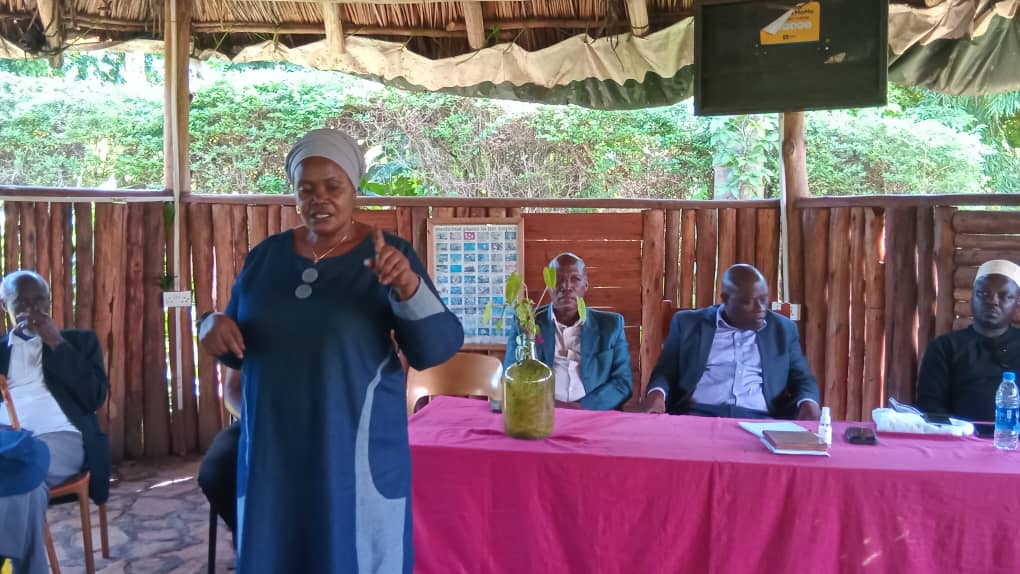
The approach was unveiled during a harmonisation meeting in Baitambogwe Sub-county.
Key party figures in attendance included Third Deputy Prime Minister Lukia Nakadama, Bunya West MP Iddi Isabirye and district party chairperson Aggrey Bagire, Bunya South MP Hajji Iddi Isabirye, Bunya East MP James Kubeketerya, and former LC5 chairperson Hajj Omar Bongo.
Factionalism within the district has long troubled the ruling party, particularly following the last general elections, where senior leaders backed rival candidates.
The resulting divisions not only fractured party cohesion but also contributed to the NRM presidential candidate’s defeat in Mayuge, where the opposition garnered 57 percent of the vote.
Nakadama traced the root of the conflict to a disregard for grassroots opinion in internal party decisions.
“When decisions are made by the district executive committee contrary to the people’s choice, members become frustrated and defect to other parties like NUP,” she said.
“Manipulated results only breed mistrust and disunity.”
She called on the newly appointed district registrar to ensure transparency and resist pressure from senior party structures.
“Declare only genuinely elected candidates,” she urged, “and avoid being influenced by the district executive committee.”
Nakadama also challenged Aggrey Bagire on accusations of concentrating party activities in his own constituency of Bunya West at the expense of the wider district.
“The party must be felt in every corner of Mayuge, not just the western part,” she said, urging inclusive leadership.
Bagire acknowledged the concerns and admitted that party activity typically dwindles after elections due to limited resources.
“It’s difficult to maintain engagement without support,” he said, “but we’re committed to rebuilding trust and strengthening outreach.”
He explained that the give-and-take strategy seeks to de-escalate tensions by encouraging early dialogue among aspirants for various positions.
“The idea is to open space for negotiations before conflicts emerge. It’s not about silencing ambition—it’s about managing it constructively,” Bagire said.
Bunya South MP Hajj Iddi Isabirye supported the move, insisting that harmonisation was necessary to preserve internal cohesion.
“Unity does not undermine democracy. It reinforces it by creating room for consensus before damage is done,” he said.
Yet not all voices were unreservedly optimistic. Hajj Omar Bongo, once chair of the district, warned that past reconciliation efforts had collapsed due to dishonesty.
“My humble prayer is that we don’t have hypocrites,” he said.
“Hypocrisy has been our major problem. Let’s commit to what we’ve resolved.”
The strategy is not only being viewed as a tool for mending internal rifts but also as a means to regain public support.
Leaders acknowledged that Mayuge’s political landscape has changed, and failure to unite could cost the party more ground in upcoming elections.
As the NRM works to regroup, the success of the give-and-take approach may depend not only on good intentions but also on the ability of its leaders to build trust, ensure fairness, and prioritise the party’s collective strength over individual ambition.
