

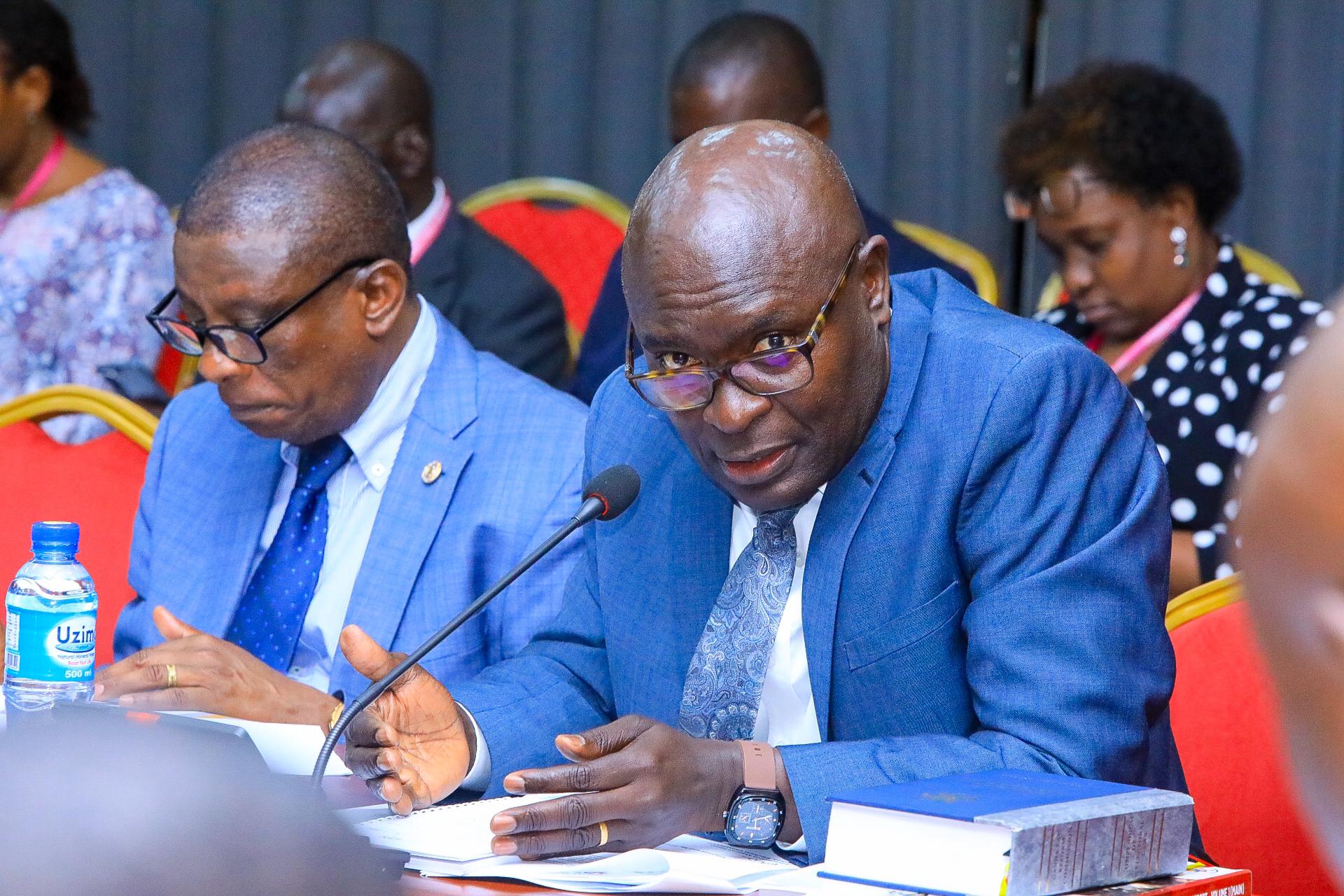
The chairperson of the Electoral Commission (EC), Justice Simon Byabakama has revealed that the commission will not utilize the biometric machines earlier provided by the Uganda Bureau of Statistics (UBOS) for the upcoming 2026 general elections.
After the completion of the 2024 national census, UBOS handed over 36,000 biometric machines to the EC for potential use in the 2026 general elections.
However, on Tuesday, Byabakama informed members of the Parliamentary Legal Committee that the machines are unsuitable for voting due to their unexpectedly short battery life.
“At the time of procurement, they were said to have a battery life span of 18hours but if in March 2025, the battery is running low in 7 hours when it isn’t doing anything, what if on polling day, you have 1000 voters at a polling station where the voter numbers are high and that kit is working nonstop, we don’t even know whether in January 2026, the degradation level would have gone lower, and lower. So, we discovered that these tablets will not serve the purpose,” Byabakama explained.
He further noted that during testing, the machines exhibited significant battery drain even when not in use.
“We decided to test the functionality and reliability of these kits, the first thing we noted, that when you turn on the kit, and leave it unutilised, just on standby, the battery runs low in 7hours, when it isn’t doing anything. So therefore, the delay can’t be attributed to the Commission, the thinking was that these UBOS kits would serve the purpose, but now we find that they cannot,” Byabakama said.
Additionally, Byabakama pointed out technical challenges with the machines, stating that while UBOS did not require biometric identification through fingerprints, the EC now needs this capability, which the machines are not equipped to handle.
His comments came after the committee rejected the government's proposal to use the same kits from the 2024 national census for the 2026 elections.
The MPs expressed concerns that relying on these kits could lead to election results marred by the same discrepancies that plagued the census, which ultimately led UBOS to retract its findings.