
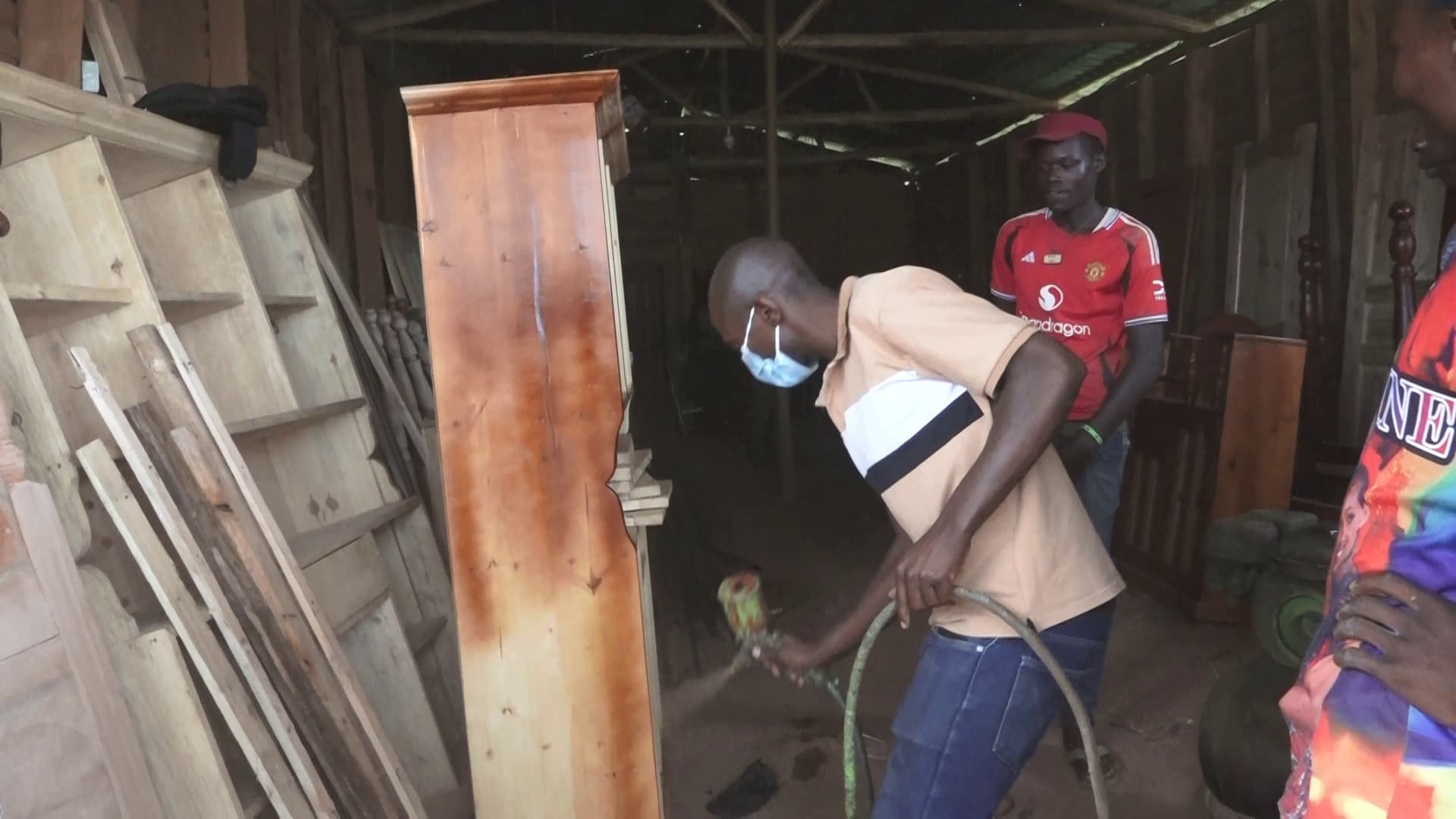
The Ministry of Gender, Labour, and Social Development is conducting regional tours to assess the progress of the Support Jua Kali Enterprises to Transition into the Formal Economy (SENTE) programme.
The initiative, which has benefitted over 23,000 people from 781 registered groups, aims to foster growth within Uganda's informal sectors, including tailoring, welding, carpentry, and creative arts.
“We have come to Bushenyi to monitor the progress of the machines we provided to Jua Kali group enterprises and see how they’ve used these tools to expand their businesses,” said Sharifah Naziiwa, a community outreach officer in the Ministry of Gender.
Launched nine years ago, the SENTE programme’s core goal is to enhance productivity, profitability, and employment in the informal sector by helping enterprises transition into the formal economy.
In its nine years, the program has supported 23,891 beneficiaries, targeting youth, women, and people with disabilities across the country.
It has also helped enterprises in sectors such as tailoring, welding, carpentry, plumbing, and creative arts.
“Thanks to the government's collective inclusion efforts, I’m confident that youth unemployment will soon become a thing of the past,” said Hillary Igambirine, the Assistant Resident District Commissioner (RDC) for Bushenyi.
In Bushenyi District, many beneficiaries have reported substantial progress, with some seeing improvements in productivity after receiving government-supplied toolkits.
Bashir Namara, a beneficiary from Rwentuha Town Council, explained, “I have four children, and I pay their school fees through this business. I also pay my fellow group members. We are thankful to the government for its support.”
Merab Tushemereirwe, another beneficiary from Kyabujimbi Subcounty, shared how the tailoring machines she received have helped grow her business, attracting more trainees.
“Before I got the electric tailoring machines, I could make about 10 garments a day. Now, with the two additional machines from the government, I make 20 or more,” she said.
The program, which is exclusively for Ugandan-owned enterprises organized into registered groups of at least five members, has encountered some challenges.
These include misuse of tools, inconsistent power supply, and complacency among some group members.
However, the Ministry remains committed to addressing these issues and continues to monitor the program’s impact across the country.
