

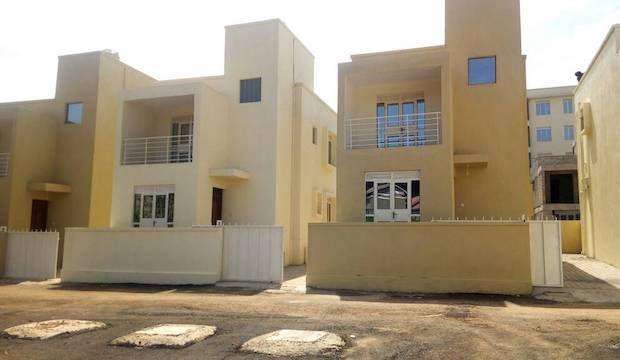
Kampala has been reported to be among the fastest-growing cities in Africa, with a population growth rate of 4.05% but the real estate industry has not grown to match the need for residential houses, apartments, and offices.
With more new people moving into the city, real estate experts told the Nile Post that condominiums are the future of the city.
According to the Uganda Bureau of Statistics, in 2020, Uganda’s population was nearly 46 million people, of whom 27% were urban residents.
They predicted urban households to grow from 2.9 million in 2020 to 3.8 million in 2025, with an increase of 180,000 housing units needed by 2025 to accommodate the growing population.
As an emerging economy, experts said that Uganda is currently grappling with the problem of proper housing to meet the ever-increasing demand because of the fast increasing population and growth rates in its urban centres.
They said that more people are migrating from the rural areas in search of better opportunities in their towns and cities.
Abbas Rasheed, the general manager, Universal Multipurpose Enterprises, a company that deals in residential housing in the form of condominium apartments, said that rising real estate and construction costs have many entrepreneurs and families considering residential and commercial condominiums as an alternative to stand-alone houses or commercial buildings for their business and families.
"It makes sense for businesses or families to share land and parking or security. Stand-alone buildings are expensive and hard to find in many areas, especially in commercial business parks," he said.
Adam Mpuuga, a city realtor noted real estate business remains largely informal, unregulated, over-priced in urban centres and marred with information asymmetry, which factors underscore structural challenges and long-term risks to the sector.
He, however, stated that with time, the economy has improved and people want to own property now.
Mpuuga noted that Uganda needs an orderly response to rapid urbanisation, which expects to grow at 5.6% per annum. That would be an affordable housing supply.
However, the widening economic gap between the poor and the wealthy is one of the major factors hindering the proper take-off of Uganda’s housing sector in urban areas, with over 60% of the population in urban areas living in slums.
For an average middle-class consumer, he explained the idea of paying for a separate ownership of individual units in a multiple unit building is a natural step up from the gruelling monthly rent payments that majority have to endure in their early professional life.
David Kireli, a civil engineer in the ministry of Education and Sports said houses built in estates are fast-becoming the choice of preference today as they are easy to buy compared to a single bungalow that you have to take loads of time to build.
Although they have not existed for long, he noted that estates are developing very fast in middle-class residential neighbourhoods in Uganda.
The development and ownership of condominiums is governed by the Condominium Property Act, 2001 and the regulations thereunder.
