

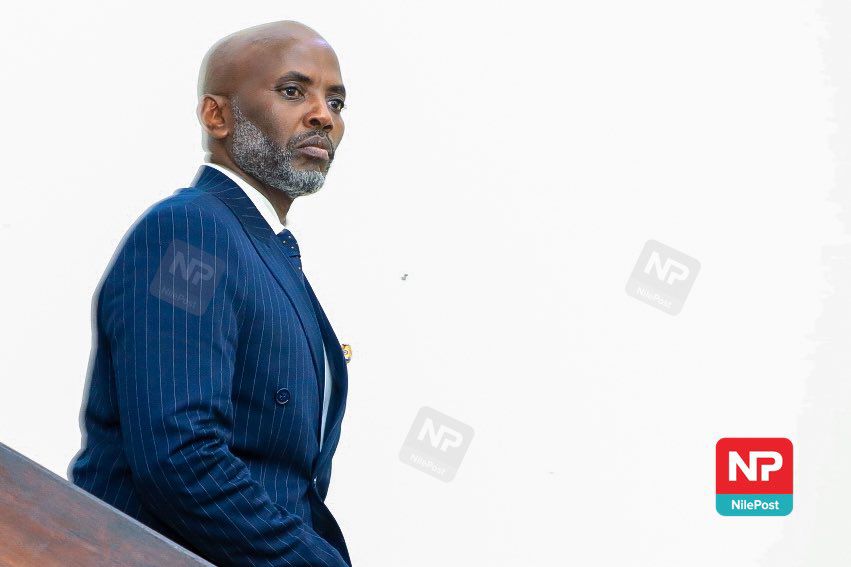
The Uganda Law Society (ULS) has called for greater transparency in the vetting of Minister-designate for Internal Affairs Lawrence Muganga, insisting that questions over eligibility for ministerial office are constitutional matters of public accountability rather than personal attacks.
In a statement dated June 4, 2026 and signed by ULS President Isaac Ssemakadde and members of the Society’s leadership, the legal body said scrutiny of Muganga’s suitability for Cabinet office is grounded in law and must be handled in line with constitutional requirements.
“Questions of eligibility for high public office are not personal attacks, but issues of constitutional and statutory compliance,” the statement read.
ULS cited Article 15(7) of the Constitution, which empowers Parliament to restrict dual citizens from holding specified public offices, alongside provisions of the Uganda Citizenship and Immigration Control Act and the Fifth Schedule, which bar dual citizens from occupying certain state positions, including Cabinet and ministerial roles.
“The clear legal position is unambiguous,” the Society stated, adding that while citizenship is ordinarily a private matter, it becomes a public interest issue when linked to senior offices involving national security responsibilities.
The Society noted that it does not usually engage in citizenship disputes but was compelled to respond after Muganga publicly commented on his vetting before Parliament’s Appointments Committee.
ULS cautioned against framing constitutional scrutiny as ethnic hostility, warning that such claims risk undermining public debate and the rule of law.
“Pursuant to Section 3(d) of the ULS Act, we strongly caution Dr. Muganga and his supporters against framing legitimate legal scrutiny as anti-Rwanda hatred, tribalism, or racism,” the statement read.
It stressed that restrictions on dual citizens apply narrowly to specific offices for reasons of sovereignty and undivided allegiance, and do not amount to discrimination in private life.
The intervention comes amid controversy over Muganga’s nomination as State Minister for Internal Affairs, a portfolio that oversees immigration, citizenship and identity systems.
Muganga has strongly defended himself following his appearance before the Appointments Committee, rejecting claims that he holds Rwandan citizenship and alleging bias during the vetting process.
He said accusations about his nationality were false and politically motivated, and claimed he was unfairly targeted during the parliamentary process.
In response, MPs defending the committee process argued that the issue under review was citizenship compliance, not ethnicity, with some alleging that investigations suggested Muganga held multiple passports.
The debate has also triggered legal action, with a petition filed seeking suspension of his appointment process until his citizenship status is clarified.
ULS also criticised the use of closed-door vetting sessions under Parliament’s Rules of Procedure, arguing that secrecy undermines accountability.
“We reiterate our call for genuinely open and transparent parliamentary vetting processes,” the statement said, urging Parliament to amend rules that allow closed hearings.
The Society said it would formally request the Appointments Committee report on Muganga’s vetting to independently assess compliance with constitutional and legal requirements.
While rejecting xenophobia, ULS maintained that constitutional scrutiny of public appointments must not be misrepresented as ethnic prejudice.
“This isolated case of constitutional scrutiny must not be misused to stoke division or prejudice against any community,” the statement added.
The Law Society reaffirmed its commitment to constitutionalism, stating that all public appointments must strictly comply with the law and principles of good governance.
