
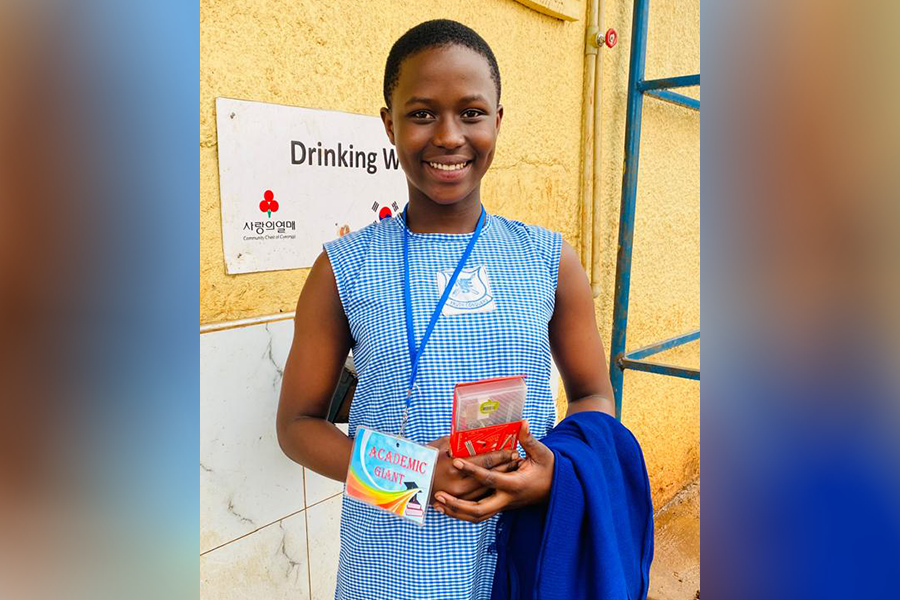
In Uganda’s Busoga region, the stories of two children at Mpumudde Estate Primary School reveal what water scarcity quietly takes from a child: not only health, but focus, dignity and the simple right to feel clean. This is what was at stake, and what changed.
For years, the surest sign that the school day had ended at Mpumudde Estate Primary School was not the final bell. It was the clatter of unwashed plates being slipped into hundreds of school bags.
There had been no water to wash them, so the children carried their lunch dishes home the same way they had carried their thirst all day; quietly and without complaint.
Batabazi Wahab knew that silence well. At just 12 years old, the Primary Six West pupil understood the value of clean water in a way many adults overlook.
A thirst that followed them into class
Before a new drinking and handwashing facility was built, water was one of the silent struggles of the school day.
Pupils arrived ready to learn, but thirst often followed them into the classroom. Some carried water from home, only for their bottles to run dry by midday.
Others bought water when they had a few coins. Those who had none simply endured.
For a child, thirst is never only about the body. It steals attention too. A teacher may be explaining a lesson, but the mind keeps drifting back to water.
The mouth turns dry, the body grows heavy, and a single school day begins to feel far longer than it should.
Thirst also changed how children tried to care for one another. When one pupil arrived with water, classmates without water often asked for a sip from the same bottle. The gesture was generous, but it carried risks.
During cough outbreaks, one bottle could move from child to child, spreading infection.
“Sometimes one bottle would serve many children because some had nothing to drink. When one child came with a cough, you would soon hear other children coughing too," says Lydia Naigino Kiirya, deputy headteacher of Mpumudde Estate Primary School.
"The new water point has made drinking safer because every child can get water without sharing bottles.”
The struggle did not end with the last lesson. After lunch, pupils needed water to wash their plates, and there was rarely any to spare. Most had no choice but to pack the dirty dishes back into their bags and carry them home.
Wahab explains it the way only a child can:
“We used to just put the plates in the bag when they are dirty, and you wash from home," says Wahab Batabazi, 12, in Primary Six West.
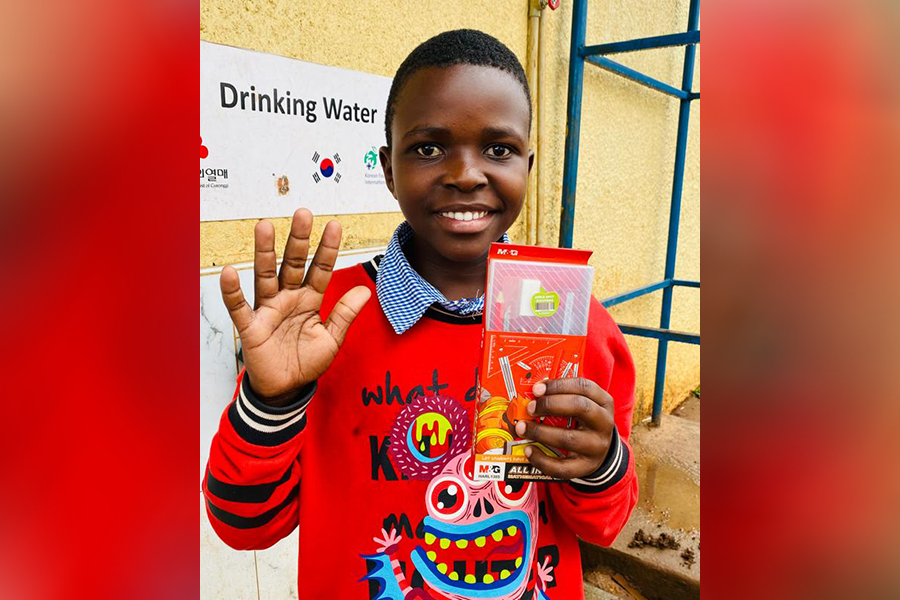
For Philis Mukodha, in Primary Seven West, the hardest memory is the day she returned to school after a stay in hospital. She had been unwell, and doctors had instructed her to take medicine with clean water. But when she came back to class, she found that drinking water was still out of reach.
“I had medicine from the hospital that I needed to take with clean water. I came back to school, and I still could not get it. That was very hard," says Mukodha, 13.
The day the taps arrived
In 2025, that changed.
Through a partnership between the Korea Foundation for International Healthcare (KOFIH), the Office of the Prime Minister, and with funding from the Community Chest of Korea under the Waterborne Disease Reduction and Prevention Project (2025–2026), a new drinking and handwashing facility was built at Mpumudde Estate Primary School to serve nearly 1,500 pupils.
The structure itself is not grand. It is simply clean water, reliably available, in a dignified space. To a passing visitor, it might look modest. To Wahab and Philis, it rearranged the world.
The plates come home clean now. Cough outbreaks no longer spread the way they once did. Children no longer have to stretch one bottle across many mouths, and a child returning from hospital with medicine and thirst can finally drink.
These are not just lines in a hygiene report. They are the return of something more fundamental; the everyday dignity that should come with simply being a child at school.
“Now when I am thirsty, I just go and drink. It is there. It is clean. I don’t have to think about it anymore,” Wahab Batabazi says.
What it means for the health worker
For those responsible for community health, the change is not only visible; it is measurable.
“When I walk into Mpumudde Estate Primary School today, I see something a health officer never takes for granted: children who are present, and children who are well," says a Jinja City Health Officer.
"What confirms it for me are the registers at the nearby health centre. Cases of waterborne illness among children from this school and community such as cholera and abdominal cases that used to fill our waiting rooms have dropped."
The health officer added: "Every shilling no longer spent treating a child for a preventable waterborne disease is a shilling that can meet the rising tide of non-communicable diseases. Safe water does not only save lives; it frees the resources to save more lives. I am deeply grateful to the people of South Korea for making this possible.”
The bottles are no longer empty. The taps are open. And for the children of Mpumudde Estate Primary School, a school day now begins and ends with something that should never have been extraordinary: a clean drink of water.
