

A study by a researcher at Makerere University School of Public Health has found that a large proportion of minibus taxi drivers operating in Kampala suffer from significant levels of psychological distress, highlighting an overlooked occupational health concern in Uganda’s informal transport sector.
The research, conducted by medical doctor and public health graduate Dr Linda Jovia Kyomuhendo, found that nearly two-thirds of taxi drivers surveyed showed symptoms of depression, while more than 70 percent had symptoms of anxiety and about 82 percent reported high stress levels.
The findings are based on a cross-sectional study involving 422 drivers operating in major taxi parks across Kampala, including Old Taxi Park, New Taxi Park, Kisenyi, Usafi, Namirembe, Nakawa, and Nateete.
According to the research, whose results have been featured on the Makerere Unviversity website in an article by Davidson Ndyabahika, the high levels of psychological distress are linked to demanding working conditions in the city’s transport sector, including long working hours, sleep deprivation, economic pressure, and exposure to road accidents.
Dr Kyomuhendo, who recently completed a Master of Public Health degree at the Makerere University School of Public Health, conducted the study to examine the prevalence of depression, anxiety, and stress among taxi drivers and to identify factors contributing to their mental health challenges.
Participants in the study completed structured interviews covering socio-demographic, occupational, lifestyle, and health factors. Their mental health status was assessed using the Depression Anxiety Stress Scale (DASS-21), a widely used screening tool in mental health research.
The results showed that 65.6 percent of drivers screened positive for symptoms of depression, more than 70 percent for anxiety, and approximately 82 percent for stress.
Several factors were strongly associated with higher levels of psychological distress. Drivers who had been involved in road accidents within the previous year were significantly more likely to report symptoms of depression.
Chronic medical conditions and a family history of mental illness also increased the likelihood of mental health problems.
Sleep deprivation emerged as one of the strongest predictors. Drivers who reported sleeping fewer than seven hours per night were more likely to experience anxiety and stress.

Economic pressures also played a role. Drivers who owned the vehicles they operated were less likely to report anxiety compared to those who rented taxis or were required to make daily remittance payments to vehicle owners.
Kyomuhendo said the findings highlight the need to pay greater attention to the well-being of taxi drivers, who form a critical part of Uganda’s transport system.
“They are important in Uganda’s transport industry, yet they seem to be overlooked in our society,” she said.
Uganda’s road transport system relies heavily on 14-seater public service taxis and motorcycles. Thousands of taxis operate in the Kampala Metropolitan Area daily, transporting millions of passengers and forming the backbone of urban mobility.
The study suggests that the mental health of drivers should be considered not only as an occupational health issue but also as a public safety concern.
According to Kyomuhendo, psychological distress can affect concentration, reaction time, and decision-making — abilities that are essential for safe driving in a city known for heavy traffic congestion and complex road conditions.
“If drivers are anxious or sleep-deprived, there is a risk they may struggle to follow traffic rules or respond quickly to hazards,” she said.
The research also found that discussions about mental health among drivers are rare, partly due to stigma surrounding men’s mental health in many communities.
Kyomuhendo called for increased awareness and stronger occupational protections for drivers, including interventions that address long working hours, economic pressures, and access to health services.
She also suggested that transport regulators and health authorities consider integrating mental health support into occupational safety programs for the sector.
The findings add to growing evidence that mental health challenges among workers in high-pressure informal occupations remain largely unrecognized despite their potential impact on both individual well-being and public safety.
The issue also sits within a broader context of road safety concerns in Uganda. Public service taxis have frequently been cited in road safety reports as contributors to serious crashes on the country’s highways and urban roads.
Investigations into traffic accidents have repeatedly highlighted reckless overtaking, sudden lane changes, speeding, and aggressive driving behaviours among some taxi operators.
In dense urban traffic, taxi drivers often compete aggressively for passengers and road space, a dynamic that can encourage risky manoeuvres such as cutting lanes abruptly, overtaking in narrow corridors, or ignoring traffic rules in order to maintain their position in the queue or reach stages faster.
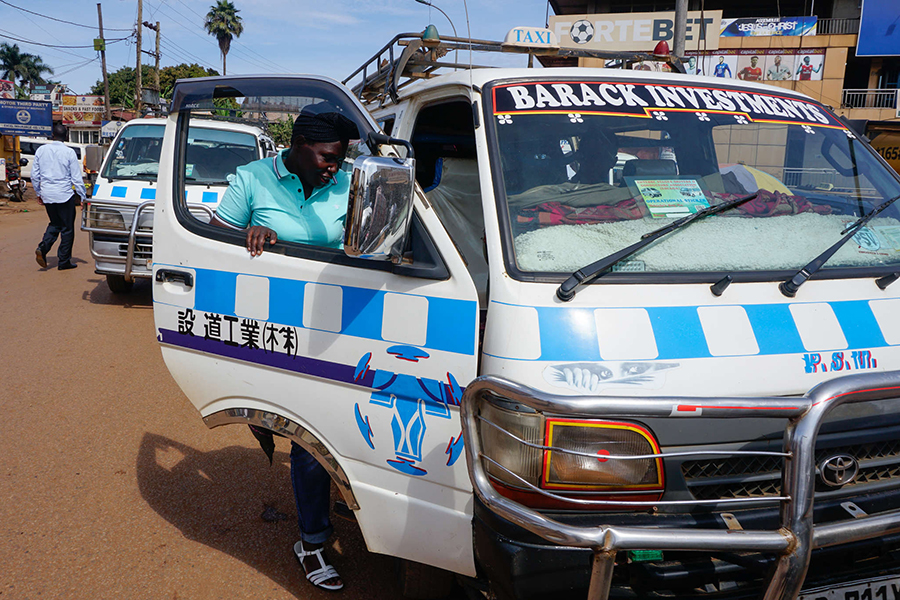
These behaviours have occasionally escalated into confrontations on the road. Motorists and pedestrians in Kampala regularly report instances where taxi drivers lose their temper in traffic, exchanging insults with other road users or directing verbal abuse at passersby.
Women in particular have frequently complained of harassment or insults from some taxi operators and their conductors during traffic disputes or roadside altercations.
Road safety observers have long linked such behaviour to the intense pressures within the taxi industry, where drivers must meet daily remittance payments to vehicle owners, compete for passengers, and navigate some of the most congested roads in the country.
Traffic environments in Kampala also remain highly hazardous. Busy corridors such as Jinja Road, Bombo Road, Entebbe Road, and the Kibuye–Natete route carry a constant mix of taxis, buses, motorcycles, pedestrians, and cyclists competing for limited road space.
In these conditions, driver fatigue, stress, and frustration can easily translate into dangerous driving decisions.
Researchers note that impaired concentration, irritability, and reduced patience—common symptoms of chronic stress—can increase the likelihood of aggressive driving, risky overtaking, and road rage.
Kyomuhendo’s findings therefore point to a broader policy challenge: the mental well-being of taxi drivers is not only a labour and public health issue but also a matter of road safety.
Improving working conditions, addressing economic pressures, and expanding mental health awareness among drivers could ultimately have implications not only for the drivers themselves but also for the millions of passengers who rely on Uganda’s informal transport system every day.
