
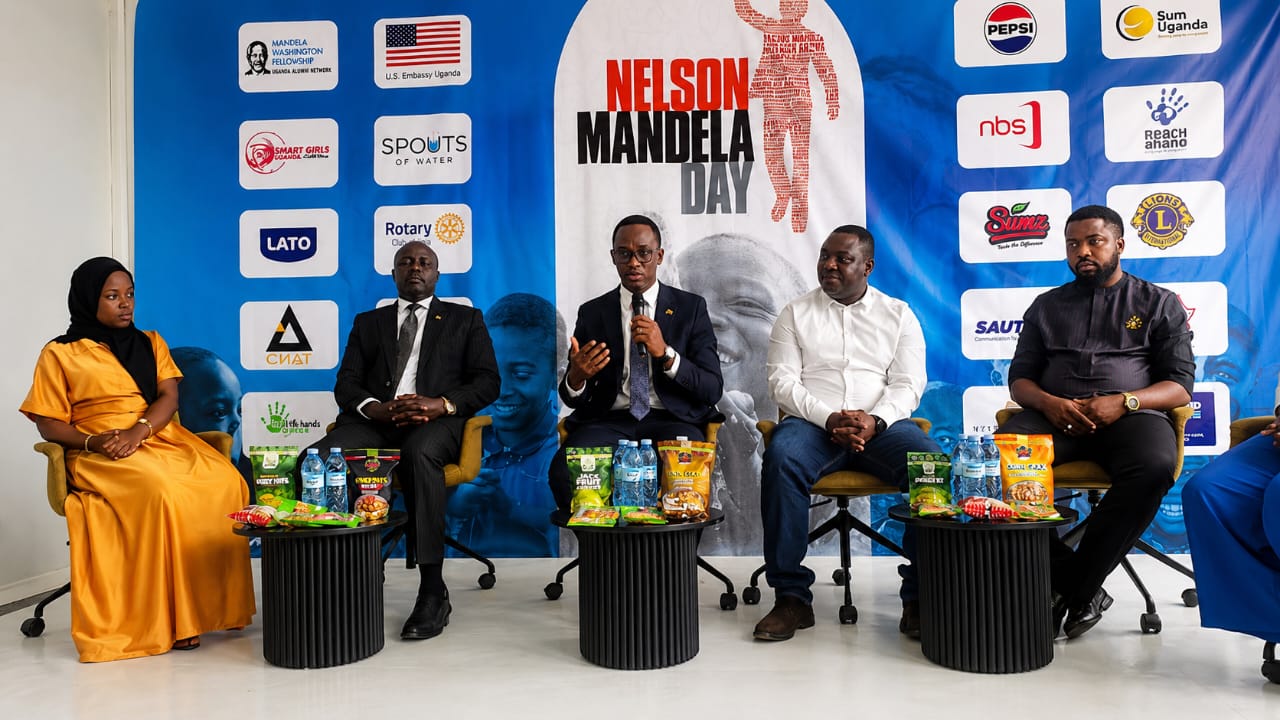
The Mandela Washington Fellowship Alumni Network Uganda has launched a Clean Water Campaign to mark Mandela Day 2026, aiming to improve access to safe drinking water for schoolchildren in Jinja District through partnerships with Rotary, private sector organisations and civil society groups.
The initiative, which shifts from last year's focus on disability inclusion, will see the distribution of ceramic water purification filters to five schools in rural and peri-urban Jinja to help reduce waterborne diseases such as diarrhoea and typhoid among learners.
Speaking at the launch, the President of the Mandela Washington Fellowship Alumni Network Uganda, Don Patrick Bugingo, said the fellowship—an initiative of the U.S. Government established under former U.S. President Barack Obama and supported by the U.S. Embassy in Uganda—was created to equip young African leaders with the skills, knowledge and networks needed to drive positive change in their communities.
Bugingo said the campaign demonstrates the power of partnerships in addressing pressing community challenges, noting that access to clean water is fundamental to children's health, well-being and education.
"This year, we embarked on a unique campaign focused on safe drinking water because many learners continue to suffer from preventable diseases due to unsafe water. Through partnerships, we want to ensure children have access to clean and safe drinking water," Bugingo said.
He noted that the network's 2025 Mandela Day activities were held at the Kampala School for the Physically Handicapped, where members championed disability inclusion and equal access to education.
"Our network of more than 300 Mandela Washington Fellowship alumni remains committed to using leadership, partnerships and community service to create lasting change across Uganda," he added.
The campaign will benefit Riva Primary School, Wenda Primary School, Uganda Railway Primary School, Spire Road Primary School, and another selected school in Jinja District, where ceramic water purification filters will be installed to improve access to safe drinking water.
Rotary District Governor Gerald Obai welcomed the initiative, describing access to clean water as one of the most effective ways to improve public health and prevent disease.
Drawing on his experience implementing a Rotary-funded water project worth nearly US$1 million, Obai recalled witnessing communities forced to rely on unsafe water sources, an experience he said strengthened Rotary's commitment to investing in water, sanitation and hygiene (WASH) programmes.
He said the Mandela Day campaign aligns with Rotary's seven areas of focus, including water and sanitation, disease prevention, maternal and child health, education, peacebuilding, economic development and environmental protection.
Obai emphasised that partnerships are essential for sustainable community development, noting that organisations achieve greater impact when they work together rather than in isolation.
Representatives of partner organisations also pledged continued support for the initiative, saying the campaign goes beyond providing clean drinking water to creating lasting improvements in the lives of young people.
They said investing in children's health through improved access to safe water will contribute to healthier communities, better educational outcomes and long-term social and economic development.
The partners further committed to strengthening collaboration with the Mandela Washington Fellowship Alumni Network Uganda to expand the campaign's reach and ensure more vulnerable communities benefit from clean and safe drinking water in the years ahead.
