

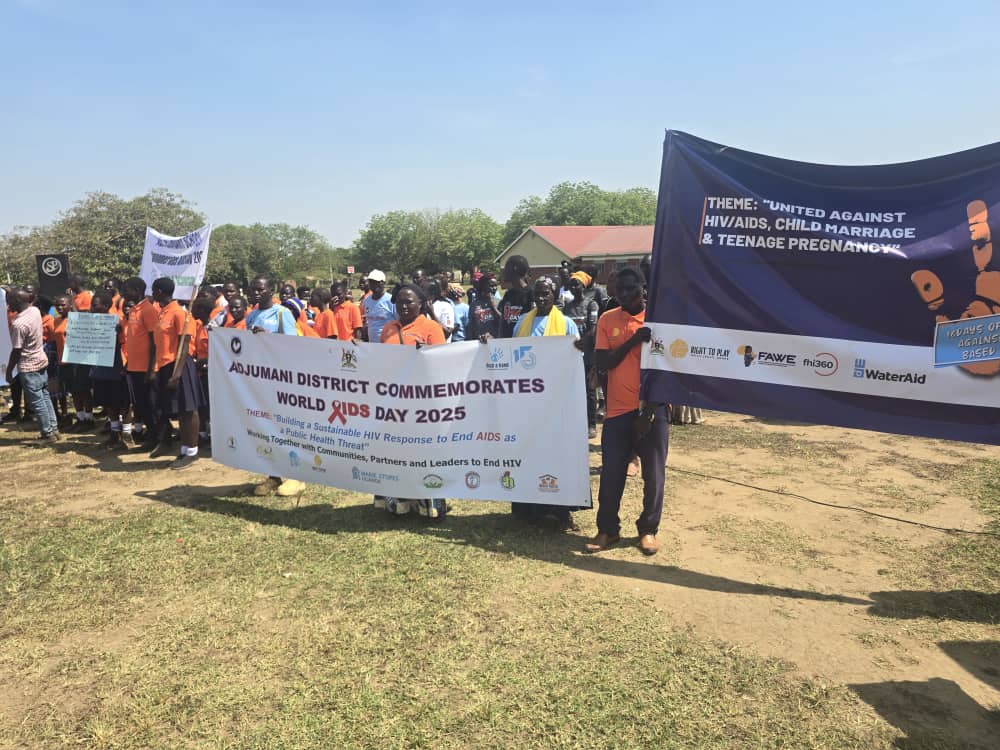
Adjumani District has reported a rise in HIV cases to more than 3,300 people—including nationals and refugees—as communities joined the rest of the world to commemorate World Aids Day.
New figures released by the district’s health department place Adjumani’s HIV prevalence at 2.4 percent, slightly above the West Nile regional rate of 2.3 percent and below the national prevalence of 5.1 percent. The district currently ranks fifth in HIV prevalence within the region.
District Health Officer Dr Dominic Drametu said Adjumani registered 476 HIV cases in the 2024–2025 financial year, up from 412 cases the year before.
He noted that 110 new infections were recorded over the same period, with most occurring among young people.
“Out of the more than 3,300 individuals living with HIV, at least 1,700—representing 84 percent—are consistently taking their medication, while others have defaulted due to cross-border movements and socio-economic challenges,” Dr Drametu said, calling for a renewed focus on addressing inequalities and strengthening access to accurate health information.
During the district-level commemoration at Adjumani Model Secondary School playground, the Tuberculosis and HIV Officer at the Infectious Diseases Institute (IDI), David Emucm, revealed that the organisation is supporting 18 health facilities to enhance HIV services for both refugees and host communities.
“We are working closely with these facilities to strengthen testing, care, and treatment adherence across the district,” he said.
Gender-based violence remains a key driver of infections, according to FAWE Uganda’s Programs Manager, Joseph Adiam, who said the organisation is using the SHARE project to promote informed decision-making and keep vulnerable young people in school.
“We have re-enrolled more than 400 school dropouts and teenage mothers so they can continue their education and stay safe,” he added.
Adjumani District Secretary for Health, John Sabuni, urged the community to avoid discrimination against people living with HIV and encouraged abstinence, testing and regular counselling.
District Chief Administrative Officer James Ocen Andrew called for sustained commitment, saying, “Despite the progress made, we must renew our efforts to fight the scourge.”
The Vice Chairperson of the Adjumani District Association of People Living with HIV, Sabina Komigbwu Vukoni, said the annual commemoration provides an essential platform to assess progress and raise awareness of the challenges communities still face.
Deputy Resident District Commissioner Emmanuel Okware reaffirmed government support for prevention and care, urging young people to “live responsibly and be productive,” while noting that Uganda has made “tremendous strides” in combating the epidemic.
Stakeholders collectively appealed for stronger prevention strategies, community empowerment initiatives, and sustained support for treatment adherence as Adjumani works toward reducing new infections and bringing the district closer to ending AIDS as a public health threat.