
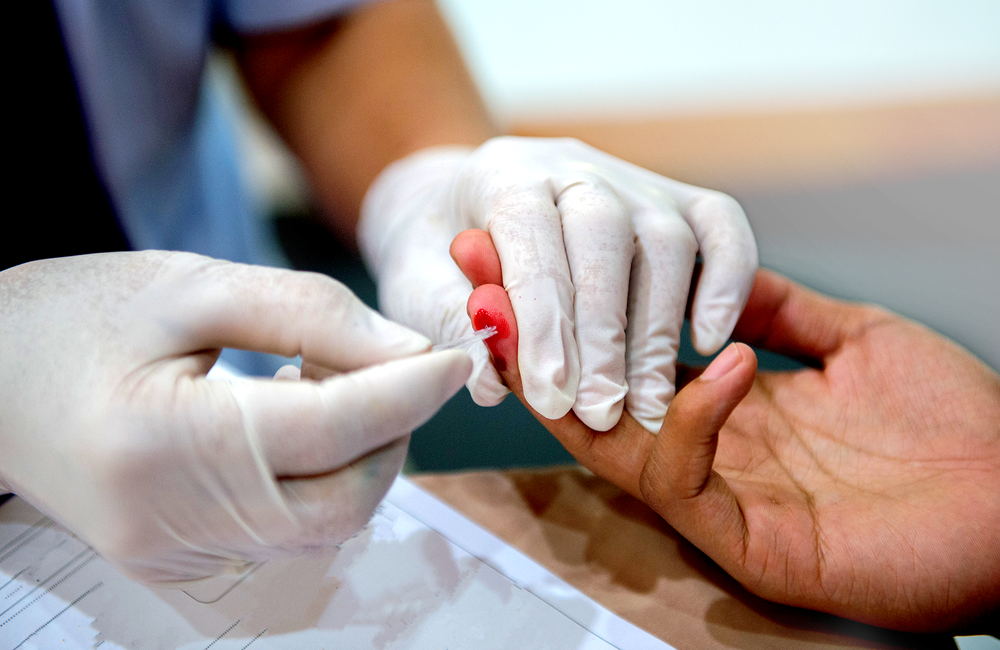
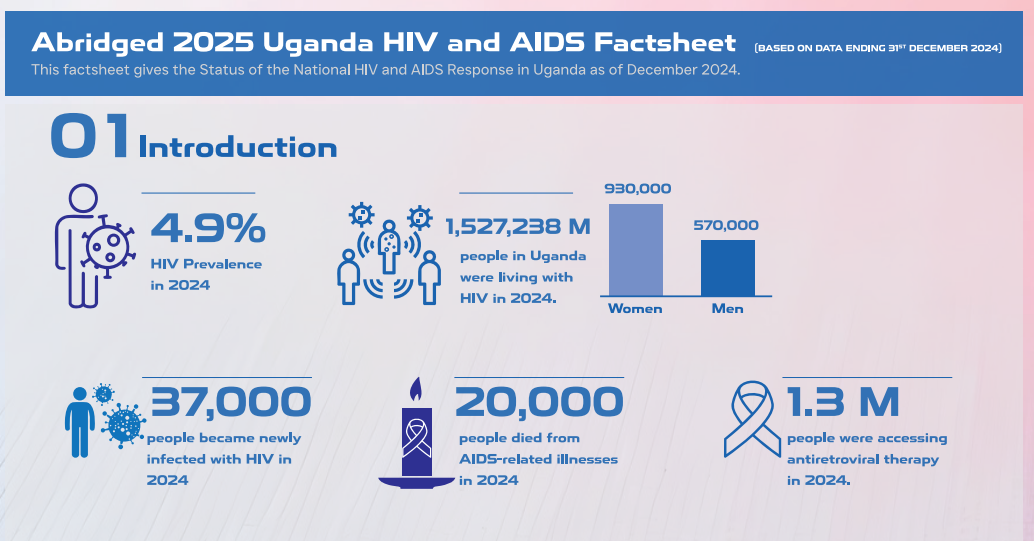
Uganda entered 2025 with cautious optimism in its long-running battle against HIV/Aids. Fresh national data shows that HIV prevalence among adults aged 15–49 fell to 4.9% in 2024, down from 5.1% in 2023—continuing a slow but steady decline.
The country also registered fewer new infections and fewer Aids-related deaths than in previous years, signs that decades of investment in treatment, awareness, and prevention are bearing fruit.
But these gains may be short-lived. Experts warn they could quickly unravel following Washington’s decision to freeze funding to major global health agencies, including UNAIDS.
The cut leaves Uganda facing a Shs400 billion financing gap in its HIV response, according to the Ministry of Health, and threatens to destabilize programs that millions of Ugandans rely on for free or subsidized services.
The Abridged 2025 Uganda HIV and AIDS Factsheet, released this week by the Uganda Aids Commission, paints a nuanced picture of the epidemic.
By the end of 2024, an estimated 1.53 million Ugandans were living with HIV, with women disproportionately affected—930,000 women compared to 570,000 men.
That gender imbalance highlights how social and structural inequalities continue to fuel vulnerability, especially among young women and girls.
Uganda recorded 37,000 new infections in 2024, a dramatic 61% decline since 2010, yet still averaging about 101 new infections every day.
Aids-related deaths also fell, with about 20,000 deaths in 2024, down from 56,000 in 2010—a 63% decline that reflects wider treatment rollout and improved awareness.
By December 2024, more than 1.3 million Ugandans were accessing antiretroviral therapy (ART), a cornerstone in prolonging lives and suppressing transmission.
Still, geography and gender disparities remain stark. Fort Portal City recorded the highest prevalence at 14%, while the central region averaged 7.7%.
West Nile, by contrast, reported just 2.3%. Women’s prevalence stood at 6.4%, nearly double men’s 3.4%.
Experts cite biological factors, unequal healthcare access, gender-based violence, and cultural norms as drivers of this imbalance.
The shadow of US aid cuts
For two decades, Uganda’s HIV response has been heavily bankrolled by U.S.-funded initiatives such as Pepfar (the President’s Emergency Plan for Aids Relief) and Washington’s contributions to UNAIDS.
These programs provide the backbone for HIV testing kits, ARV procurement, prevention campaigns, and community outreach.
The recent freeze under the Trump administration has sent shockwaves through Uganda’s health sector.
Civil society groups warn that the Shs400bn funding hole could trigger stock-outs of lifesaving ARVs, reduce the availability of HIV testing kits, and derail prevention drives such as condom distribution and voluntary medical male circumcision.
“If we cannot close this gap quickly, we risk undoing 20 years of progress,” a Kampala-based health advocate said.
“Testing services will be disrupted, adherence support will weaken, and people will fall through the cracks.”
Uganda, like many countries, has been working toward the 95-95-95 global targets: ensuring that 95% of people living with HIV know their status, 95% of those diagnosed are on treatment, and 95% of those on treatment achieve viral suppression.
Current figures show Uganda is moving steadily toward those benchmarks, but without predictable funding, momentum could stall.
Disruptions in testing would mean fewer people knowing their status. Interruptions in ART supply chains could push patients off treatment, risking both personal health crises and a resurgence of transmission.
And without consistent viral suppression, Uganda’s hard-won progress in reducing AIDS-related deaths could reverse.
The looming crisis is particularly worrying for young Ugandans. While new infections among young people have dropped by 57% over the last decade, adolescent girls and young women remain at much higher risk than their male peers.
Many rely on US-funded outreach initiatives for HIV testing, counseling, and prevention education.
A funding freeze could leave this group dangerously exposed, undermining the generational progress Uganda has been building toward.
A call for alternatives
The challenge for Uganda is now twofold: consolidating the fragile progress already made while urgently mobilizing alternative financing to plug donor withdrawal.
Government officials have floated the idea of increasing domestic health financing, tapping into private sector partnerships, and seeking new bilateral donors. But such measures will take time to organize—and time is not on Uganda’s side.
Health experts stress that addressing the structural drivers of the epidemic is equally critical.
Tackling gender inequality, combating stigma, and promoting safer sexual practices remain as urgent as ever. Without sustained prevention alongside treatment, the epidemic could easily resurge.
Uganda’s story is one of resilience: the country has moved from the devastating peak of the epidemic in the 1990s to steady declines in prevalence, deaths, and infections.
Yet, the latest data underscores how fragile those gains remain.
As one HIV clinician in Gulu put it: “We have the science, the drugs, and the knowledge to end AIDS as a public health threat. What we don’t have—right now—is the certainty of funding. That’s the cliff we are standing on.”
Unless Uganda can swiftly shore up resources and safeguard the treatment pipeline, the optimism of 2025 may fade, leaving the country’s most vulnerable to bear the heaviest costs of global politics.
