
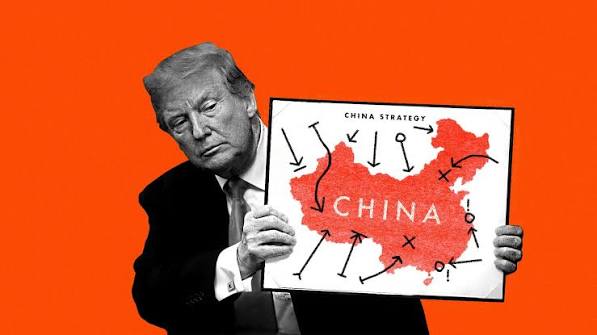
Donald Trump's latest allegation that China interfered in the 2020 U.S. presidential election has predictably reignited a familiar debate.
Beijing dismissed the claim as politically motivated, while American intelligence agencies have previously assessed that China did not attempt to alter the outcome of the election itself. Yet the renewed controversy draws attention to a larger and more consequential question of whether Beijing has developed a sophisticated repertoire of political influence that seeks to shape elections long before a vote is cast.
Discussions on election interference has often evoked images of cyberattacks on electoral infrastructure, ballot manipulation or covert funding of candidates. These remain valid concerns, but they represent only one end of a much broader spectrum.
China's approach, where documented, has generally been more subtle. Instead of directly determining who wins an election, Beijing has sought to shape the political environment by cultivating political elites, influencing public discourse mobilising diaspora networks and leveraging economic relationships to create conditions favourable to its long-term strategic interests.
This approach has also been a consistent feature of Chinese statecraft across the board. The Chinese Communist Party (CCP) rarely views influence as an episodic activity tied to election cycles. For them, it has always been an enduring political process.
Institutions such as the United Front Work Department, the Party's external propaganda system and an expanding digital ecosystem work in parallel to cultivate relationships, amplify preferred narratives and marginalise voices viewed as hostile to Beijing.
For instance, for Beijing, Taiwan's elections are not simply domestic political contests across the Strait; they are referendums on the future of cross-Strait relations. Every presidential election has therefore become accompanied by increasingly sophisticated attempts to influence public opinion. Earlier efforts relied heavily on economic coercion, diplomatic signalling and state media messaging. Over the past decade, however, the toolkit has expanded dramatically.
Researchers from prominent think-tanks, alongside investigations by Meta, Google and Microsoft, have documented coordinated networks of fake social media accounts, content farms and influence campaigns operating across Facebook, YouTube, TikTok and X.
During the 2024 presidential election, Taiwanese authorities identified waves of fabricated stories questioning the integrity of the electoral process, exaggerating economic anxieties and portraying the Democratic Progressive Party as unnecessarily provoking conflict with Beijing. Much of the content was not entirely false. Instead, genuine news was selectively amplified, taken out of context or combined with misleading narratives, a technique that is considerably harder to detect and counter than outright disinformation.
Equally significant was the increasing use of artificial intelligence. Microsoft warned that China-linked actors had begun experimenting with AI-generated images, multilingual messaging and synthetic content designed to increase engagement while making attribution more difficult.
Rather than convincing every voter, these campaigns sought something more modest but equally consequential: increasing uncertainty, deepening political polarisation and eroding trust in democratic institutions.
Similar patterns have emerged elsewhere, albeit through different methods. Canada has spent the past three years confronting allegations that Chinese officials attempted to influence federal elections in 2019 and 2021.
Intelligence leaks reported by prominent media outlets suggested efforts to cultivate preferred candidates, mobilise community organisations and influence nomination contests. These revelations culminated in the establishment of the Hogue Commission on Foreign Interference.
Importantly, the Commission has not concluded that election results themselves were manipulated. Instead, it found that foreign actors sought to influence democratic processes through community networks, political relationships and information activities that often remained below the threshold of criminal conduct.
That finding captures the central challenge facing democracies today. Influence operations are increasingly designed to remain within legal grey zones.
They rely less on dramatic acts of espionage than on activities that appear individually benign, political donations, business partnerships, cultural associations, academic exchanges or local media engagement, but collectively build long-term political leverage.
Australia encountered precisely this dilemma nearly a decade earlier. The resignation of Senator Sam Dastyari in 2017 transformed what had previously been an intelligence concern into a national political debate.
Investigations revealed extensive links between Chinese political donors and Australian public figures, prompting security agencies to warn that Beijing was systematically cultivating influence across politics, universities, business and diaspora organisations. Rather than focusing exclusively on espionage, Australia's subsequent foreign interference legislation recognised a broader reality that foreign influence increasingly operates through openness rather than secrecy, exploiting the very institutions that liberal democracies depend upon.
Democracies on the other hand, are increasingly responding through foreign influence transparency laws, stricter campaign finance regulations, cybersecurity investments, intelligence cooperation and digital literacy initiatives.
Taiwan's experience demonstrates the value of rapid fact-checking networks and whole-of-society resilience against information manipulation. Australia's legislative reforms have strengthened transparency around foreign lobbying, while Canada's ongoing inquiries are prompting institutional reforms aimed at protecting democratic integrity.
The future of election security will therefore depend less on protecting ballot boxes than on safeguarding the broader information environment in which democratic choices are made.
China's expanding influence toolkit reflects a wider transformation in international competition, where narratives, networks and perceptions increasingly matter as much as military capabilities or economic strength.
Trump's latest allegations may ultimately fade from the headlines, but they highlight a much larger question confronting democracies worldwide.
The challenge is no longer simply whether foreign actors can interfere in elections, but how democracies can preserve political autonomy in an era where influence itself has become one of the most powerful instruments of statecraft.
