
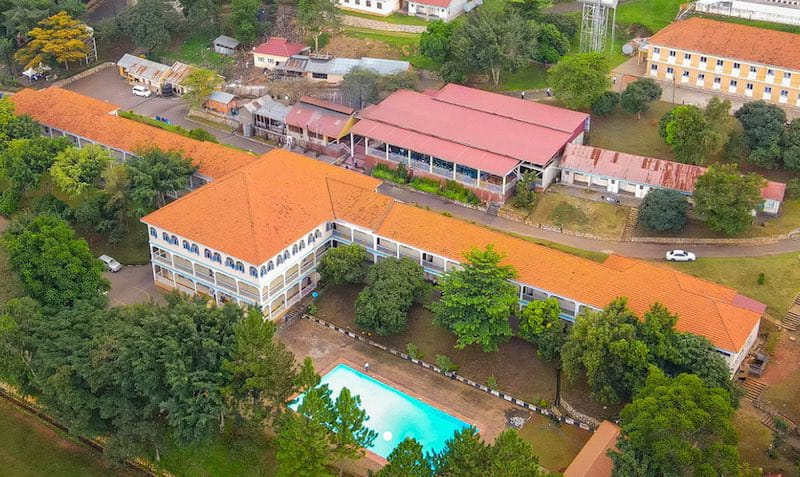
The swimming pool at Seeta High School in Mukono District was meant to be a place of laughter, not loss. But on the afternoon of August 3, 2025, its calm blue surface became the silent witness to tragedy.
Twenty-one-year-old Senior Six student Kevin Nsamba drowned during an unauthorised swim after he and other students returned from a football match.
According to school principal Davis Kafumbe, Kevin ran toward the pool and jumped in without following school guidelines.
The school did not notice Kevin’s absence until the following day, nearly 24 hours later, when his unresponsive body was found in the pool.
The official report reached police on August 4, after which the body was retrieved, a post-mortem conducted, CCTV footage reviewed, and a conclusion drawn by the authorities.
During a press briefing at Naguru Police Station on August 11, police spokesperson Kituuma Rusoke announced that the school’s swimming pool caretaker, Diriisa Kato, had been arrested and would face negligence-related charges.
He assured the public that the investigation was “professional and transparent” and insisted that all stakeholders had done as much as possible.
Yet behind those polished statements lies a deeper current of unease.
A Fault Found — But Not Where You’d Expect
Kituuma placed the blame squarely on Diriisa, the one man tasked with watching the pool that day.
“He was responsible for ensuring the safety of the students who come to enjoy and make use of the swimming pool,” Kituuma said.
The implication was clear: the safeguard failed.
What is less clear is why the school itself — the institution that hired and supervised him — bears no legal responsibility.
Parents entrust their children’s safety not to an individual lifeguard but to the school’s administration.
If the caretaker was negligent, as the arrest suggests, then isn’t the act of hiring and overseeing him the school’s first failure?
CCTV footage, Kituuma said, was the investigation’s saving grace. It helped counter wild speculation circulating online — from claims of ritual sacrifice to doubts over whether Kevin drowned at all.
“Had we not had the footage, speculation would have taken control,” he warned.
But the same footage that brought clarity to the investigation will not be released to the public, meaning parents and the wider community must take the police’s account on faith.
That scepticism is partly rooted in history. Kevin’s death is not the first linked to Seeta High School. At least two other deaths this year have drawn attention:
- In February or March 2025, 16-year-old Senior Three student Elishama Ssesaazi (Main Campus) was found dead in a suspected suicide.
- About a month later, a 30-year-old teacher from the school’s Mbarara campus was brutally killed near Code High School.
Police have dismissed talk of curses or ritual killings as “baseless social media banter,” insisting each incident was “explainable” and unrelated to the school’s conduct.
Still, the question lingers: how many “explainable” deaths does it take before patterns are examined?
A Troubling Industry Practice
Kituuma also drew attention to a broader problem in the swimming industry: lifeguards doubling as swimming coaches.
The extra pay from coaching, he said, distracts them from their primary duty of constant observation.
He urged all pool owners to separate the two roles to prevent lapses in safety.
For police, Kevin’s drowning has become a cautionary tale for all institutions with swimming pools. Their safety checklist includes:
- Installing CCTV cameras
- Hiring certified lifeguards
- Avoiding overcrowding
- Enforcing clear and strict pool-use protocols
These warnings apply not only to schools but also to hotels, resorts, and other entertainment venues, especially as students enter the holiday season.
The arrest of one caretaker may satisfy the letter of the law, but the deeper question remains unanswered: when a young life is lost on school grounds, can accountability stop at the poolside?
