
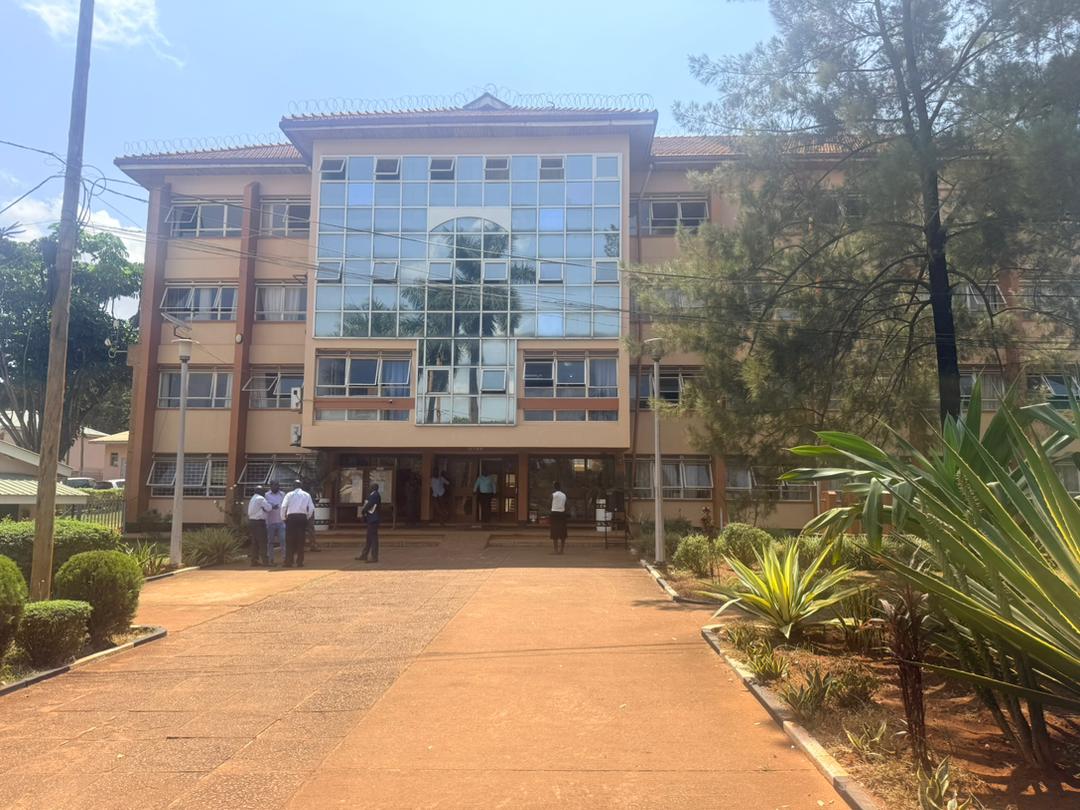
Kyambogo University has called on the government to introduce scholarships for master’s and PhD students, warning that the country’s research capacity will remain constrained unless more postgraduate students receive financial support.
Speaking to journalists, Vice-Chancellor Prof. Eli Katunguka-Rwakishaya said the lack of government-funded scholarships for graduate studies was limiting enrolment in master’s and doctoral programmes, particularly in science disciplines where Uganda needs more highly qualified researchers.
“As a country, we do not have enough PhDs, especially in the sciences. If we are going to improve research, we need to support postgraduate students, but that has not happened,” Prof. Katunguka said.
He explained that while Kyambogo University receives government funding for its operations, the allocations do not cater for scholarships for graduate students, forcing most master’s and PhD candidates to finance their studies.
“Graduate intake will remain low because students have to find money to support themselves,” he said.
The Vice-Chancellor noted that the university sponsors some members of staff to pursue postgraduate studies as part of its staff development programme.
Those beneficiaries are required to sign bond agreements committing them to work at the university for at least five years after completing their studies.
He said although some staff members breach the agreements, many return to serve the university after graduating.
Prof. Katunguka also said Kyambogo is preparing to implement Uganda’s competence-based curriculum at university level ahead of the first cohort of learners expected to join higher institutions under the new curriculum in the 2027/2028 academic year.
He said the university had received guidance from the Ministry of Education and Sports and was working with the National Council for Higher Education to review academic programmes to align them with the new curriculum.
According to the Vice-Chancellor, deans, heads of departments and examination coordinators are undergoing training to redesign programmes and assessment methods to meet competence-based learning requirements.
“We are reviewing our programmes and training our academic staff so that we shall be ready to admit students under the competence-based curriculum,” he said.
Prof. Katunguka also addressed complaints raised by former students over a diploma programme in sports management, insisting the university did not train them as teachers despite an error in their admission letters.
He acknowledged that the affected students had initially received admission letters referring to a Diploma in Physical Education and Sports Management, but said the mistake was corrected at the beginning of their studies.
According to the Vice-Chancellor, students were informed on the first day that the university only offered a Diploma in Sports Management, and they subsequently followed that curriculum throughout their studies.
“They did not study physical education. They studied sports management, and they were aware of that from day one,” he said.
Prof. Katunguka explained that the programme did not include professional teacher education courses such as teaching practice, curriculum development or subject methodology, which are mandatory for anyone seeking qualification as a teacher.
He said graduates later demanded transcripts and qualifications indicating physical education because teaching vacancies had become available in schools.
However, he maintained that the university could not certify them as teachers for courses they had never undertaken.
“They are not trained in physical education, so they cannot be employed as teachers of physical education,” he said.
The Vice-Chancellor disclosed that the affected graduates had requested a meeting with him to discuss the matter.
He said the university was willing to engage them but maintained that the academic record could not be altered to reflect qualifications they had not earned.
Instead, Prof. Katunguka advised the graduates to enrol for a Bachelor of Education, where they could study physical education alongside another teaching subject and complete the professional education courses required for teacher registration.
“That is the proper pathway if they want to become teachers,” he said.
The Vice-Chancellor said the university remained committed to resolving the dispute through dialogue while upholding academic standards and ensuring that qualifications awarded accurately reflect the training undertaken by students.
