
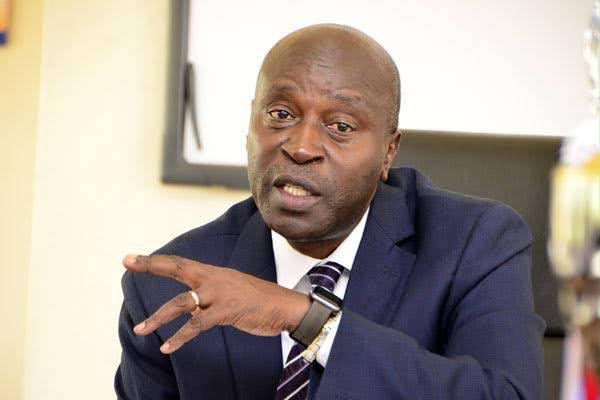
Uganda is facing a critical shortage of professors and PhD holders, a trend that threatens the country's ability to produce high-quality research, drive innovation and support long-term economic growth, according to Kyambogo University Vice Chancellor Professor Eli Katunguka Rwakishaya.
In this interview, Prof Katunguka discusses why universities are struggling to recruit and retain senior academics, the growing attraction of politics and the private sector, and the urgent reforms he believes government must undertake to strengthen higher education.
Excerpts;
Your university recently promoted several members of staff. Why was this exercise important?
We have struggled with staff promotions for some time. Whenever members of staff attain the qualifications required for higher academic ranks, it is our responsibility to promote them.
One of our biggest challenges has been the shortage of professors and associate professors. Even when we advertise these positions, we receive very few applications.
That is why we decided to identify qualified staff from within the university and promote them. We recently promoted 44 academic staff, including three to the rank of professor, bringing our total number of professors to about five.
We also promoted eight associate professors, bringing that number to about 22, and we now have nearly 20 senior lecturers who are expected to progress through the academic ranks.
Is the shortage of professors and PhD holders unique to Kyambogo University?
No. It is a national challenge. Uganda simply does not have enough professors or PhD holders.
If a country wants to develop, it must invest in graduate education and research. Professors and PhD holders generate knowledge, identify national challenges and develop solutions. Without them, it becomes difficult to build a knowledge-based economy.
Why are so few Ugandans pursuing PhDs?
There are several reasons.
First, postgraduate education is expensive. Most Master's and PhD programmes are privately funded, meaning students must meet the costs of tuition, research and publication themselves. Many begin their studies but fail to complete them because they run out of money.
Secondly, there are very few scholarships and limited government support for graduate education.
Even those who complete PhDs often do not remain in universities. Why?
The biggest factor is remuneration.
People with PhDs, particularly in engineering, science and technology, are highly sought after by the private sector. An engineer with a PhD can earn through consultancy in a few days what a university pays in an entire month.
Universities simply cannot compete with those salaries, making it difficult to recruit and retain highly qualified academics.
You also mentioned politics. How is it affecting academia?
We have glamorised politics to the extent that many educated people now see it as the quickest route to wealth.
Even some professors and associate professors consider leaving academia for politics. During a recent career event, I asked students what they wanted to become, and many said politicians.
That is worrying because the country also needs researchers, scientists and university lecturers.
What are the consequences of having too few professors?
The consequences are significant.
Without enough professors, Uganda cannot produce the high-quality research and innovations needed to solve national challenges. Many of the world's successful businesses have their roots in university research.
If we fail to invest in graduate education, our industries, education system and economy will continue to miss opportunities created through research and innovation.
Why do PhD students take so long to complete their studies?
There are three main reasons.
The first is inadequate funding. Many students interrupt their studies because they cannot afford tuition and research costs.
Secondly, Uganda lacks enough experienced supervisors to guide PhD candidates effectively.
Thirdly, many students struggle to dedicate sufficient time to research because they are balancing employment or businesses alongside their studies.
What should government do to address this challenge?
Government should establish a national scholarship programme to support Master's and PhD training, particularly in science, engineering and mathematics.
It should also continue improving salaries and introduce incentives that attract and retain highly qualified academics.
Government recently increased salaries for professors. Has that helped?
Yes. President Museveni enhanced salaries for teaching staff in public universities.
Professors now earn about Shs15.6 million gross per month, while vice chancellors earn around Shs20 million gross. That has improved morale.
However, after taxes, the take-home pay is much lower, and universities still struggle to compete with private-sector salaries, especially in engineering and science.
Beyond salaries, what else concerns you?
Retirement benefits.
Many professors dedicate their entire careers to teaching and research but retire without adequate financial security, medical insurance or housing.
I have written to the President proposing a retirement benefits scheme specifically for university academic staff.
What is your final message to government and university staff?
I encourage young academics to continue pursuing higher qualifications and to save for their future despite the financial challenges.
To government, I appeal for greater investment in graduate education, research and retirement benefits for university staff. If we fail to support professors and researchers, Uganda risks weakening its universities and slowing the country's long-term development.
